




A slight adjustment has occurred in how FIFA is creating league tables for the 2026 World Cup—and it could significantly affect the concluding group games.
For the first time in a World Cup, FIFA is utilizing head-to-head records rather than group goal difference as the main tiebreaker for teams with equal points.
Up until 1966, teams were distinguished by goal ratio, which calculated a team’s scored goals divided by the goals allowed. In 1970, FIFA adopted goal difference—up to this point.
It aligns FIFA with UEFA, which has consistently prioritized outcomes between teams.
The reasoning is that evaluating the direct performance of two teams is more equitable, as it eliminates unusual outcomes—like Germany’s 7-1 victory against Curacao.
Some argue that using overall goal difference is preferable since it reflects the total performance in the group.
FIFA initially implemented it during last year’s Club World Cup, where Flamengo topped Group D before the eventual champions Chelsea after two games.
The primary consequence is an increased likelihood of teams not only progressing but also securing the group victory before matchday three.
In the previous format, a team had to be four points ahead of second place to secure the top position after two matches.
That was uncommon since it necessitated both of the other matches in the initial two rounds of the group to end in ties.
It is now possible to secure first place with a three-point lead.
There are several possible ways it can occur.
It needs either two draws or first place to have surpassed the team(s) on three points.
We’ve witnessed it previously in Group A.
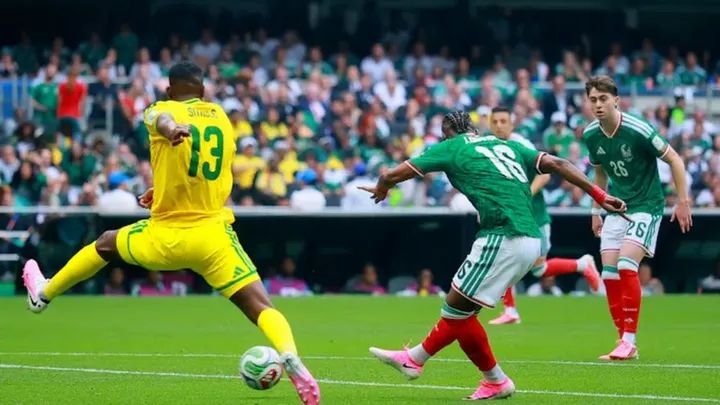
Mexico has secured victories in their opening two matches and currently holds six points, three points ahead of South Korea, while the Czech Republic and South Africa each have one point.
Since Mexico has already defeated South Korea, they cannot be surpassed if both nations finish with six points.
Thus, Mexico has topped the group.
They are aware they will compete in a last-32 match in Mexico City against a team that finished third.
However, there’s a ripple effect.
Mexico essentially has no stakes when they face the Czech Republic next Wednesday and may choose to give players a break.
This results in a disparity that the Czech Republic might exploit, but they can only secure automatic qualification if South Korea is defeated by South Africa.
However, in a competition where the strongest third-placed teams advance, it may hold significance.
The system is also implemented in the European Championship, where the top third-placed teams progressed.
What are all the tiebreakers?
When teams are level on points, this is the order used to separate them:
- Head-to-head points between the teams in question. If there are three teams involved, a mini-league is created, removing the results against the fourth team.
- Head-to-head goal difference
- Head-to-head goals scored
- Group goal difference
- Group goals scored
- Fair play (yellow card -1, red card for two cautions -3, straight red card -4, yellow then straight red -5)
- FIFA world ranking
- Better position in progressively older FIFA world rankings