




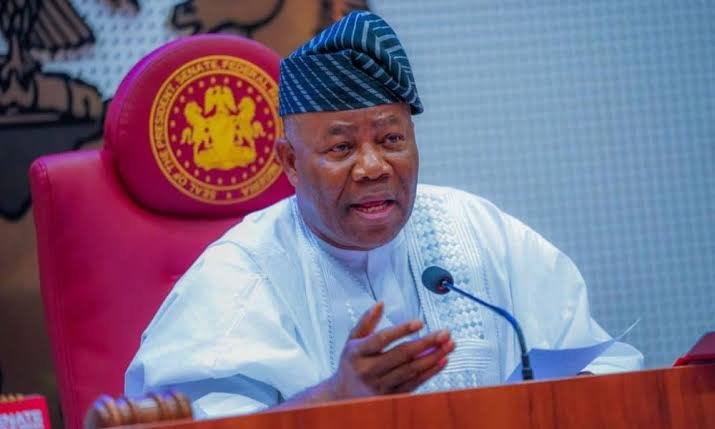
The Senate has ruled out any immediate review of the Electoral Act 2026 following the Supreme Court ruling restoring provisions governing political party membership registers and the nomination of candidates ahead of the 2027 elections.
Yemi Adaramodu, Chairman of the Senate Committee on Media and Public Affairs, said the National Assembly had finished the electoral reform process and would not change the law while preparations for the 2027 elections were underway.
Adaramodu made this known in an exclusive interview, as he answered questions on whether lawmakers would revisit the Electoral Act in light of the Supreme Court judgment and the concerns political parties had raised about certain provisions.
He said, “We have already done the electoral reform and passed that one. It is meant for the 2027 elections. It is only after it that we can consider it for a review if there is any necessity or calls for amendments and rejigging. That’s when it can come up.
“Anybody who has any petition against it should submit to the Senate. But for us at the Senate and National Assembly, we have passed the Electoral Act into law. It has been assented to, and it is now in use.
“As you know, it is through the Electoral Act that parties produced the candidates who will contest in January and February. So, are you now going to shift the goalposts in the middle of the game? Are you going to play a football match in reverse? Do you tell them to walk backwards instead of running forward?
“How do you halt an Electoral Act that is already in use for a new one? We are not going to do that.”
The senator’s stance emerged days after the Supreme Court reinstated Sections 77(5), 77(6), 77(7) and 84(2) of the Electoral Act 2026, which the Court of Appeal had previously struck down.
In a unanimous ruling, the seven-member Supreme Court panel overturned the Court of Appeal’s decision, determining that the contested provisions did not conflict with the Constitution.
Sections 77(5)-(7) deal with political parties’ membership registers and their participation in primaries, whereas Section 84(2) allows for direct primaries or consensus as ways of nominating candidates.
Still, the ruling has raised new concerns about what the restored provisions mean for candidates whose membership, waivers, or nomination processes might be examined.
Yet political parties, among them the Peoples Democratic Party, Allied People’s Movement, and Labour Party, insisted that their candidates remain safe after the September 24, 2026, Supreme Court judgment on the Electoral Act.
Certain affected candidates and political parties have already pushed back against claims that the judgment renders their candidacies invalid.
The Nigeria Democratic Congress, for example, rejected fears that the judgment might jeopardize the candidacies of its presidential candidate, Peter Obi, his running mate, Rabiu Kwankwaso, and former Deputy Senate President, Ovie Omo-Agege.
In an earlier interview, the NDC National Publicity Secretary Osa Director stated that the judgment ought not to be interpreted on an individual basis, contending that anyone contesting a candidate’s eligibility should take the matter to court.
The Supreme Court ruling came after a legal dispute over whether the contested provisions were constitutional. In July, the Court of Appeal had ruled Sections 77(5), 77(6), 77(7), and 84(2) unconstitutional, which led INEC to appeal to the apex court.
Now that the Supreme Court has restored the provisions and the Senate maintains that the Electoral Act 2026 will govern the 2027 elections, any further amendment would, per Adaramodu, have to wait until after the poll.