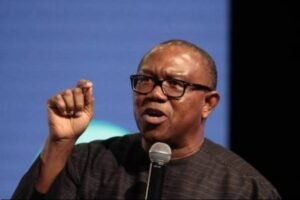



Rabiu Kwankwaso, the vice presidential candidate of the Nigeria Democratic Congress (NDC), has stated that a government headed by the party’s presidential candidate, Peter Obi, would bring back fuel subsidies, though in a different manner.
Kwankwaso, who previously served as governor of Kano State, made this remark in an interview with Arise News, where he talked about fuel pricing and the economic policies of President Bola Tinubu’s administration.
He noted that the NDC would look for ways to lower the price of petrol for Nigerians, such as boosting investment in local refining.
“No, no, no, look. We are bringing subsidy in our own way,” Kwankwaso said when asked whether the party’s position on subsidy would affect its campaign in the North-West.
While outlining the proposed approach, he noted that the government could set up additional refineries to increase local production and lessen reliance on imported petroleum products.
He stated that growing domestic refining capacity would help guarantee that Nigerians are able to buy petrol at a price he called reasonable.
“Now, if individuals in this country could build refineries, I see no reason why the government, under certain circumstances, will not build a refinery or refineries to the extent that we achieve the minimum requirement,” he said.
Kwankwaso stated the NDC would prioritize measures aimed at lowering fuel prices.
“What is the minimum requirement? The minimum requirement is for the people across the country to go to the filling stations and buy fuel at a reasonable price,” he added.
“We, in the NDC, will do whatever it takes, really, to put the price of oil down.”
Atiku defends fuel subsidy plan, says Dangote raised legitimate concern
NANS rejects Atiku’s calls to bring back fuel subsidy
The NDC chieftain also took issue with the way Tinubu scrapped the petrol subsidy soon after taking office in 2023.
He pointed out that the leading presidential candidates in the 2023 election had backed removing the subsidy, but he blamed Tinubu for rolling out the policy right away.
In his view, the decision was made without properly tackling the fallout that comes with removing the subsidy.
“And not only did he decide to remove the subsidy, but what he did was to remove it immediately—in fact, day one—without looking at all those possible issues that were associated with that,” Kwankwaso said.