



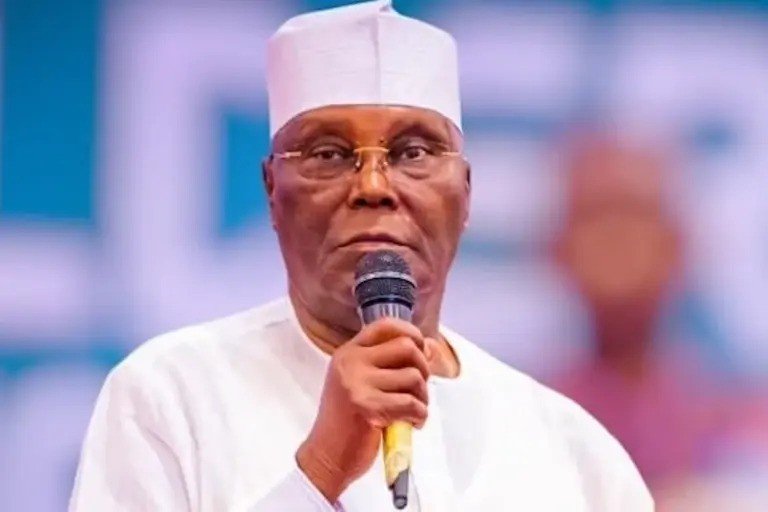
Former Vice-President and African Democratic Congress (ADC) presidential candidate, Atiku Abubakar, has said Nigeria cannot achieve lasting economic growth by relying on imports instead of boosting domestic production.
In a statement issued on Monday by his Senior Special Assistant on Public Communication, Phrank Shaibu, Atiku said the country’s economic recovery depends on producing what it consumes, manufacturing what it uses and exporting finished goods.
Atiku blamed Nigeria’s economic hardship on years of policies that encouraged importation and consumption while neglecting local production and industrialisation.
“For too long, we have celebrated importation while neglecting production,” he said.
“We import food that should be grown in our fields, goods that should be manufactured in our factories and even raw materials that ought to be processed by Nigerian hands. No nation has ever become prosperous by exporting jobs and importing poverty.”
The former vice-president said the country’s economic challenges are reflected in rising food inflation and weak manufacturing output. He cited national food inflation of 17.52 per cent, with Kogi recording 53.02 per cent and Niger State 43.83 per cent. He also noted that Nigerian manufacturers spent ₦3.53 trillion importing raw materials within six months.
“A nation cannot build prosperity when its factories are falling silent. We are exporting jobs, importing inflation, weakening the naira and mortgaging our future,” he added.
Atiku said Nigeria must rebuild its economy around agriculture, manufacturing, solid minerals, technology and value addition. He highlighted the importance of processing cocoa in Ondo State, harvesting rice in Kebbi, cultivating yam in Benue, processing tomatoes in Kano, producing pharmaceuticals in Aba and assembling machines in Nnewi to create jobs and strengthen the naira.
He also recalled that the administration of former President Olusegun Obasanjo, in which he served as vice-president, implemented market-oriented reforms that attracted investment and supported economic growth.
The ADC presidential candidate said his administration would restore security in farming communities and industrial corridors, stressing that “food security begins with farm security”.
He pledged to reduce import duties on industrial machinery not produced locally, provide affordable long-term credit for farmers and manufacturers, ensure competitive electricity and fuel prices, stabilise the naira, invest in infrastructure, promote agro-processing and industrial clusters, reform the tax system to reward production and improve workers’ purchasing power.
“Factories cannot thrive where borrowing is prohibitive, energy is unaffordable, the currency is unstable and consumers are too poor to buy locally made goods,” he said.
Atiku summed up his economic vision by saying: “Our mission is simple: Produce in Nigeria. Employ Nigerians. Consume Nigerian products. Export Nigerian excellence.”