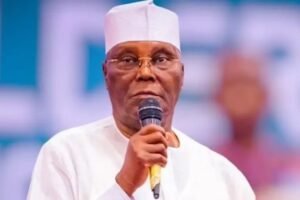



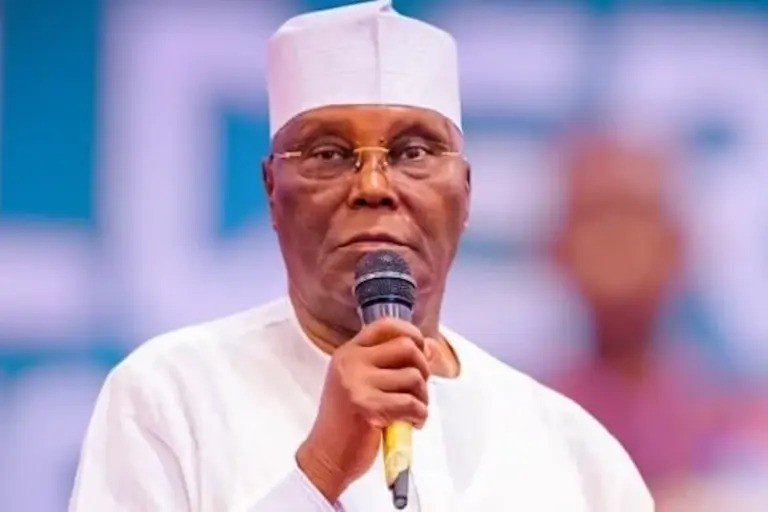
Former Vice-President Atiku Abubakar has faulted the Federal Government’s plan to pay public service workers a ₦70,000 monthly transport allowance, saying it is not enough to ease the effect of rising living costs on Nigerian households.
Atiku, who is the African Democratic Congress presidential candidate in the 2027 election, said the allowance, set to run for six months starting November 2026, would barely help with the wider economic hardships confronting workers, businesses, and families.
In a statement released on Wednesday by Phrank Shaibu, Director of Strategic Communication of the ADC Presidential Campaign Council, Atiku contended that the intervention did not tackle the growing costs of food, electricity, rent, and other essential goods and services.
He described the allowance as inadequate, pointing out that at an assumed petrol price of about ₦1,400 per litre, ₦70,000 would buy only around 50 litres of petrol.
“At about ₦1,400 per liter, ₦70,000 buys roughly 50 liters of petrol. What meaningful difference can 50 liters make over an entire month?” he asked.
Atiku accused the government of responding to economic hardship with temporary payments rather than addressing the underlying causes of rising living costs.
“The Tinubu administration is scrambling from one announcement to another, showing its failure to grasp the crisis. The cost of living crisis reaches beyond transport: energy, food, rent, and other essentials affect every part of daily life,” he added.
He stated that the intervention would leave out a significant proportion of Nigerians, including private-sector employees, traders, small-business owners, transport operators, and people working in the informal economy.
“If public service workers receive ₦70,000 monthly for transport from November, what happens to private sector workers, traders, small businesses, transport operators, and millions without formal jobs?
“The public workforce is only a fraction of Nigeria’s population. A temporary allowance for some cannot solve a national crisis,” he argued.
He also urged the federal government to clarify the payment schedule and eligibility criteria for the allowance while voicing concern over what he described as the unresolved effective date for a new minimum wage.
Atiku called on the government to give clear information on when wage negotiations would yield a decision, arguing that workers needed lasting improvements in their earnings rather than temporary assistance.
He acknowledged that the allowance could offer some relief but insisted that its six-month duration would not reverse the economic pressures facing households and businesses.
“Any genuine relief is welcome, but a six-month allowance cannot undo this hardship,” he said.
The ADC chieftain also criticized the government’s fuel and transport interventions, including its compressed natural gas program, contending that they had not delivered the promised relief to Nigerians.
He described the announcements as a familiar cycle of short-term measures that had not meaningfully cut the cost of commuting or running businesses.
“These rushed announcements smack of political bribery and corruption. Tinubu has shown no genuine intention of clearing the monumental mess caused by his hasty subsidy removal. He offers temporary payments instead of confronting the consequences,” Atiku stated.
He went on to condemn the removal of the petrol subsidy, maintaining that the administration should rethink its approach to fuel pricing and embrace policies that can actually lower costs for consumers.
Atiku proposed a transparently managed production subsidy for fuel refined in Nigeria, which he said could ease the burden at the pump while also supporting domestic refining.
“Tinubu must not punish 250 million Nigerians for the corruption and leakages of a few thousand,” he said.
The former vice-president insisted that the government ought to prioritize policies that lower the cost of living, raise household incomes, and make it easier for businesses to operate affordably.
“What Nigerians are witnessing is a government that set the house ablaze with its reckless policies, then pretends to fight the inferno by throwing ice cubes at the flames,” he said.
The Federal Government’s planned transport allowance is being introduced as household budgets remain under pressure following the removal of the petrol subsidy in May 2023 and the resulting rises in transport and other living costs.
The subsidy removal, together with exchange-rate reforms, has helped push prices higher across several sectors, though the scale of the impact differs by location and household circumstances.
The government has rolled out various measures intended to cushion the effects of the reforms, including transport-related interventions and the promotion of CNG as a cheaper alternative to petrol and diesel.
Yet the adequacy, reach, and implementation of these measures continue to be debated among political parties, labor groups, and other stakeholders.
Atiku said his campaign would pursue policies designed to lower living costs, raise household incomes, and restore the dignity of work.
“Nigerians need lasting relief, decent wages, and an economy that rewards honest work. When will life become affordable again?” he asked.