




A Nigerian university student identified as Ayomide has been exposed for allegedly blackmailing a Canadian teenager after luring him into sharing intimate photographs through a fake social media identity.
An investigation by The Associated Press (AP) and PBS FRONTLINE revealed that the student, who is in his early 20s, allegedly impersonated a young woman named Ava on TikTok to target foreign men and boys.
The Canadian teenager told AP that he was 15 when Ava approached him on TikTok and gradually gained his trust.
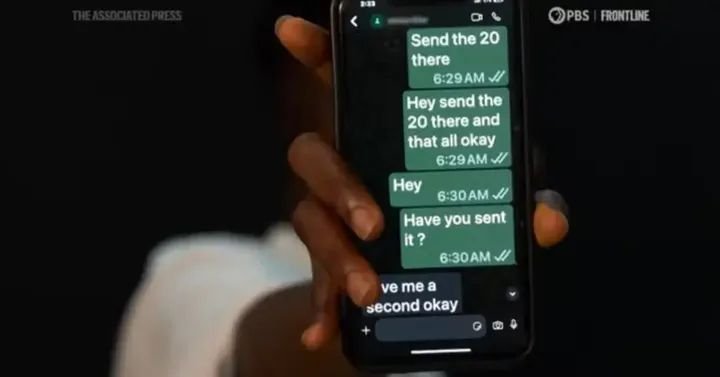
According to the investigation, Ayomide persuaded the teenager to move their conversation to an encrypted messaging platform, where he manipulated him into sharing personal information and an intimate photograph.
After obtaining the image, Ayomide allegedly threatened to distribute it to the teenager’s family, friends and employer unless he paid money.
The teenager initially transferred $500 in response to the threats.
However, when he asked whether the payment had ended the ordeal, Ayomide reportedly replied: “Not just yet. This isn’t that simple.”
The victim subsequently paid nearly $2,000, according to the investigation.
How the Nigerian Student Operated the Scam
The AP investigation found that Ayomide used a fake female identity to approach potential victims on TikTok.
He reportedly followed hundreds of foreign men and boys, initiating conversations with those who followed him back.
After establishing contact, he moved conversations to private messaging platforms, where he continued manipulating his targets.
The investigation also revealed that Ayomide exploited gift cards and payment accounts to collect money from victims.
AP journalists met with him in Lagos, where he shared chat histories from some of his successful scams, including the incident involving the Canadian teenager.
Ayomide said he learned how to use his phone to blackmail foreigners from his friends.
He described himself as a computer science student who was also apprenticing at a barbershop.
Although he admitted feeling bad about what he had done to the Canadian teenager, he said he would apologise if given the opportunity.
However, the victim told AP that he could not take an apology from a “master manipulator” seriously.
In a video published by AP, Ayomide admitted that he continued demanding money because he needed the funds.
FBI Raises Alarm Over Growing Sextortion
Charles Smith, the FBI’s law enforcement attaché in Abuja, warned that perpetrators of online sexual extortion were becoming increasingly aggressive.
“These perpetrators are becoming more and more aggressive,” Smith told AP.
“It can happen to any of our children, any child with access to a computer or online,” he added.
The investigation highlighted the growing threat of financially motivated sextortion, particularly against teenagers who are manipulated into sharing intimate images before being threatened with exposure.
It also examined how online scammers exploit social media platforms, encrypted messaging applications and payment services to target victims across international borders.
EFCC Chairman Condemns Yahoo Boys
The chairman of the Economic and Financial Crimes Commission (EFCC), Ola Olukoyede, described internet fraudsters, popularly known as Yahoo Boys, as a “national shame” in his interview with AP and FRONTLINE.
Olukoyede said Nigeria would no longer be a safe haven for fraudsters.
The investigation also explored how cybercrime has become normalised in some Nigerian communities, with some young people viewing internet fraud as a means of achieving financial success.
Ayomide told AP that he preferred working as a barber to engaging in internet fraud but struggled financially.
He said his ambition was to become an engineer and work in the aviation industry.
However, the investigation found that a year after promising to stop scamming, Ayomide had become involved with a group of other Yahoo Boys at his university.
He declined to explain why he was still involved in internet fraud.
The Canadian teenager, meanwhile, said the experience continued to affect him nearly two years after escaping the scam.
He told AP that he had since learned to recognise suspicious online approaches and block people he did not trust.