




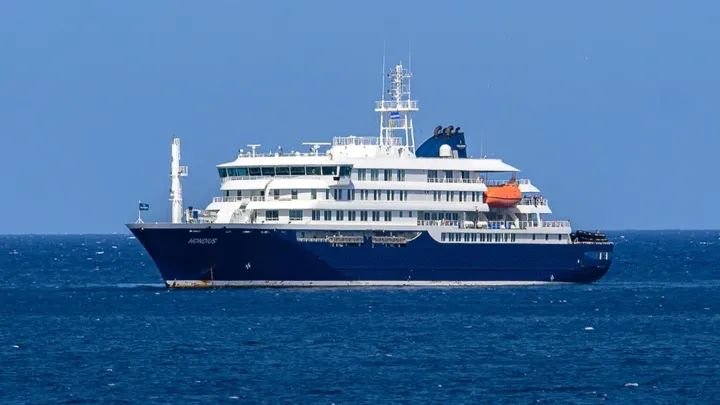
A cruise ship at the centre of a deadly hantavirus outbreak has arrived in Spain’s Canary Islands, where passengers are set to be evacuated after weeks stranded at sea.
The Dutch-flagged MV Hondius reached the port of Granadilla in Tenerife on Sunday under escort from Spain’s Civil Guard, according to maritime tracking data.
Most of the nearly 150 passengers and crew are expected to leave the vessel and fly home, while the ship continues its journey to the Netherlands.
Three passengers — a Dutch couple and a German woman — have died during the outbreak, while several others were infected with the rare hantavirus disease, which is commonly spread through rodents.
Health officials confirmed that the strain involved is the Andes virus, the only known hantavirus capable of spreading from person to person, raising international concern.
Maria Van Kerkhove of the World Health Organization said everyone aboard was being treated as a “high-risk contact”, although she stressed the danger to the wider public remained low.
WHO Director-General Tedros Adhanom Ghebreyesus also sought to calm fears after arriving in Spain ahead of the evacuation operation.
“This is not another Covid,” Tedros said in an open letter to residents of Tenerife, while praising local solidarity and preparedness efforts.
At the port of Granadilla de Abona, emergency tents were set up and police sealed off sections of the quay ahead of the evacuation process.
Spanish authorities refused to allow the vessel to dock directly. Instead, passengers are being screened offshore before transfer to specially arranged flights grouped by nationality.
Cruise operator Oceanwide Expeditions said passengers and a limited number of crew members would disembark in stages before being taken straight to aircraft.
The WHO confirmed six positive cases from eight suspected infections, adding there were no remaining suspected cases on board.
The ship had sailed from Argentina on April 1 on a transatlantic voyage from Ushuaia to Cape Verde.
Health authorities across several countries are now tracing passengers and contacts linked to the outbreak.
Officials in the Netherlands, South Africa, Singapore and the United Kingdom are monitoring potential exposures, including a suspected case on the remote island of Tristan da Cunha.