




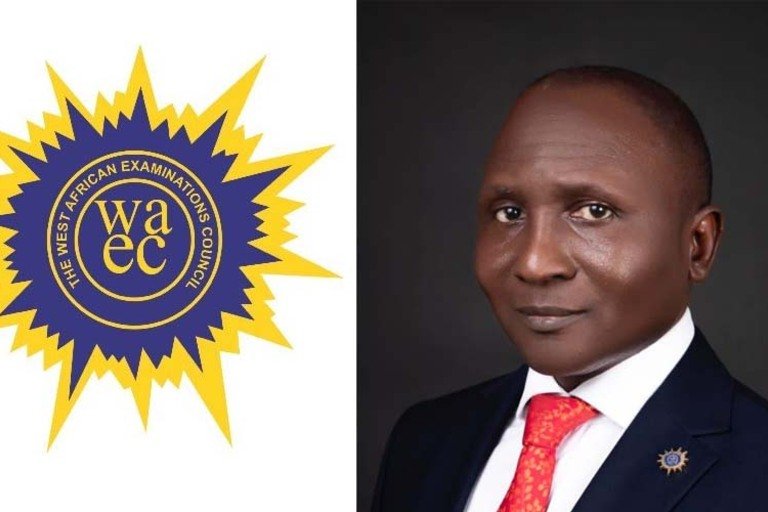
The West African Examinations Council (WAEC) has attributed delays and the conduct of some night papers during the 2026 West African Senior School Certificate Examination (WASSCE) to late registration, insecurity and the Federal Government’s last-minute decision to adopt a hybrid examination format.
WAEC’s Head of National Office (HNO), Dr Amos Josiah Dangut, gave the explanation amid growing concerns from educators, parents and school administrators over the 2026 WASSCE results.
Dangut spoke during a virtual dialogue organised by the Education Writers’ Association of Nigeria (EWAN), where school proprietors and education stakeholders raised questions about the conduct of the examination and the performance of candidates.
Several participants accused WAEC of mishandling aspects of the examination and alleged that schools known for examination malpractice appeared to record better results than institutions with strict anti-cheating policies.
Stakeholders also expressed concern over what they described as unusually poor performances among students from reputable schools.
The Principal of Babcock University High School, Ilishan-Remo, Ogun State, Fatola Samson, said the 2026 examination results were significantly below the school’s usual performance and could negatively affect students seeking admission into higher institutions.
The readiness of schools and WAEC for the transition to computer-based testing (CBT) also came under scrutiny.
Dr Peter Ogunkunle, Proprietor of Soundmind School, Arigbajo, Ogun State, questioned whether the infrastructure required for large-scale CBT examinations was sufficiently reliable.
He argued that difficulties maintaining a stable internet connection during the virtual meeting raised concerns about the reliability of the infrastructure being deployed for examinations.
Other stakeholders highlighted the financial burden of CBT requirements, including laptops, generators and CCTV systems, saying many private schools could struggle to meet the costs.
The participants called for an independent review of the 2026 WASSCE results, warning that unresolved concerns could undermine confidence in CBT examinations in Nigeria.
They also urged the Federal Government to intervene urgently to protect students whose admission prospects could be affected by the results and restore confidence in the examination system.
Responding to the concerns, Dangut rejected claims that technological or logistical challenges were responsible for the reported decline in performance.
He said stronger security measures, including randomisation and serialisation, had helped reduce examination malpractice and could explain lower performances in schools that previously benefited from cheating.
Dangut also stressed that WASSCE is an achievement examination based on a prescribed syllabus and should not be compared with the Joint Admissions and Matriculation Board (JAMB) examinations, which are aptitude tests.
According to the WAEC HNO, the overall decline in performance across the subjects was only 1.4%.
He said performance in English Language actually improved, with the percentage of candidates who obtained at least a C6 rising from 64.58% in 2025 to 69.31% in 2026.
Mathematics, however, recorded a decline, with candidates obtaining at least a C6 falling from 88.66% in 2025 to 84.03% in 2026.
Dangut also confirmed that the results of visually impaired candidates had been released, although a small number were still undergoing manual resolution over shading errors.
The WAEC HNO rejected calls for external verification of the results but advised aggrieved schools and candidates to formally appeal for a review.
The controversy over the 2026 WASSCE results comes as stakeholders continue to debate the readiness of Nigeria’s education system for the wider adoption of CBT and the need to ensure that technological changes do not compromise the credibility of national examinations.