




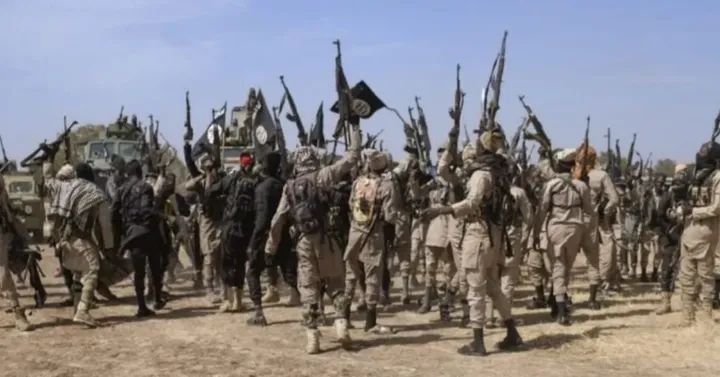
The United States has warned that parts of Africa are facing renewed extremist threats as remnants of the Islamic State (ISIS) regroup across the continent following their defeat in Iraq and Syria.
ISIS was declared defeated in 2017 by the governments of Iraq and Syria after years of military campaigns backed by US-led coalition forces.
However, by late 2014, militant factions claiming allegiance to ISIS had already emerged in several conflict zones across Africa, the Middle East and Central Asia.
In a newly released counterterrorism strategy, the US said the jihadist group splintered and relocated to Africa and Central Asia, taking advantage of weak governance and instability in vulnerable regions.
According to the document, areas facing renewed threats include West Africa, the Sahel, the Lake Chad Basin, Mozambique, Sudan and Somalia.
The US noted that ISIS elements have re-established themselves in Somalia, while Islamist group Al Shabaab continues its insurgency operations.
“In the Sahel and Lake Chad Basin, where parts of northern Nigeria fall under, the ISIS provinces operate as Boko Haram and Islamic State in West Africa Province (ISWAP), controlling territory and attacking military and civilian targets,” the document stated.
The strategy outlined two main US objectives in Africa.
“The first is to guarantee that none of the jihadi groups can build a base of operations that allows them to plot and execute attacks against the United States and American interests around the world,” the document said.
“The second is to protect Christians, who have been slaughtered at the hands of these jihadi groups.”
Nigeria has faced criticism from some US lawmakers and advocacy groups over allegations that authorities have not done enough to stop attacks targeting Christian communities.
However, the administration of Bola Tinubu has repeatedly maintained that the country’s security challenges are not driven by sectional or religious interests.
The US also referenced President Donald Trump’s decision to authorise strikes against Islamist militants on Christmas Day, describing it as a signal that attacks on Christian communities would not be ignored.
Nigeria reportedly approved the operation.
Despite plans to reduce its military footprint globally, the US said it would continue targeting extremist groups in Africa capable of launching attacks against American interests.
The strategy added that Washington is rebuilding bilateral counterterrorism partnerships with African governments and will continue sharing intelligence, training partner forces and supporting operations against ISIS and al-Qaeda-linked groups.
The US said Africa possesses “almost limitless potential” but stressed that governments must maintain sovereign control over their territories and deny terrorists safe havens.
It also said regional partners would be expected to shoulder a greater share of the counterterrorism burden going forward.