




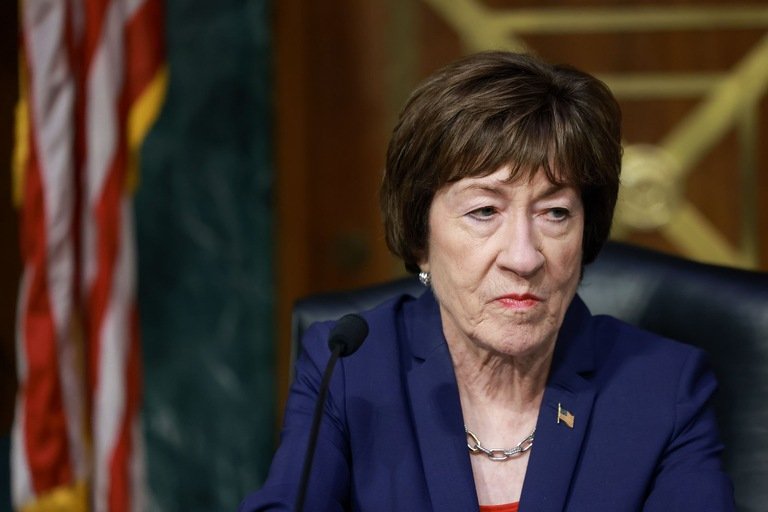
Democrat Troy Jackson has beaten longtime Republican incumbent Susan Collins in Maine, unseating the well-known moderate senator in a race defined by controversy.
Jackson joined the race after taking the place of Graham Platner, the Democratic nominee who stepped aside amid a series of scandals.
First elected in 1996, Collins was the only Republican senator representing a state that has voted consistently Democratic in presidential elections since 1992.
She built a reputation as a moderate and worked to distance herself from President Donald Trump throughout her campaign. Jackson, a former logger, ran on workers’ rights and accused Collins of giving in to pressure from the president.
Collins and Jackson faced off in state debates, and Jackson drew national headlines when he told the 73-year-old to “shut up.”
He joined the campaign late in the season, after Planter withdrew amid a string of controversies, including allegations of sexual assault. Platner has denied the allegations.
Jackson had failed to win the Democratic gubernatorial primary, but he secured the senate nomination at a special convention. He presented himself as a working-class candidate and supported progressive policies such as abolishing Immigration and Customs Enforcement.
His win over Collins gives Democrats an even larger majority in the US Senate; after victories in several key states, including Texas and South Carolina, they handed them control of the chamber.
Democrats also gained control of the US House of Representatives, meaning they will control the entire US Congress for the final two years of Donald Trump’s presidency.
At times, Collins walked a tight rope with Trump. A moderate Republican in a state that has historically backed Democrats, she frequently criticized his policies.
Many saw her as a possible “swing vote” on controversial legislation, able to tip the scales either way.
She voted to convict Trump in his second impeachment trial in 2021, following the riots at the US Capitol, and she also voted against Trump’s One Big Beautiful Bill, which passed.
And she voted against repealing the Affordable Care Act, helping to preserve the health care policy commonly known as Obamacare.
Still, she backed the president on many crucial votes including voting in favor of Brett Kavanaugh’s nomination to the Supreme Court and confirming Robert Kennedy Jr., a vaccine sceptic, as Health Secretary.
In debates, Jackson tied Collins to Trump’s record, citing her voting record and arguing that she could have used her role as a key swing vote to influence the president.
Collins, however, argued that she used her position leading the Senate’s Appropriations Committee, which oversees drafting the bills that allocate federal funds to states and programs across the US, to make a difference for Maine and its residents.