

The All Progressives Congress (APC) says Nigeria must now move beyond macroeconomic stability and deliver tangible improvements in the lives of ordinary citizens.
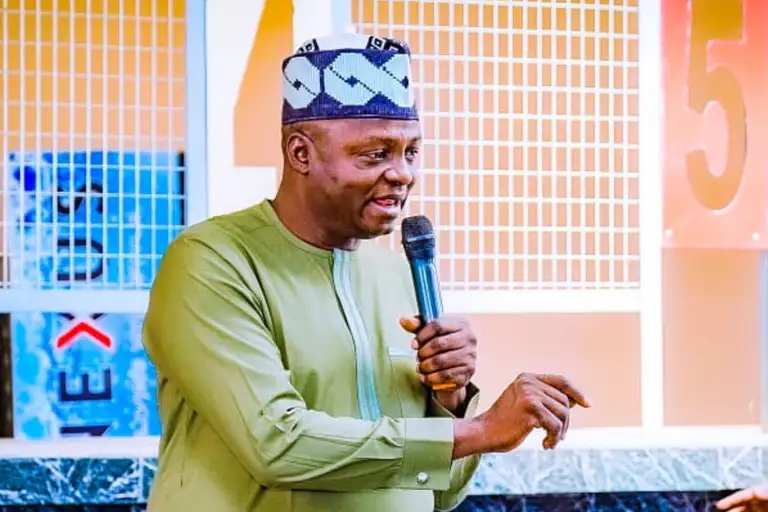
APC National Chairman, Professor Nentawe Yilwatda, made the declaration on Tuesday at a policy roundtable in Abuja organised by the All Progressives Congress Professional Forum.
Yilwatda, who represented President Bola Tinubu at the event, acknowledged growing concerns about the direction of the Nigerian economy, despite improvements in some key economic indicators.
He said the next phase of the administration’s Renewed Hope agenda must translate economic stability into microeconomic prosperity for Nigerians.
“A good GDP number does not automatically put food on a family’s table. Stronger reserves do not pay school fees. A stronger stock market does not automatically put money into the pocket of a market woman,” he said.
The APC chairman said the government must now focus on delivering “more food, more jobs, lower inflation, affordable credit, reliable power, more manufacturing, greater exports and stronger purchasing power”.
The comments come amid continued concerns over the cost of living and the purchasing power of Nigerian households, even as the country records improvements in areas including foreign exchange stability, gross domestic product and external reserves.
As political activity builds ahead of the 2027 elections, Yilwatda urged Nigerians to choose between consolidating the government’s economic reforms and returning to what he described as years of fiscal pressures.
He said Nigerians would hear several promises ahead of the election, including proposals to reverse some of the current administration’s reforms.
“As we approach 2027, Nigerians will hear many promises. Some will promise to reverse the reforms; others will promise prosperity without confronting the structural problems that brought us here. The question is whether we go backwards or consolidate and improve the progress we have begun,” he said.
Yilwatda also challenged Nigerians to consider whether the country should accelerate infrastructure investment, attract more investors and position its ports as a gateway to the wider African hinterland.
“For the All Progressives Congress, the answer is clear. We choose progress, productivity, investment, infrastructure, innovation, Nigerian enterprise, exports, human capital, and we choose President Bola Ahmed Tinubu,” he said.
He added that the administration remains committed to President Tinubu’s ambition of building a $1 trillion Nigerian economy by 2030.
“We must power our industries, develop our digital economy, educate our young people and mobilise the private capital required to transform our productive capacity,” Yilwatda said.
He said Nigeria must begin to see itself not merely as a large domestic market but as a potential maritime, industrial, digital and logistics powerhouse for Africa.
“The foundation has been laid. The opportunity is before us. The work has begun. Now we must take Nigeria from reform to results, from results to growth, from growth to prosperity, and from prosperity to a $1 trillion economy by 2030.”
APC highlights NELFUND, CREDICORP investments
Yilwatda also highlighted social investment initiatives, including the Nigerian Education Loan Fund (NELFUND) and the Nigerian Consumer Credit Corporation (CREDICORP), saying such programmes must not be reversed.
He said NELFUND is expanding access to higher education by helping young Nigerians overcome financial barriers, while technical and vocational training initiatives are providing grants and skills-development opportunities.
According to him, digital technology programmes are also preparing young Nigerians for opportunities in the global digital economy.
Yilwatda said CREDICORP was similarly helping workers, entrepreneurs and businesses gain access to responsible credit to acquire productive assets, expand enterprises and create jobs.
“This is not simply social investment; it is an investment in the productive capacity of Nigeria and in the young Nigerians who will ultimately build and drive our $1 trillion economy,” he said.