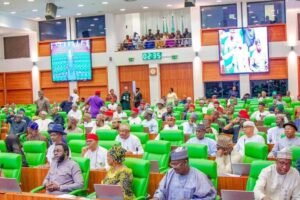




The House of Representatives has called for tougher measures against fake and substandard food products, while advancing legislation to regulate nutrition practice in Nigeria.
Separately, the National Agency for Food and Drug Administration and Control (NAFDAC) has assured Nigerians that medicines supplied under the United States-Nigeria Government (USG-GoN) agreement will undergo appropriate regulatory checks to ensure their safety and quality.
The two developments took place on Tuesday, as lawmakers adopted a motion on food safety during plenary and held a public hearing on a proposed law to establish the Nutritionists Registration Council of Nigeria.
The House urged the Presidency to intensify efforts to tackle the production and sale of adulterated food, counterfeit beverages and other substandard consumer products, warning that they pose serious threats to public health.
The motion was sponsored by Abubakar Yalleman, who represents Madori/Kaugama Federal Constituency of Jigawa State. It called for stronger enforcement of existing regulations and improved coordination among agencies responsible for food safety and consumer protection.
Yalleman said access to safe, quality food was essential for public health, productivity and economic development. He added that proper processing, hygiene and compliance with safety standards could prevent illnesses linked to harmful bacteria, chemical residues and contaminated ingredients.
The lawmaker also expressed concern over illegal factories and counterfeit operations, citing the National Agency for Food and Drug Administration and Control’s dismantling of alcohol-counterfeiting syndicates at Zamfara Plaza on Lagos Island on April 22, 2026.
He further referenced a September 22 raid by the Nigeria Security and Civil Defence Corps on an illegal, unregistered fruit juice factory in Badagry, Lagos State.
According to him, such practices could expose consumers to acute poisoning, cancer and damage to vital organs, including the liver, kidneys, lungs and heart.
Meanwhile, Chairman of the House Committee on Nutrition and Food Security, Chike Okafor, said the public hearing on the proposed nutrition bill would give citizens, experts and other stakeholders an opportunity to contribute before lawmakers reach a decision.
He assured participants that the committee had not predetermined its position and would consider submissions both for and against the proposed legislation.
NAFDAC Assures Nigerians Over US-Supplied Medicines
On the US-Nigeria agreement, NAFDAC said the arrangement covers HIV/AIDS medicines intended to address gaps created by the exit of the United States Agency for International Development (USAID).
The agency also said it would deploy a technology-driven tracking system to monitor the distribution of all medical products supplied under the agreement.
In a statement signed by its Director-General, Prof. Christianah Adeyeye, NAFDAC maintained that it would continue to exercise its statutory responsibility for regulating medicines, vaccines and diagnostic products despite existing regulatory-reliance arrangements with other countries.
Explaining the framework governing the agreement, the agency said the memorandum of understanding refers to its existing regulatory-reliance arrangement with the United States Food and Drug Administration (FDA).
Under the arrangement, products manufactured in the United States and approved by the FDA could receive expedited approval in Nigeria, taking into account the rigour of the American regulatory process.
However, NAFDAC clarified that products supplied under the agreement but manufactured outside the United States would undergo testing by the agency to establish their quality, safety and efficacy.
It added that regulatory reliance was designed to eliminate unnecessary duplication and accelerate access to quality-assured products without removing NAFDAC’s authority to make independent regulatory decisions in Nigeria.
The agency said its responsibilities include evaluating applications, inspecting products and manufacturing facilities, conducting risk-based testing, releasing vaccine lots and carrying out post-market surveillance where necessary.