



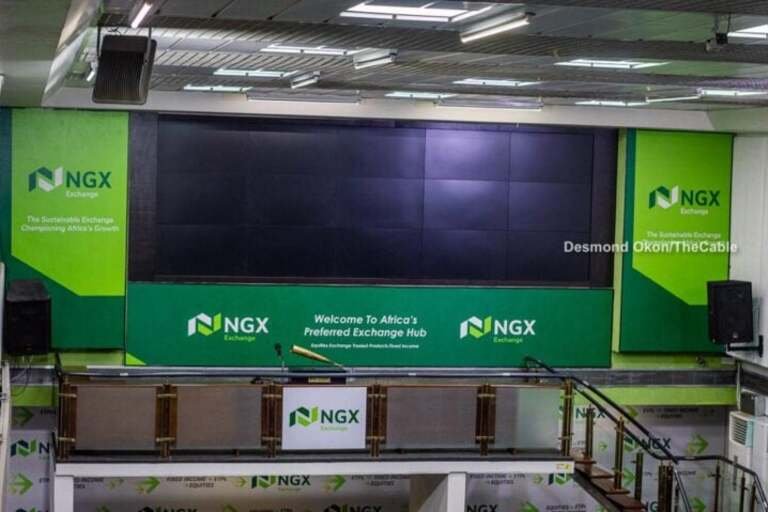
President Bola Tinubu’s economic reforms are responsible for the improved financial performance of many companies listed on the Nigerian Exchange (NGX) in the first half of 2026, the Presidency has said.
In a statement on Wednesday, Special Adviser to the President on Information and Strategy, Bayo Onanuga, said reforms introduced since 2023 have strengthened the operating environment for businesses, leading to higher revenues and profits.
According to the statement, key policies including the unification of the foreign exchange (FX) market, removal of petrol subsidy, banking sector recapitalisation, tax reforms and approvals of major oil and gas transactions have improved operational efficiency and boosted investor confidence.
Onanuga explained that the unified FX market created a single, market-driven exchange rate, allowing companies with significant foreign currency earnings to better reflect the value of their revenues.
He noted that export-focused energy firms such as Aradel Holdings and Seplat Energy were among the beneficiaries because their revenues are largely tied to international oil prices and earned in foreign currencies.
The presidential aide also highlighted the Federal Government’s approval of Renaissance Africa Energy’s acquisition of Shell Petroleum Development Company (SPDC) assets, in which Aradel Holdings is a consortium member, as well as Seplat Energy’s acquisition of Mobil Producing Nigeria Unlimited (MPNU) assets.
According to him, the approvals expanded the companies’ reserves and production capacity while removing regulatory uncertainty surrounding two of Nigeria’s biggest upstream oil and gas transactions.
Onanuga added that the government’s decision to allow crude oil sales in naira also strengthened local refining, helping Dangote Refinery become a net exporter of Premium Motor Spirit (PMS) and aviation fuel.
He said manufacturers including Dangote Cement, BUA Cement and HBM Holdings also benefited from improved access to foreign exchange, enabling better production planning, easier procurement of imported inputs and increased output.
Onanuga further argued that the removal of the petrol subsidy strengthened public finances, creating more fiscal space for infrastructure development, improving revenue mobilisation and supporting long-term macroeconomic stability.
He added that tighter monetary policies, banking reforms and recapitalisation have strengthened liquidity, improved business confidence and enhanced banks’ capacity to finance large corporate projects.
The presidential spokesman also cited ongoing tax reforms designed to simplify tax administration and reduce structural inefficiencies as measures improving Nigeria’s business climate.
He said the combined impact of the reforms has improved market efficiency, strengthened macroeconomic stability, increased investor confidence and supported better capital allocation, resulting in stronger revenues and earnings before tax for many NGX-listed firms.
The Presidency maintained that the financial results recorded by companies in the first half of 2026 demonstrate how structural economic reforms can translate into measurable improvements in corporate performance.