


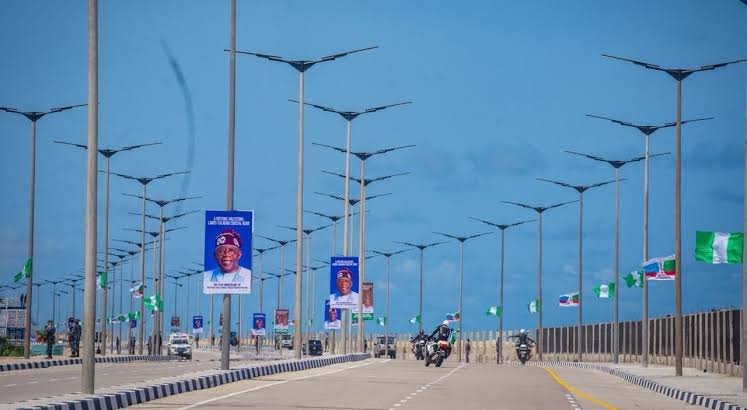
The Ilaje Omuro Community Connect (IOCC) has called on the federal government to investigate the alleged diversion of the proposed Lagos-Calabar coastal highway away from coastal communities in Ilaje Local Government Area of Ondo State.
In a statement issued on Sunday and signed by Babatunde Omobone, the group’s lawyer and representative, IOCC urged the National Assembly and relevant anti-corruption agencies to examine the circumstances surrounding the reported route change.
The group, which said it has more than 1,000 members of Ilaje origin, demanded an independent engineering assessment, a public explanation of the decision and an audit of its financial implications.
It also challenged David Umahi, minister of works, to explain the technical reasons for rejecting the proposed Ilaje alignment.
“The issue at stake is not merely the construction of a road; it is a question of fairness, economic inclusion, environmental protection, and the right of the Ilaje people to benefit equitably from a major national development project,” the statement reads.
IOCC Demands Technical Review of Highway Route
To support its call for a technical review, IOCC cited the Igbokoda-Ugbonla road project undertaken by the Ondo State Oil Producing Areas Development Commission (OSOPADEC) and a 2010 Niger Delta Development Commission (NDDC) contract covering the Ugbonla-Awoye axis.
The group asked the Federal Ministry of Works to clarify the geological, environmental, engineering or financial challenges that could prevent the proposed coastal highway from passing through Ilaje.
“If roads can be constructed within the Ilaje coastal environment, what specific engineering, geological, environmental, or financial considerations make the proposed coastal highway route impracticable?” the group asked.
IOCC called for the release of feasibility studies, geotechnical assessments, environmental impact assessments and cost estimates for the proposed alignment and alternative routes.
It also proposed an independent assessment by engineering professionals to establish whether the technical and financial implications of the route decision had been adequately evaluated.
While acknowledging that safety, environmental and economic considerations could justify changes to highway alignments, the group insisted that the government should publicly explain any decision to exclude Ilaje.
It also questioned why the proposed highway could serve coastal areas in Lagos and Ogun states but bypass the proposed corridor in Ondo State without a detailed explanation.
Group Highlights Coastal Challenges, Economic Risks
IOCC said residents of the Ilaje coastline face coastal erosion, seawater incursion, poor transport infrastructure and limited economic opportunities.
It identified Abereke, Orioke, Magbehinwa, Idiogba, Mese, Ayetoro and Awoye Odofado as communities affected by environmental degradation, which it said threatens homes, fishing grounds, livelihoods and cultural heritage.
According to the group, excluding the area from the proposed highway corridor could constrain fisheries, agriculture, tourism, trade and logistics by limiting access to markets and discouraging investment.
The group called for a comparative assessment of the proposed and alternative routes, covering construction costs, environmental impacts, projected economic benefits and value for public money.
It also urged the Economic and Financial Crimes Commission (EFCC) to investigate any credible evidence of corruption, abuse of office or improper influence linked to the route decision or related contracts.
“This is a call for accountability, not a declaration of guilt. Any allegation of wrongdoing should be investigated fairly, and any findings should be based on verifiable evidence,” the group said.
IOCC Calls for Community Consultation
The group urged the federal government to consult affected residents, traditional institutions and civil society organisations before finalising the highway alignment.
IOCC said it supports national infrastructure development but wants Ilaje communities to receive fair consideration in decisions affecting the region.
“The Ilaje people are Nigerians. Ondo State is an integral part of the Nigerian federation. The coastal communities of Ilaje deserve to be considered fairly in decisions concerning a major national coastal highway,” the statement reads.
The group’s demands centre on transparency, independent technical scrutiny and public accountability over the proposed route. The allegations of diversion and possible wrongdoing remain claims by IOCC and would require verification by the relevant authorities.