




Nigeria’s fragile budget system has come under fresh scrutiny after the International Monetary Fund warned that weak budget credibility across sub-Saharan Africa is damaging macroeconomic stability, eroding public trust and slowing long-term development.
In a new report titled Budget Credibility in Sub-Saharan Africa, the IMF said many African governments routinely fail to implement budgets as approved, leading to widening fiscal deficits, abandoned capital projects and weakening investor confidence.
The warning comes amid mounting concerns over Nigeria’s persistent pattern of delayed budgets, overlapping implementation cycles, weak revenue performance and opaque fiscal administration.
At the centre of the controversy is Nigeria’s 2026 appropriation bill, which was only signed into law by President Bola Tinubu on April 17, more than three months into the fiscal year.
Shortly after the signing, presidential spokesperson Bayo Onanuga said implementation of the budget had already taken effect from April 1, triggering questions over whether spending commenced before the president formally assented to the bill.
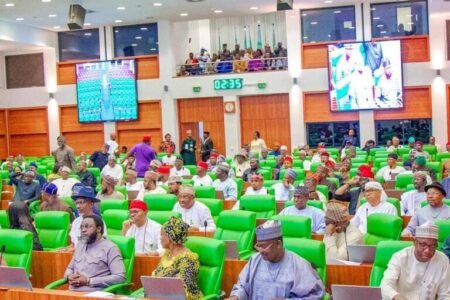
The National Assembly had hurriedly passed the budget after approving additions submitted by Tinubu. Lawmakers also extended the implementation of the capital component of the 2025 budget to June 30, 2026 — a practice increasingly criticised as a sign of deepening fiscal disorder.
The extension continues a trend of overlapping budget cycles that began under former president Muhammadu Buhari and has persisted despite promises by the current administration to end multiple budget implementation.
Analysts say the repeated rollover of capital budgets reflects weak revenue mobilisation and poor execution capacity, with capital expenditure performance reportedly falling below 70 per cent in recent years.
The IMF report examined 39 African countries between 2021 and 2024 and identified Nigeria as one of the clearest examples of structural fiscal weaknesses, including unrealistic revenue projections, poor expenditure controls, fragmented fiscal management and recurring reliance on revised budgets.
The fund also raised concerns over transparency. Nearly a month after the revised 2026 budget was signed into law, the updated document had yet to be publicly released.
Nigeria’s fiscal transparency record has increasingly come under criticism. Budget implementation reports that were previously published quarterly are now significantly delayed, while the Federal Government’s audited financial statements were reportedly last submitted to the National Assembly in 2023, contrary to provisions of the Fiscal Responsibility Act.
According to the IMF, Nigeria is battling rising debt servicing costs, chronic revenue shortfalls, growing recurrent expenditure and heavy borrowing amid worsening infrastructure gaps and increasing social spending demands.
“Budgets are more than technical documents. They reflect the core policy commitments of a government,” the IMF said, warning that repeated deviations from approved budgets weaken fiscal discipline and increase macroeconomic uncertainty.
Nigeria’s revised 2026 budget of N68.32 trillion is based on assumptions of crude oil production at 1.84 million barrels per day, an oil benchmark price of $75 per barrel and an exchange rate of N1,400 to the dollar.
However, the country’s actual oil production stood at about 1.49 million barrels per day last month, roughly 20 per cent below the target. Persistent oil theft, pipeline vandalism, operational disruptions and declining investment by international oil companies continue to undermine production growth.
The revised budget projects a fiscal deficit of N29.2 trillion, while debt servicing is expected to consume more than 20 per cent of total expenditure.
The IMF warned that governments across sub-Saharan Africa often respond to revenue shortfalls by cutting or delaying infrastructure projects, a trend that contributes to unfinished roads, weak healthcare systems and underfunded education sectors.
The report also highlighted weak cash management systems, poor oversight structures and limited digitalisation as major obstacles to fiscal accountability in many African countries, including Nigeria.