


The Nigeria Deposit Insurance Corporation (NDIC) has voiced concern about some debtors of failed banks refusing to repay outstanding loans, accusing them of deliberately frustrating recovery efforts through asset concealment, legal delays, and intimidation.
The corporation cautioned that such practices weaken efforts to recover funds belonging to depositors and hold up the payment of outstanding claims to customers of liquidated financial institutions.
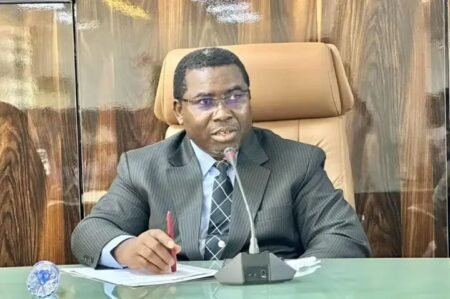
The Director of the Asset Management Department of the NDIC, Ogungbemi Theophilus, raised these concerns on Monday at the Stakeholders’ Seminar and Public Relations Workshop held at Exclusive Serene Hotels and Suites, Wuye, Abuja.
Addressing the challenges the corporation faces in recovering assets of failed banks, Theophilus said, “Some debtors of failed banks believe that because a bank’s license is revoked, he is not obliged to fulfill his responsibilities anymore. They hide assets. They frustrate service. Employ delay tactics in court. Sometimes, they try to intimidate. But we have to always do our job and be professional too.”
He explained that recovering outstanding loans remained one of the hardest parts of bank liquidation, especially when borrowers failed to meet their obligations before the affected institutions lost their operating licenses.
“A loan that was not repaid when the bank was alive does not become easier to recover when the bank is dead,” he stated.
The NDIC director noted that delays in recovering loans and disposing of physical assets could considerably lower their value, ultimately affecting the amount available for distribution to depositors.
According to him, buildings left unoccupied for long periods depreciate, equipment deteriorates, and outstanding loans become increasingly hard to recover.
“Every delay slows payment to depositors,” he warned.
Theophilus explained that the Asset Management Department was responsible for managing the loans, physical assets, and investments of closed deposit money banks, primary mortgage banks, and microfinance banks.
He said the department was tasked with recovering outstanding loans, disposing of properties and investments, and converting recovered assets into cash to settle uninsured depositors.
He stressed that the corporation’s ability to compensate depositors whose balances exceeded the insured limits depended largely on how successful these recovery efforts were.
The director explained that depositors of deposit money banks, non-interest banks, and mobile money operators were insured up to N5m per depositor per bank, while those of microfinance banks, primary mortgage banks, and payment service banks were covered up to N2m.
He said the existing coverage fully protected about 99 percent of depositors, but customers with balances above the insured limits relied on liquidation dividends to recover their outstanding funds.
“For them, the insured payment is only the first installment. The balance, the uninsured deposit can only be paid as a liquidation dividend from the proceeds of the assets we are able to realize and the loans we are able to recover,” he explained.
Theophilus disclosed that the corporation carried out public auctions on November 3 and 4, 2026, using competitive sealed bidding to dispose of physical assets belonging to three banks in liquidation.
He named the institutions as Union Homes Savings and Loans, Heritage Bank, and Resort Savings and Loans, noting that the auctions were held in Lagos, Taraba, and Adamawa states.
According to him, the exercises were coordinated by the Asset Management Department and carried out by appointed auctioneers.
The director also warned against excessive recovery costs, emphasizing that the expenses of recovering debts must not exceed the value of the assets recovered.
“If it costs us N10m to recover N8m, the depositor has lost. We must be disciplined about costs, timelines, and reporting,” he said.
He further cautioned professionals involved in asset recovery against insider dealing, deliberate undervaluation, collusion with buyers, and diversion of proceeds.
“If it costs us N10m to recover N8m, the depositor has lost. We must be disciplined about costs, timelines, and reporting,” he said.
Theophilus announced that the NDIC was developing a comprehensive Asset Management Policy to strengthen asset identification, documentation, valuation, disposal procedures, and accountability in recoveries.
He said the corporation would also deepen collaboration with auctioneers, valuers, sales agents, surveyors, and other professionals to improve loan recoveries and speed up the settlement of depositors’ claims.
The director explained that the Abuja workshop was one of three stakeholder seminars scheduled for Abuja, Enugu, and Lagos, designed to identify operational challenges, strengthen professional relationships, and improve asset recovery outcomes.
He maintained that successful collaboration would ultimately benefit depositors awaiting payment following the collapse of their banks.