



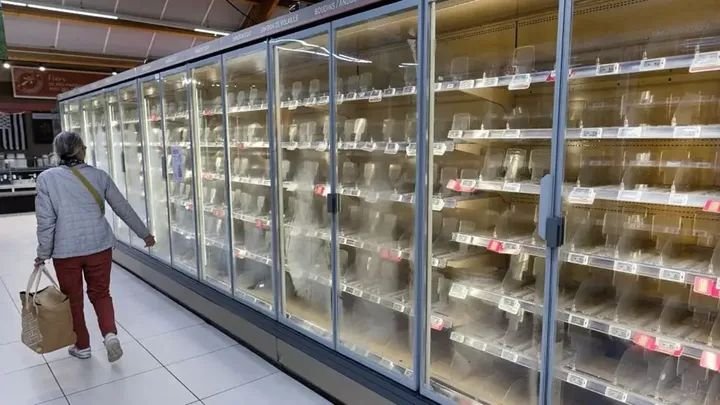
France has accused Iran of orchestrating cyber-attacks that tampered with refrigeration systems in hundreds of supermarkets, causing millions of euros worth of food to spoil.
French Foreign Minister Jean-Noël Barrot made the allegation during a news conference, identifying Iran’s Islamic Revolutionary Guard Corps (IRGC) as responsible for the attack.
Barrot described the incident as “unprecedented in both its scale and its level of aggression”, warning that France would “implement sanctions at the European level against all those responsible for this attack.”
The attack, which occurred last month, involved hackers gaining control of software regulating temperatures in supermarket fridges and freezers, causing fresh and frozen food to spoil.
France has yet to disclose the full financial cost of the incident, although the damaged food was estimated to be worth millions of euros.
The incident has also raised concerns across Europe after dozens of supermarkets in seven other countries were reportedly affected by similar cyber-attacks last week. However, it remains unclear whether the incidents are connected.
Iran has not publicly responded to the allegations.
France Opens Investigation Into Iranian Cyber Unit
Separately, the Paris prosecutor’s office announced on Monday that an investigation had been opened into the head of an Iranian offensive cyber unit and two of his deputies.
Paris prosecutor Laure Beccuau identified the unit as Shahid Kaveh, which she said was affiliated with the IRGC’s electronic and cyber centre.
The investigation comes amid growing concerns over cyber-security threats targeting critical infrastructure and commercial operations across Europe.
How Hackers Targeted French Supermarkets
The attack on French supermarkets took place on 11 October, when hackers reportedly gained control of software responsible for regulating refrigeration temperatures.
More than 100 stores operated by Coopérative U were affected, alongside 180 Intermarché supermarkets and outlets under its Netto brand.
In some stores, refrigerator temperatures reportedly climbed to 50C (120F) overnight, rendering large quantities of fresh and frozen food unsafe for consumption.
The incident exposed the potential consequences of cyber-attacks on everyday commercial infrastructure, with supermarkets facing significant losses from disrupted refrigeration systems.