


The Independent National Electoral Commission, INEC, has warned that politicians and political parties who employ abusive, intemperate or inflammatory languages in their campaigns risk heavy financial penalties and possible imprisonment under the Electoral Act 2026, as the country grapples with a fresh wave of threats by political office holders against dissenting voters.
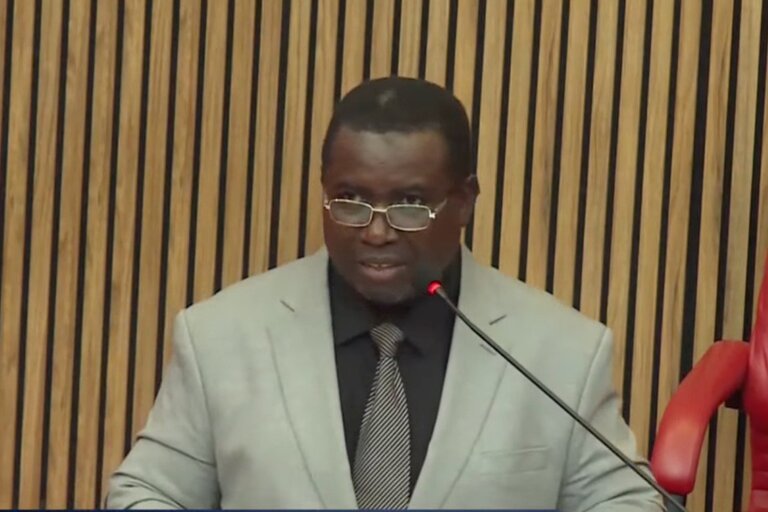
Mr Adedayo Oketola, Chief Press Secretary/Media Adviser to the INEC Chairman, stated in a telephone interview with our correspondent on Sunday that campaign rhetoric crosses the legal threshold into electoral intimidation when it moves beyond robust partisan debate or policy critique and into the realm of coercion, hate speech, or the threat of harm.
“Under the Nigerian legal framework, rhetoric becomes punishable intimidation when it incites ethnic, religious, or regional hostility through abusive, base, or slanderous language explicitly designed to provoke violent emotions or target specific groups,” Oketola said, citing Section 96 of the Electoral Act 2026.
Quoting the law directly, Oketola said, “A political campaign or slogan shall not be tainted with abusive language directly or indirectly likely to injure religious, ethnic, tribal, or sectional feelings.”
He also mentioned that the law further provides that “abusive, intemperate, slanderous or base language, insinuations, and innuendoes designed or likely to provoke violent reaction or emotions shall not be employed or used in political campaigns.”
According to him, campaign rhetoric becomes outright intimidation when it threatens force or violence, whether by directly or indirectly warning voters, candidates, or electoral officials of physical harm, economic reprisal, or social ostracism in order to compel or suppress support for a candidate.
He also emphasized that political campaigns must not create an atmosphere of fear in order to discourage voter turnout or disenfranchise specific demographics.
Speaking on what INEC can actually do about the trend, Oketola clarified that the Commission is an election management body and not a security agency but explained that Section 95 of the Electoral Act 2026 explicitly prescribes the security architecture for political rallies in relation to the operational roles of the Nigeria Police Force, the Nigeria Security and Civil Defence Corps (NSCDC), and other security institutions.
“Beyond inter-agency security coordination, INEC is statutorily empowered to monitor political campaigns and enforce compliance with the Code of Conduct for Political Parties. The Commission can issue formal queries and sanction non-compliant parties within its administrative limits,” he said.
Oketola revealed that to enforce deterrence, Section 96(7) of the Electoral Act 2026 prescribes severe statutory penalties for offenders. “Any candidate who commits these offenses is liable upon conviction to a maximum fine of ₦5,000,000 or imprisonment for a term of 12 months,” he said.
He also stated that political parties face even harsher sanctions. “A non-compliant political party is liable to a fine of ₦10,000,000 in the first instance and ₦2,000,000 for each subsequent offense,” he said.
However, Oketola stressed that INEC alone cannot ensure electoral integrity, defining it as a collaborative stakeholder responsibility. “The Nigeria Police Force and other security agencies have a clear duty to prevent the breakdown of law and order during political campaigns,” Oketola stated.
He went on to say that the media must actively play the role of a watchdog, calling out those who make incendiary statements, while traditional and religious leaders must also step in, using their moral authority to advise politicians to avoid using inflammatory rhetoric and instigating bloodshed in the country.
The INEC spokesman’s warning comes amid a new wave of threats by high-ranking political officials across the country in recent weeks, with some of Nigeria’s political elite openly threatening voters, opponents, and dissenting residents with violence, eviction, and physical harm ahead of the 2027 elections, prompting condemnation from civil society groups, rights organizations, and opposition politicians.
Among the most notable cases is that of Osun East Senator Francis Adenigba Fadahunsi, who was summoned and questioned by the Nigeria Police Force over a viral video in which he was heard telling All Progressives Congress APC supporters in Ilesa, “Until the day of election, when you see any Accord party member here in Ilesa, kill them.”
Governor Ademola Adeleke dismissed his media office’s subsequent clarification, claiming the words posed a national security threat and seeking his arrest.
In the Federal Capital Territory (FCT), the Chairman of Kuje Area Council, Samuel Danjuma Shekwolo, sparked controversy by urging locals who do not support the APC to migrate before 2027, prompting Amnesty International Nigeria to criticize the remarks as a “call to violence.”
In Yobe state, the situation went from bizarre to ridiculous when the state chairman of the APC, Alhaji Mohammed Gadaka, urged married women in the state to leave their husbands if they stood in the way of voting for the party in the upcoming general elections, a remark he later withdrew in response to public outrage.
Gadaka, who made the comment when addressing hundreds of new APC defectors in Nangere town on Thursday, went so far as to promise to personally pay the “new bride price” for any lady who ended her marriage because of her party devotion.
Other flashpoints include Kebbi State, where the Chairman of Gwandu Local Government Area, Alhaji Atiku Ahmad Mandiya, told supporters that anyone who spoke out against Governor Nasir Idris “should be dealt with,” and Ebonyi State, where Governor Francis Nwifuru warned newly inaugurated local government chairmen that they would be removed from office if their councils were not delivered to the APC by 2027.
In a pre-election assessment of Nigeria’s democratic environment, the International Republican Institute (IRI) revealed that civil society monitors recorded more than 81 election-related violent incidents in Osun State alone in the year preceding the August governorship poll, while a separate Pre-Election Security Risk Assessment by the Kimpact Development Initiative (KDI) documented 73 election-related violent incidents resulting in 29 deaths leading up to local elections in the state.
In this regard, INEC, through Oketola, has moved to remind political actors of the legal consequences for those who cross the line from campaign rhetoric to intimidation, insisting that the burden of enforcement falls not solely on the Commission but also on security agencies, the media, and traditional and religious leaders working together.
“Political campaigns should be platforms of competing ideas, not theaters of war,” Oketola said.