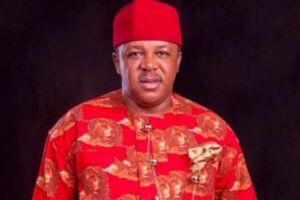




Public sector unions operating under the Joint National Public Service Negotiating Council, JNPSNC, have instructed all workers of the federal, state, and local governments, including staff of ministries, departments, and agencies, MDAs, across the country, to commence a three-day warning strike starting from midnight today in response to the government’s failure to address their demands.
The council has instructed union officials across the federal, state, and local government services to guarantee full compliance with the industrial action, pointing to what it called the worsening economic and mental hardship faced by workers and other Nigerians.
The JNPSNC comprises the Nigerian Civil Service Union (NCSU), Medical and Health Workers Union (M&HWU), Association of Senior Civil Servants of Nigeria (ASCSN), and National Association of Nigerian Nurses and Midwives (NANNM).
The others are the Amalgamated Union of Public Corporations, Civil Service Technical and Recreational Employees (AUPCTRE); Nigeria Union of Public Service, Reportorial, Secretarial, Data Processors, and Allied Workers (NUPSRAW); National Union of Printing, Publishing, and Paper Products Workers (NUPPPPROW); and National Union of Agriculture and Allied Employees (NUAEE).
Staff of federal and state government MDAs are equally affected.
The warning strike came after the federal government failed to address the demands laid out in a letter dated September 21, 2026, sent to President Bola Tinubu by the national leadership of the JNPSNC.
The council stated that the action was needed to press home its concerns regarding the hardship facing workers and vulnerable Nigerians.
The council had also warned on September 29 of a three-day warning strike if its demands—a reduction of the petrol price to N500 a liter, a wage award, and other measures to ease the hardship in the country—were not met or addressed by President Tinubu in his Independence Anniversary Address to the nation on October 1.
The JNPSNC leadership is disappointed that President Tinubu, in his Independence Anniversary Address, did not respond to the call to reduce the pump price of petrol to N500, from the current N1,400 to N2,000 per liter depending on location, nor announce immediate steps to ease the socioeconomic hardship caused by government policies.
The directive to embark on the warning strike is contained in a circular issued by JNPSNC’s National Secretary (Trade Union side), Olowoyo Gbenga, dated October 1, 2026, to the national presidents and general secretaries, state chairmen, and secretaries of affiliate unions of the JNPSNC, titled “Declaration of three (3) day Warning Strike; action with immediate effect.”
The circular reads: “Please, recall the position of the National leadership of the Joint National Public Service Negotiating Council that if the President of the Federal Republic of Nigeria, Bola Ahmed Tinubu, refuses to address our requests as contained in the letter to his exalted office (dated 21st September, 2026), the three-day warning strike earlier scheduled shall commence immediately.
“Consequent upon the above, the strike shall start with effect from midnight of Friday, 2nd October, 2026, to Sunday, October 4th, 2026.
“In the same vein, all public servants in the services of federal, state, and local governments are to join the warning strike because an injury to one is an injury to all, most especially all workers and their dependents. Vulnerable and hapless Nigerians are groaning terribly under the present economic hardship.
“The economic and mental hardships are becoming unbearable and frustrating.
“The time to act and mobilize workers for the three-day warning strike is now!!! Please, disseminate the information!!! Surely, there is victory for us!!!”
Expressing their frustration, one of the leaders of the JNPSNC told the press, “We are deeply disappointed that the President’s Independence Anniversary address failed to address our legitimate demands for a reduction in the pump price of petrol and the introduction of concrete measures to alleviate the excruciating hardship confronting workers and other Nigerians.
“While the President acknowledged the severe suffering inflicted on citizens by government policies, it is deeply concerning that the speech offered no concrete relief or meaningful response to the urgent demands of Nigerian workers.
“In view of this failure to address these pressing concerns, our three-day warning strike will proceed as planned.”
On September 21, the JNPSNC wrote to President Bola Tinubu, calling for the petrol price to be cut to N500, an immediate wage award announcement, and the start of talks on a minimum wage of at least N500,000 from 2027, along with other demands.
In a statement released on Tuesday, September 29, 2026, leaders of the JNPSNC cautioned that if the matters of fuel pump prices and the wage award were not resolved by September 30, particularly during President Tinubu’s Independence Anniversary Address, public servants across the country would begin a three-day warning strike starting October 2, 2026.
The statement, issued by Olowoyo Gbenga, National Secretary of the JNPSNC and General Secretary of the Nigeria Civil Service Union, stated that the September 30 deadline remained firm, emphasizing that the concerns of Nigerian workers could no longer be overlooked.
According to him, “the three critical issues requiring urgent attention are as follows: reduction of fuel price to N500 per liter. The Federal Government should take urgent steps to bring down the price of Premium Motor Spirit (PMS) to N500 per liter. “This can be achieved through the provision of an intervention fund to address landing costs and support oil and gas operators.
“It is equally important for the Federal Government to ensure the sale of crude oil to the Dangote Refinery and operators of modular refineries at appropriate terms in order to facilitate increased domestic refining and help bring down the price of petroleum products.
“The current price of PMS, ranging from N1,450 to N2,000 and, in some locations outside major communities and cities, as high as N2,500 per liter, is unacceptable to Nigerian workers.
“The Council maintains that the economic hardship occasioned by the high cost of fuel is placing the survival of Nigerian workers, their dependents, and the general populace under severe pressure, making it increasingly difficult for Nigerians to live normal and dignified lives.
“The Federal Government should urgently approve a wage award for Nigerian workers to cushion the effects of the prevailing harsh economic conditions being experienced by workers, their dependents, and vulnerable Nigerians.
“The Council believes that urgent action on this demand will further enable public servants to consolidate their loyalty, commitment, and productivity within the public service ecosystem.
“The Federal Government should urgently establish a tripartite committee to commence and facilitate negotiations for the new national minimum wage expected to become due in 2027.
“The Nigerian workers’ demand for the immediate constitution of the committee is informed by the need to avoid any administrative or procedural delay that could affect the implementation of the new National Minimum Wage once it is eventually negotiated and passed into law by the National Assembly.
“Consequently, the Council states that failure by the Federal Government to take the necessary steps to address these issues on or before 30th September 2026 will leave Nigerian workers with no option but to commence a three-day warning strike, with effect from Friday, 2nd October 2026, to press home their demands.
“It is imperative to state clearly that the Independence Day address of the President of the Federal Republic of Nigeria should adequately address these critical issues.
“Failure to address the concerns raised, according to the Council, will attract the displeasure of Nigerian workers and their dependants, as well as other vulnerable Nigerians who continue to bear the brunt of the prevailing economic hardship.”