



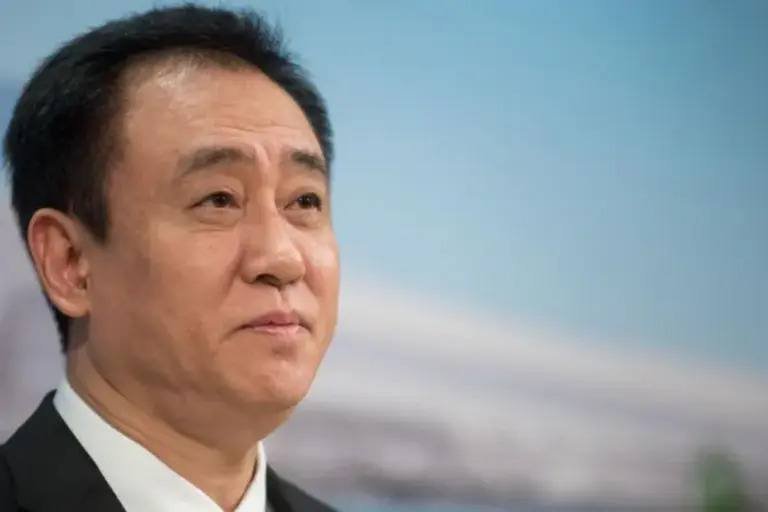
Hui Ka Yan, the founder of Evergrande, has pled guilty to a variety of counts, including asset misappropriation and corporate bribery, the court announced.
Hui apologized before a public hearing in Shenzhen on April 13 and 14, according to Chinese official media.
The court stated that it will announce its decision on the lawsuit at a later date.
His guilty plea is a watershed moment in the aftermath of Evergrande’s collapse, which has shaken China’s real estate market and left investors and domestic banks reeling.
Evergrande was formerly China’s largest real estate developer, with a stock market valuation of more than $50 billion (£37 billion), but it plummeted into a debt-driven catastrophe in 2021, shattering its business.
The court heard that the corporation accepted millions of dollars in pre-sale finance from prospective home buyers that was not used for construction. Instead, the money was shifted to new projects, resulting in hundreds of unfinished properties around China.
Hui, also known as Xu Jiayin, came from humble beginnings in rural China, where he was reared by his grandmother before entering into property development and founding Evergrande in 1996.
Evergrande’s demise has frequently been identified as a catalyst for China’s ongoing property market collapse, which worsened in 2021 and has hampered the country’s economic growth.
At the time of its demise, Evergrande was working on around 1,300 projects in 280 Chinese cities.
Evergrande is known as the world’s most indebted property developer after much of its empire was created with $300 billion in borrowed funds.
However, its business was harmed when Beijing implemented new restrictions in 2020 to limit property debt in the country, forcing Evergrande to sell its homes at steep discounts to ensure that money came in.