




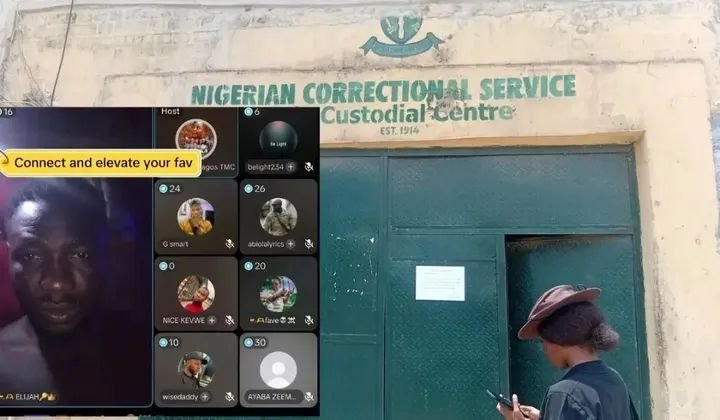
A convicted murderer on death row allegedly operated multiple TikTok accounts, hosted livestreams, received monetary gifts and ran business activities from inside the Ibara Maximum Security Custodial Centre in Abeokuta, exposing serious security concerns within Nigeria’s prison system.
Elijah Oyebode, who was sentenced to death by hanging in 2019 for the murder of Osun State University student Rofiat Adebisi, maintained an active online presence despite being incarcerated in a maximum-security facility.
Court records cited by the publication show Oyebode was convicted over the ritual killing of the final-year student in 2019 after the court rejected his varying accounts of the crime and found him guilty of murder.
The investigation found that Oyebode used at least two TikTok accounts, including @ayola.oluwafu, where he reportedly hosted livestreams, interacted with thousands of viewers and received virtual gifts that generated income. One account reportedly reached TikTok’s Level 20 gifting status, indicating significant financial transactions.
The report also alleged that Oyebode impersonated a Nigerian TikTok host and activist, Omolola Awoyele, using her name and photograph before changing the account after she confronted him.
Awoyele disclosed that she initially believed Oyebode’s claims of innocence and sought legal assistance for him before obtaining court documents, which changed her understanding of the case.
During one livestream monitored by the newspaper, Oyebode allegedly claimed that many inmates possessed multiple mobile phones and had unrestricted internet access inside the prison.
He further alleged that corrupt correctional officers smuggled phones and drugs into the facility for inmates in exchange for payments. He also claimed some wealthy inmates were escorted outside prison to supervise private business projects before returning to custody.
The Nigerian Correctional Service (NCS) acknowledged that contraband remains a challenge and admitted that “bad eggs” among personnel could compromise security.
NCS spokesperson Jane Osuji said the service operates a zero-tolerance policy against staff misconduct, adding that more than 1,400 officers have faced disciplinary action, including dismissals, suspensions and demotions. She also warned that inmates’ unrestricted online access could pose serious national security risks.
Cybersecurity expert Professor Tunde Olabiyisi suggested deploying mobile signal jammers within prison facilities to disable unauthorised devices while allowing approved communication systems to function.
The investigation also questioned TikTok’s moderation systems, noting that Oyebode’s accounts remained active for months despite repeated livestreams and monetisation. Following inquiries from The Nigerian Tribune, TikTok reportedly began reviewing the accounts, although the investigation said the primary account remained active weeks after a broader enforcement sweep.
The findings have renewed concerns over corruption, prison security and the ability of convicted criminals to continue conducting digital activities from behind bars.