




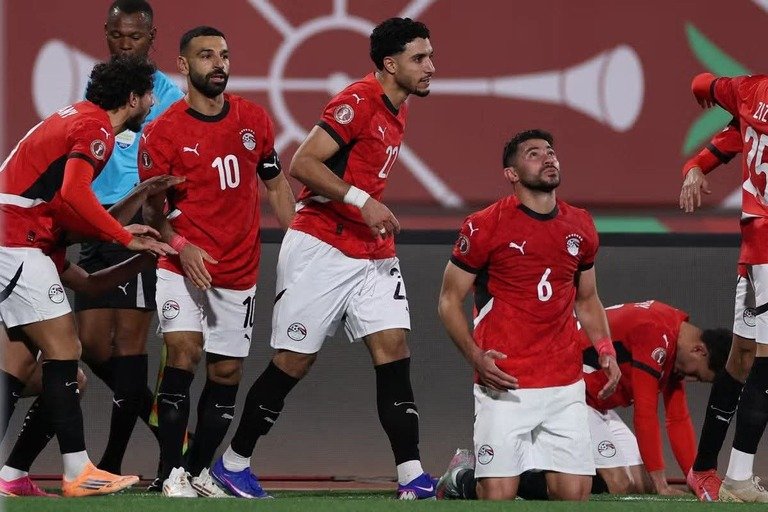
Egypt was on the brink of their most significant World Cup achievement with 12 minutes left in regular time as the Pharaohs were ahead of Argentina, the current world champions, 2-0 at Atlanta Stadium.
A quarter-final position – their first – was within reach for the football-loving African nation.
It quickly went awry.
When Cristian Romero cut the gap in the 79th minute, Egypt had to hold firm and see it through. However, they appeared terrified when Argentina’s skipper Lionel Messi – who else? – equalised at 2-2 just four minutes later.
Enzo Fernandez capped off an incredible comeback for Argentina with a header in the second minute of added time, thrilling their supporters.
Egypt was in dire straits and extremely angry after the video assistant referee (VAR) disallowed a second goal by Mostafa Zico due to a foul, as midfielder Marwan Attia was called for barely stepping on Lisandro Martinez at the beginning of the play while they were ahead 1-0.
They firmly insisted that Mohamed Salah was fouled in Argentina’s penalty box, just moments before the current champions surged ahead for the victory.
As French referee Francois Letexier blew the final whistle, numerous players from Egypt collapsed to the ground in shock at the outcome.
In a tense interview following the match, Egypt coach Hossam Hassan claimed his team had been “mistreated” and had “experienced injustice”. Fifa has been contacted by BBC Sport for a response.
“There have been a lot of things to be questioned on and off the pitch,” added Hassan.
“Negative aspects all around. It’s just about credibility, a lack of credibility with how things unfolded.
“Perhaps they wanted to keep the world champion in the competition. Perhaps they wanted Messi to stay in the running.
“The world champion received support at every level. There seem to be pressures from the Argentinian side on this outcome.”
This game featured it all – a saved penalty, a goal that was ruled out, a red card, and an exciting comeback.
BBC Sport analyses a match that will be remembered in World Cup history for showcasing a team that, despite being two goals behind late in the game, managed to secure victory without requiring extra time.
“We need to appear in a better way at the World Cup,” Egypt head coach Hassan had said on the eve of the tournament as he addressed his nation’s poor World Cup record.
Egypt entered North America as World Cup underperformers, having not succeeded in their prior three appearances on the international stage, failing to secure victory in any of their seven games.
After achieving their initial victory by defeating New Zealand in a group match in Vancouver on June 22, the Pharaohs went ahead of the three-time world champions Argentina when Yasser Ibrahim scored with a header in the 15th minute.
In a game full of incidents, Egypt’s goalkeeper Mostafa Shobeir made an incredible save to deny Messi’s penalty, with the Pharaohs believing they had netted another goal that was eventually ruled out.
Fernandez’s late goal heightened frustration as Egypt demanded a penalty following a foul on Salah, leading to a red card for a member of the Pharaohs’ bench staff.
Furthermore, Egypt’s head coach received a yellow card for dissent following Argentina’s winning goal when he crossed his arms, which is the Fifa-supported gesture for players and coaches to signal the referee regarding a racist occurrence.
The Pharaohs’ coach did not mention his gesture following the match.
“We haven’t seen respect or fair play,” he said.
“A penalty [for us] was ruled out; it was not even checked by the VAR, and our second goal was remarkably, for whatever reason, disallowed.
“We have all seen the shirt pulled back [by Alexis Mac Allister] and not even a VAR check. Life is unfair; normal life is unfair, so why is there no fairness in sports?”
Egypt forward Zico added: “The referee was really unfair. The injustice was clear. There’s been an unfairness right from the start of the match.”