



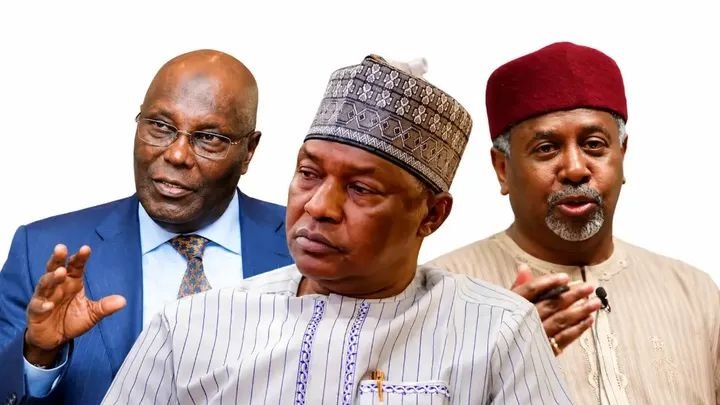
The Economic and Financial Crimes Commission (EFCC) has set up a special team to investigate individuals named in alleged questionable dealings surrounding the long-running Mambilla Power Project.
The investigation centres on Leno Adesanya, promoter of Sunrise Power and Transmission Company Ltd, and follows a recent International Chamber of Commerce (ICC) arbitration ruling that rejected claims brought against Nigeria over the project.
Sources familiar with the matter disclosed that the EFCC team is being supervised by the commission’s Chairman, Olanipekun Olukoyede.
The development comes days after an ICC tribunal in Paris ruled in Nigeria’s favour in the dispute involving Sunrise Power and the Federal Government.
The tribunal rejected Sunrise’s claims, including a $400 million demand linked to a previous settlement agreement. It also ruled that Adesanya was bound by the arbitration agreement and ordered Sunrise and Adesanya to reimburse Nigeria about $11.8 million in legal fees and expenses.
Atiku, Malami, Dasuki named
The ICC tribunal’s award referenced several Nigerian politicians and former public officials who had dealings with Adesanya in connection with the Mambilla project.
They include former Vice President Atiku Abubakar; his former wife, Jennifer Douglas; former Attorney-General of the Federation, Abubakar Malami; former Minister of Power and Steel, Olu Agunloye; former National Security Adviser, Sambo Dasuki; his son, Abubakar Dasuki; former Solicitor-General of the Federation, Abdullahi Yola; and former Permanent Secretary in the Ministry of Power, Dere Awosika.
The tribunal raised concerns about a $500,000 payment made by Adesanya in January 2003 from an account linked to his offshore company to a US bank account belonging to Douglas.
The payment came months before Sunrise was awarded a contract for the Mambilla project.
Adesanya told the tribunal that the payment was connected to a foreign-exchange transaction carried out for Atiku through his bureau de change business. However, the tribunal said the explanation was not supported by documentary evidence, including records showing the underlying naira payment, exchange rate, instructions or commercial purpose.
The tribunal said the circumstances surrounding the payment raised “significant red flags” and considered Adesanya’s relationship with Atiku, his efforts to secure the project and the timing of the transaction in assessing the matter.
Atiku has denied being indicted by the tribunal and said he was not responsible for awarding the Mambilla contract. His spokesman, Phrank Shaibu, also argued that the commercial arbitration did not amount to a criminal verdict against the former vice president.
Malami, Agunloye and Dasuki
The tribunal also examined dealings involving Malami and Adesanya.
In its award, the tribunal criticised Malami’s handling of the settlement dispute and examined what it described as an inappropriate relationship between the former AGF and Adesanya. It was reported that the tribunal concluded that a corrupt deal had tainted the settlement arrangement.
Agunloye, who was Minister of Power and Steel when the original Mambilla contract was awarded in 2003, has separately been charged in connection with the project.
The tribunal also questioned a $1.74 million payment made by Adesanya to Abubakar Dasuki in December 2014.
Adesanya reportedly described the money as a loan, but the tribunal said the explanation was not adequately substantiated, citing the absence of a loan agreement and inconsistencies in the evidence.
EFCC may invite Atiku, others
According to Premium Times sources, the EFCC may invite Atiku and Douglas for questioning as the investigation progresses.
Adesanya is also expected to come under scrutiny as the central figure in the transactions examined by the tribunal.
The development follows the ICC ruling of September 17, which rejected Sunrise’s claims over the Mambilla project and ordered the company and Adesanya to reimburse Nigeria for legal costs.
An EFCC official reportedly confirmed the development to Premium Times, while the commission’s spokesperson, Dele Oyewale, said he was aware of it but had not been fully briefed on the details.
The EFCC investigation is separate from the ICC arbitration proceedings. The tribunal’s findings concerning payments and conduct are not, by themselves, criminal convictions, and any criminal liability would have to be established through the appropriate legal process.