




Nigeria has stepped up nationwide monitoring and emergency readiness strategies against Ebola Virus Disease due to the rising outbreaks in Uganda and the Democratic Republic of Congo, the Nigeria Centre for Disease Control and Prevention reported on Saturday.
In a new public health alert released by Jide Idris, the Director-General of the NCDC, on Sunday, the organization stated that Nigeria has not confirmed any cases related to the current regional outbreak but cautioned that the risk of importation is elevated due to international travel, population movements, and the extent of transmission in impacted East African nations.
The agency stated that its recent risk evaluation pinpointed border communities, significant transport hubs, and international entry points as high-risk zones needing increased surveillance.
“This assessment estimated the risk of Ebola importation into Nigeria as high due to the ongoing transmission in the DRC and Uganda, international travel and population movement, uncertainty regarding the full magnitude of the outbreak, and the potential for delayed recognition because symptoms may overlap with endemic diseases such as malaria and Lassa fever,” the advisory stated.
The NCDC announced that the National Emergency Operations Centre is on alert status, and the National Incident Management System has been initiated with defined reporting and escalation processes to manage response efforts across the country.
The agency stated that epidemiologists and Rapid Response Teams are on standby for potential deployment to any state if necessary.
The public health agency announced it is enhancing collaboration with state ministries of health, port health services, and other pertinent government bodies as part of its initiatives to bolster national preparedness.
The agency additionally mentioned that epidemic intelligence and surveillance efforts have been increased nationwide, including improved observation of unusual health events, alerts, and rumors to guarantee the early identification of potential cases.
“Enhanced surveillance activities are also ongoing at points of entry and border communities,” it added.
In an effort to prevent infections, the NCDC announced that Ebola preparedness resources and checklists have been provided to healthcare facilities across the country, and refresher training for health workers on triage systems, infection prevention procedures, and early detection of suspected viral hemorrhagic fever cases is currently in progress.
The agency stated that states have been recommended to establish isolation and treatment facilities, evaluate bed availability, enhance logistical systems, and secure emergency medical supplies.
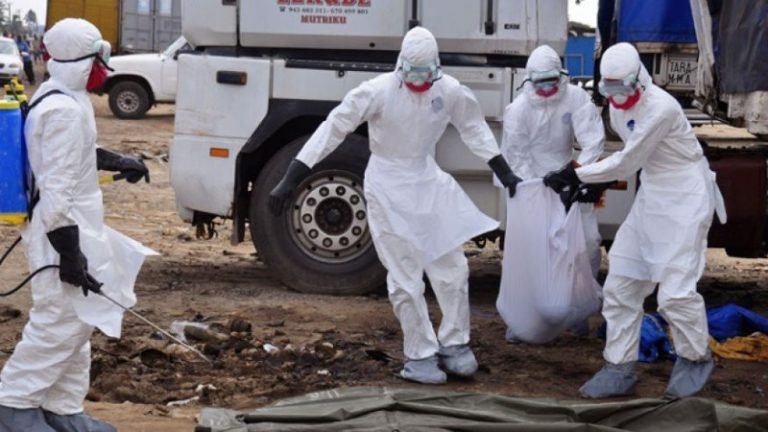
It mentioned that preparations are being made to stock essential response items like personal protective gear, body bags, lab supplies, and various emergency resources in key areas throughout the nation.
Regarding laboratory readiness, the NCDC reported that Nigeria currently has testing capabilities in states with international entry ports and throughout the national public health laboratory network, noting that there is surge capacity for Ebola testing if required.
The agency cautioned about misinformation, stating that it has increased public awareness initiatives and created “Ebola Myths and Facts” resources to combat misleading assertions spreading online.
Ebola virus disease is a serious and frequently deadly condition spread via direct contact with infected blood, body fluids, secretions, or contaminated items.
Signs consist of fever, fatigue, headache, and muscle soreness. Health specialists state that the illness is not transmitted via the air.
Nigeria’s recent warning brings back memories of the nation’s effective management of Ebola in 2014 when an infected Liberian-American diplomat, Patrick Sawyer, came to Lagos from Liberia.
The outbreak resulted in 20 confirmed cases and eight fatalities before health officials managed to halt additional transmission through intense contact tracing, isolation strategies, and public awareness efforts.
Nigeria’s actions during that period received significant acclaim from the World Health Organization and have since been viewed as one of Africa’s most successful epidemic control initiatives.
The ongoing regional issue arises from renewed Ebola outbreaks in areas of Central and East Africa, especially in Uganda and the DRC, where health officials are still tackling persistent viral hemorrhagic fever outbreaks amidst cross-border movement and vulnerable health systems.
Public health authorities have consistently cautioned that heightened international travel and open borders still present major threats to nations throughout Africa, including Nigeria, even with enhanced disease monitoring systems set up after the COVID-19 pandemic and earlier incidents of Ebola, monkeypox, and Lassa fever.