




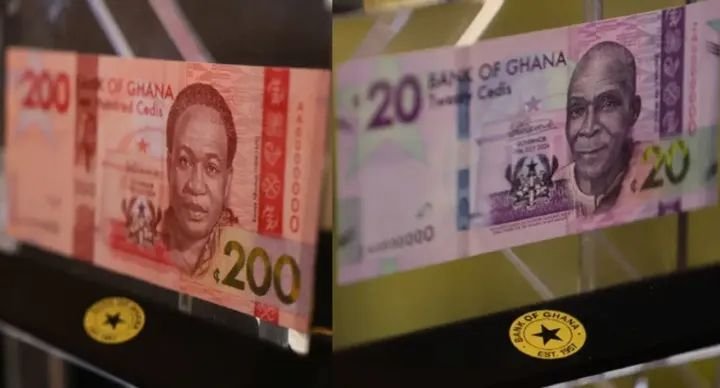
Ghana has unveiled redesigned banknotes featuring enhanced security features, improved durability and smaller sizes as the country steps up efforts to combat counterfeiting and modernise its currency.
President John Dramani Mahama launched the new Ghana Cedi Heritage Series on Thursday, November 12, 2026, at the Bank of Ghana in Accra.
The redesigned notes are made from reinforced cotton paper to withstand frequent handling and the country’s tropical climate, potentially extending their lifespan and reducing the cost of replacing damaged currency.
According to the Bank of Ghana, the new notes also incorporate improved security features to make counterfeiting more difficult and help the public identify genuine banknotes.
The smaller sizes are intended to make the currency easier to handle, carry and use in everyday transactions.
Improved tactile markings have also been introduced to help people with visual impairments distinguish between denominations.
New Ghana banknotes to enter circulation December 1
The new Heritage Series will enter circulation on December 1, 2026, alongside existing banknotes, which will remain legal tender during the transition.
Bank of Ghana Governor, Dr Johnson Asiama, said the redesigned currency would retain eight denominations, ranging from GH¢1 to GH¢200.
The series also brings back the GH¢2 banknote.
The redesign does not amount to a redenomination or change the value of Ghana’s currency.
Beyond improving security and durability, the new banknotes feature national heroes, historic landmarks and cultural symbols celebrating Ghana’s history and identity.
Among the personalities featured are former United Nations Secretary-General Kofi Annan and Ghana’s first President, Kwame Nkrumah.
The designs also incorporate Adinkra symbols, reflecting the country’s cultural heritage.
Ghana strengthens protection against currency fraud
The Bank of Ghana said the redesign became necessary because some of the country’s core banknote designs had remained in circulation for more than two decades, while counterfeiting technology and international security standards had evolved.
The central bank is also preparing legislation to replace the 1964 Currency Act, with stronger provisions against counterfeiting and the deliberate destruction or misuse of banknotes.
Despite the growing adoption of digital payments, Asiama maintained that physical cash remained essential to the economy.
He noted that cyberattacks, technical failures and natural disasters could disrupt electronic payment networks, making physical currency an important alternative for households and businesses.
The introduction of the Heritage Series forms part of Ghana’s broader efforts to strengthen confidence in the cedi while preserving its national identity.