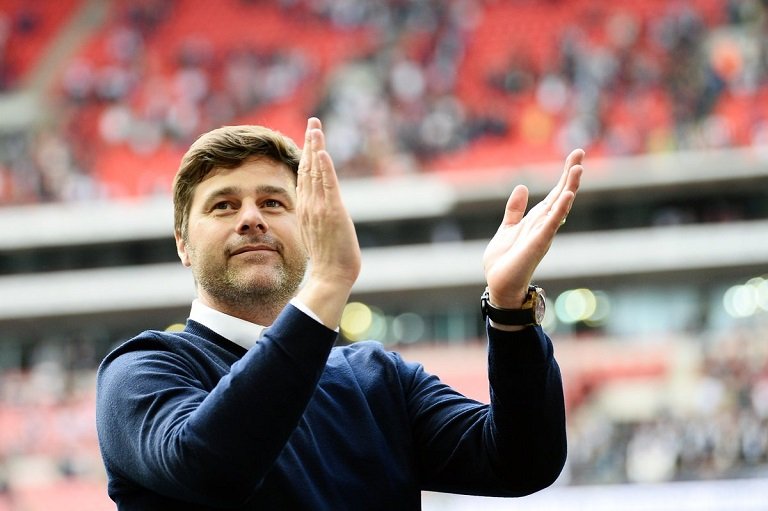




Mauricio Pochettino’s admiration for Sir Alex Ferguson could prove significant as the Argentine begins his new chapter as Manchester United manager, with his tactical philosophy offering a potential solution to the club’s long-standing identity crisis.
Pochettino, who was named United manager on Friday, has repeatedly expressed his admiration for the legendary former Old Trafford boss, describing him as his greatest managerial inspiration.
In a 2023 interview with Sky Sports, while managing Chelsea, Pochettino was asked which three Premier League managers he would have loved to play under.
His response was emphatic.
“Sir Alex Ferguson, Sir Alex Ferguson, Sir Alex Ferguson,” he replied.
The Argentine had previously shared lunch with Ferguson in 2017 when he was Tottenham Hotspur manager.
Reflecting on the experience, Pochettino said: “When I was young, when I started my career as a manager, he was always my inspiration, my reference.
“And when you can share two hours with a person who was the greatest manager in the history of football, you can only enjoy.”
Pochettino Could Bridge Man Utd’s Identity Gap
Since Ferguson’s departure in 2013, Manchester United have struggled to establish a consistent managerial identity.
The debate has often centred on whether the club should prioritise winning regardless of playing style or preserve the attacking traditions and cultural identity that defined its most successful years.
United’s managerial appointments have alternated between coaches with established tactical philosophies and former players associated with the Ferguson era.
However, Pochettino could offer a middle ground, combining an attacking philosophy with the intensity and organisation traditionally associated with United’s most successful teams.
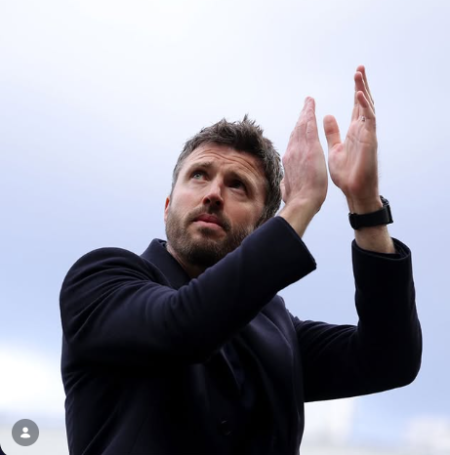
Michael Carrick’s side enjoyed an impressive run towards the end of last season, producing results that no other Premier League team matched during that period.
Their success was largely built around quick transitions, direct attacking football and making the most of their opponents’ mistakes.
United were particularly effective when they had less than 50 per cent possession, losing just once in 13 such matches and recording a 62 per cent win rate.
However, their win rate dropped to 36 per cent when they enjoyed the majority of possession.
The approach suited United’s direct attackers while offering additional protection to their defenders.
Casemiro’s effectiveness from set-pieces also gave the team another reliable route to goal, particularly against opponents who defended deep.
Once United took the lead, opposition teams were forced to push forward, creating spaces for Carrick’s players to exploit through quick counter-attacks.
Nevertheless, the bigger challenge was developing a team capable of controlling possession and consistently breaking down opponents who refused to attack.
Why Pochettino’s Tactics Could Work
Carrick had envisioned a more technically accomplished United side, built around slick passing, intelligent movement and quick combinations in possession.
His ambition included developing a midfield capable of attracting opposition pressure before finding forwards in dangerous positions.
However, that transformation failed to materialise consistently, exposing a challenge that had also affected previous managers Ole Gunnar Solskjær and Erik ten Hag.
Pochettino’s footballing philosophy could provide a different approach.
The Argentine has previously described his ideal teams as needing “to be protagonists, always press high, work hard and be dynamic”.
He also considers himself a disciple of former Argentina manager Marcelo Bielsa, whose influence is evident in his preference for aggressive pressing, vertical attacking football and energetic movement.
Liverpool manager Andoni Iraola offers a useful Premier League comparison, particularly in his emphasis on proactive football and Bielsa-inspired principles.
Such an approach could appeal to United supporters accustomed to watching their team attack with pace and intensity.
What Pochettino’s World Cup Tactics Revealed
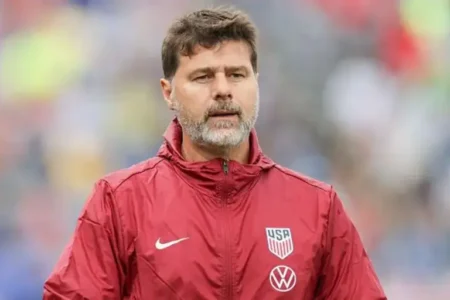
Pochettino’s work with the United States national team during the 2026 World Cup provided a further indication of his tactical evolution.
Rather than relying on a rigid positional structure, his team allowed several midfielders greater freedom to move into spaces between opposition defensive lines.
This created problems for teams defending zonally, as United States players could exploit gaps and receive the ball with more time and space.
Their combinations in tight areas also helped draw opponents towards the ball, creating opportunities for intelligent off-ball movement and stretching defensive structures.
Once those spaces opened, Pochettino’s players looked to release their forwards with early through-balls.
The pace of striker Folarin Balogun proved particularly useful in turning those opportunities into goals.
The combination of fluid midfield movement, short passing combinations and direct forward passes bears similarities to the football Carrick had hoped to develop at Manchester United.
Pochettino has previously explained his philosophy, saying: “My philosophy is to give a freer style with a good organisation.”
That balance between individual freedom and tactical discipline could be particularly important at Old Trafford.
Fitness and Organisation Will Be Crucial
One of Pochettino’s immediate priorities will be establishing a well-organised team capable of pressing opponents consistently.
His Tottenham side enjoyed considerable success through coordinated pressing, physical intensity and collective movement.
However, those qualities have become increasingly common in modern football, meaning the new United manager will need to develop additional tactical solutions.
Brighton’s performances under Fabian Hurzeler provide evidence that high-intensity football can still deliver results in the Premier League.
With Brighton occupying second place after 10 matches and recording the league’s fourth-highest average possession, their approach demonstrates that pressing intensity and possession-based football can coexist.
Pochettino will hope to bring a similar balance to Manchester United.
Palmer’s Success Offers Another Clue
Another important aspect of Pochettino’s management is his willingness to give attacking players the freedom to express themselves.
Rather than relying entirely on predetermined attacking patterns, he encourages individuals to exploit their strengths and make decisions in dangerous areas.
Cole Palmer experienced this approach during his time at Chelsea, enjoying his most productive Premier League season under the Argentine.
Reflecting on Pochettino’s influence, Palmer said: “He [gave] me the confidence and licence to go where I wanted on the pitch, where I [could] use my strengths.”
Manchester United already possess talented attacking players, but Pochettino will need to create an environment where they can consistently express themselves.
His ability to unlock their individual qualities could prove decisive.
Ultimately, Pochettino’s admiration for Ferguson, tactical principles and managerial experience offer Manchester United an opportunity to combine their traditional attacking identity with modern footballing ideas.
However, his biggest challenge may still be finding ways to break down stubborn defensive teams when United are expected to dominate possession.
Failure to solve that problem could leave the club facing another familiar cycle of managerial disappointment.