

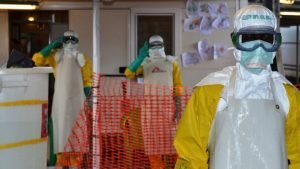



The diplomat diagnosed with the Bundibugyo strain of Ebola in the Federal Capital Territory (FCT), Abuja, has developed multi-organ failure, the Nigeria Centre for Disease Control and Prevention (NCDC) has said.
The patient’s condition was disclosed on Wednesday by Olajumoke Babatunde, NCDC’s director of public health laboratory services, during an emergency incident management meeting in Abuja.
Babatunde confirmed that laboratory tests identified the Bundibugyo strain, which is linked to a major Ebola outbreak in the Democratic Republic of the Congo (DRC).
“We did three levels of tests, but all were molecular. The strain was Bundibugyo,” she said.
Another official disclosed that the patient is a diplomat but did not reveal her nationality. The patient’s condition has reportedly deteriorated into multi-organ failure.
On Tuesday, the Federal Government confirmed Nigeria’s first reported case in the current incident, identifying the patient as a woman who recently arrived from Uganda on an international flight.
According to Ali Pate, the minister of health and social welfare, the woman was admitted to a private hospital in the FCT, where she received treatment for several days before the diagnosis was confirmed.
“She is currently in isolation and receiving medical care,” Pate said.
He added that the ministry and the NCDC were working with the FCT Health Services Secretariat and other relevant authorities to contain the infection and prevent further transmission.
The government also confirmed that contact tracing had commenced, with 44 close contacts identified for monitoring. Those being assessed include healthcare workers, patients, caregivers and travel contacts who may have been exposed to the virus.
What Is the Bundibugyo Strain of Ebola?
Bundibugyo virus disease is a rare and severe illness caused by the Bundibugyo virus, a member of the Orthoebolavirus genus. It can cause viral haemorrhagic fever in humans.
The strain was first identified in Uganda in 2007. It spreads through direct contact with the blood or other bodily fluids of infected people, as well as contaminated materials.
Public health authorities are working to identify potential exposures and limit the risk of further transmission following the confirmed case in Nigeria.