

Nigeria and the European Union have revived their push to deepen migration cooperation, including efforts to finalize the long-delayed EU-Nigeria Re-Admission Agreement.
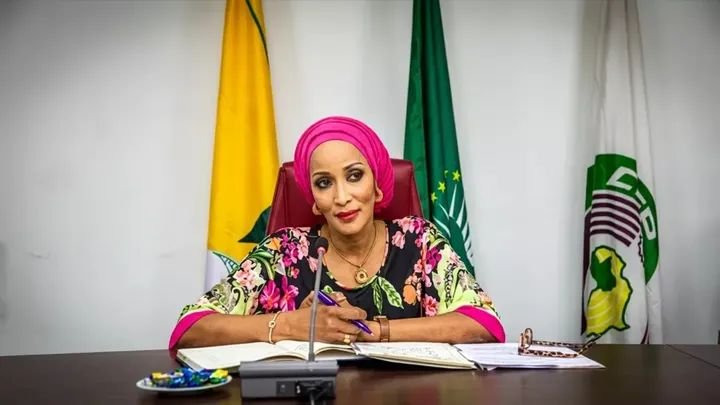
The agreement, which dates back to 2016, took center stage in Monday’s talks in New York between the Minister of Foreign Affairs, Amb Bianca Odumegwu-Ojukwu, and the EU Commissioner for Internal Affairs and Migration, Magnus Brunner.
A statement released and signed on Wednesday in Abuja by Magnus Eze, the Special Assistant on Communication and New Media to the Foreign Affairs Minister, said the meeting took place on the margins of the 81st United Nations General Assembly at the United Nations Headquarters.
The statement noted that Brunner highlighted how vital it was to wrap up the re-admission agreement, saying that completing it would set the stage for wider Nigeria-EU cooperation on migration.
The agreement featured prominently in discussions at the 8th Nigeria-EU Ministerial Dialogue held in March 2026.
“Commissioner Brunner stressed the importance of concluding the Re-Admission Agreement, which was initiated in 2016 and extensively discussed during the 8th Nigeria-EU Ministerial Dialogue in March 2026.
“He noted that its finalization would provide a basis for broader cooperation between Nigeria and the EU on migration,” the statement said.
In response, Odumegwu-Ojukwu stressed that Nigeria wants migration cooperation to include reintegration support for returnees, assistance for infrastructure development, and broader legal pathways for Nigerians pursuing opportunities overseas.
The statement added that Ojukwu “emphasised the importance of creating structured and lawful mobility opportunities, particularly for Nigeria’s large and youthful population, while ensuring that migration cooperation does not undermine the country’s development interests.”
The EU delegation stated that the concerns had been taken into account in the proposed framework and revealed plans for a wider Migration and Security Cooperation Contract.
“The proposed framework would cover strategic dialogue on local talent partnerships, mobility and legal pathways, reintegration of returnees, border management, and support from the European Border and Coast Guard Agency, Frontex.
“The cooperation would also explore a working arrangement for the exchange of information with Europol to strengthen Nigeria’s capacity to combat transnational organized crime,” the statement further said.
Brunner also emphasized the EU’s desire to establish legal pathways via talent partnerships, noting that such agreements could serve both parties by meeting Europe’s skills demands, opening doors for Nigerian professionals, and helping to ease worries about brain drain.
The meeting also explored stronger collaboration to tackle irregular migration, with the EU commissioner emphasizing that headway in this area could open the door to more legal migration opportunities.
Brunner showed willingness to keep the conversation going with the minister during a proposed trip to Abuja in November 2026, with the exact date to be settled by both parties.
This engagement mirrors Nigeria’s push for a balanced migration partnership with the EU—one that tackles irregular migration and returns while broadening legal mobility, reintegration assistance, security collaboration, and prospects for Nigerian youth.