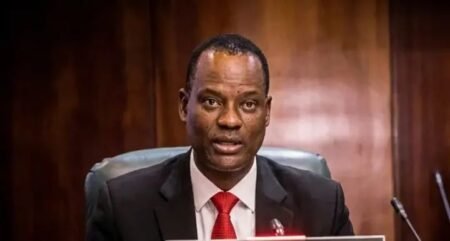



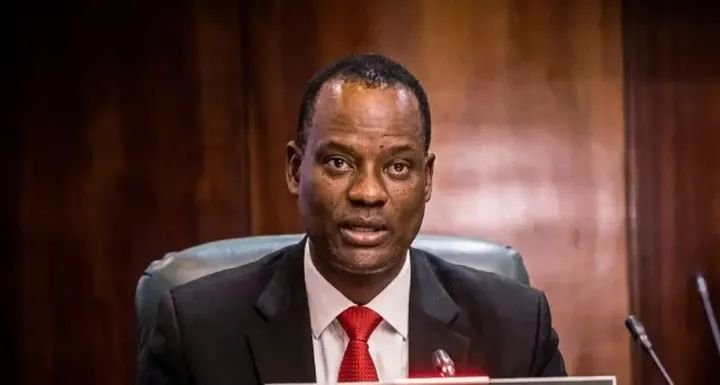
The Minister of Finance and Coordinating Minister of the Economy, Taiwo Oyedele, has rejected calls for the Federal Government to publish details of how it plans to spend funds drawn from its $5bn financing facility with First Abu Dhabi Bank.
Oyedele said the transaction had faced unnecessary scrutiny, stressing that it was approved by the National Assembly and designed to help the government refinance more expensive debt.
He spoke during a media briefing in Abuja.
The Federal Government recently drew about $1.5bn, representing the first tranche of the $5bn Total Return Swap facility arranged with First Abu Dhabi Bank. The transaction has attracted concerns from the International Monetary Fund and Fitch Ratings over transparency and potential sovereign debt risks.
The $5bn facility was approved by the National Assembly on March 31, 2026. The initial drawdown was expected to support the 2026 budget, infrastructure projects and the refinancing of existing debt obligations.
Responding to questions about whether details of the transaction would be made public, Oyedele said the government would account for its spending but questioned why the facility was receiving particular attention.
“We will not publish how we are spending it. We will publish how we spend government money. There’s nothing special about that loan,” he said.
He added: “Nobody has asked us whether we’re going to publish the money we took from the World Bank, whether we publish the one from Eurobond, whether we publish the one from Sukuk. Why is this one special?”
Oyedele also rejected suggestions that the transaction was conducted without due process, noting that it had been presented to the National Assembly.
“The loan was approved not only by FEC, it was taken to National Assembly because what some people are doing is they comparing with other countries where they did it under the table,” he said.
“What else can be more public than what you gave to the National Assembly?”
Government taking facility in phases
The minister said the government had assessed the transaction carefully and was drawing the funds in phases to avoid unnecessary costs.
“We’re assessing it in phases. You don’t want to take all the money at once because if you don’t spend it at once, you incur cost on the extra amount you’ve taken,” he said.
He explained that the arrangement differs from Nigeria’s traditional fixed-rate borrowing because the First Abu Dhabi Bank facility carries a flexible interest rate.
“We’re used to raising bonds on fixed interest rate terms. You see, I can tell you our Eurobond, for example, they were raised when the coupon was double digits. Today, our yield is down to around seven, 7.5 per cent,” Oyedele said.
According to the minister, Nigeria cannot directly benefit from the lower yield on its existing fixed-rate debt.
“This First Abu Dhabi Bank transaction is flexible rates. It means if rates go up, we pay more. If rates come down, we benefit more,” he said.
“There’s nothing that says we must always do one thing. And the all-in rate for this transaction is lower than our existing portfolio.”
Oyedele said the main objective was to refinance more expensive debt and reduce the government’s borrowing costs.
“So the objective is to use it to refinance expensive debt so you can save money,” he said.
IMF, Fitch raise concerns
Under the arrangement, the Federal Government is required to pledge securities worth about 133 per cent of the amount drawn as collateral.
The IMF and Fitch Ratings have raised concerns about the financing structure, including transparency and sovereign debt risks.
The IMF warned that derivative financing structures such as total return swaps can be difficult to track and value in real time, potentially making a country’s financial obligations less visible.
Fitch Ratings also warned that Nigeria’s planned $5bn arrangement could increase sovereign debt risks and reduce transparency in public debt reporting.
Oyedele, however, said the government would soon publish frequently asked questions about the transaction to address concerns.
“In the next few days, you will see on the website both the Ministry of Finance and DMO the frequently asked questions about this particular debt or bond, just so everybody can please themselves,” he said.
He maintained that there was “nothing special” about the facility despite the scrutiny it has attracted.