




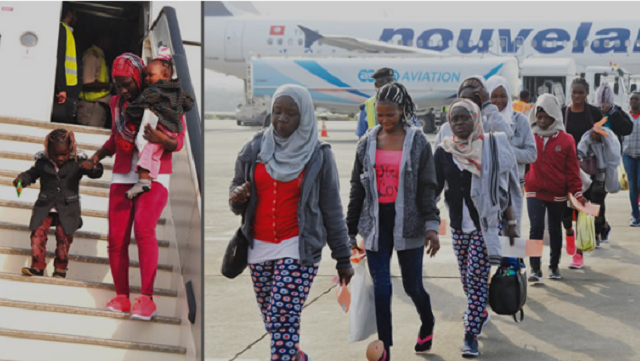
Germany deported at least 137 Nigerian citizens in five documented chartered operations between February and June 2026.
The documented arrivals included 27 Nigerians deported in February, 37 deported directly by Germany as part of a 50-person joint European Union operation in March, and 24, 23, and 26 Nigerians deported in April, May, and June, respectively, according to figures in reports monitored by the DERS Team and Refugees4refugees.org.
The numbers show a rise in the use of chartered flights to transport Nigerians back from Germany and other European nations, with numerous operations requiring cooperation among European states.
On February 18, 2026, 27 Nigerians arrived at Lagos Cargo Airport after being deported from Germany.
World2fly operated the flight, which left Stuttgart and landed in Lagos just before 2 p.m., according to Refugees4refugees.org.
According to the article, Germany was primarily responsible for enforcing the operation, though one person, classified as very ill and mentally unfit, was transferred from Slovakia to join the 26 persons deported from Germany.
It also identified Baden-Württemberg as a prominent participant in the operation, noting that Stuttgart hosted both the December 2025 and February 2026 deportation operations to Nigeria.
The study also claimed that, while some of those deported had major health issues, others had lived and worked in Germany for several years.
It mentioned the story of a single mother and her three children, who were deported from Stuttgart’s Sindelfingen area despite allegedly possessing residency documents.
According to the article, the family returned to Germany following a volunteer’s intervention and confirmation from local foreign officials that the deportation was performed in error.
Furthermore, the February deportation coincided with Nigeria’s participation in the Voluntary National Review of the Global Compact for Migration, which takes place ahead of the 2026 International Migration Review Forum in New York.
The DERS team stated that Nigerian government agencies did not send officials to meet the deportees at the airport and that the returning Nigerians were then carried away without proper help.
On March 10, another 50 persons were deported to Nigeria as part of a combined EU operation led by Germany, Spain, Austria, and Belgium.
According to the available data, Germany was personally responsible for 37 of the deportations.
The operation was described as the largest single expulsion of Nigerians in the three years covered in the report.
According to the data provided, an additional 24 Nigerians, including women and a minor, were deported on April 9 aboard a chartered flight from Frankfurt organized by Frontex and German authorities.
Another group of 23 deportees was returned to Nigeria in May 2026, and 26 Nigerians arrived in Lagos on June 17 as part of a routine chartered deportation aircraft.
The five reported batches totaled 137 Nigerians returning to the country between February and June 2026.
The figures demonstrate the persistent use of organized charter flights to enforce migration decisions affecting Nigerians in Europe.
However, migration rights campaigners have maintained that deportation policies must However, migration rights campaigners argue that effective safeguards for vulnerable persons and proper procedures to prevent unjust removal must support deportation policies. by effective safeguards for vulnerable persons and proper procedures to prevent unjust removal.
While migration is as old as time, known fundamental causes of irregular movement include conflict, exploitation, climate-related constraints, and economic injustice.
Migration refers to the permanent or temporary movement of individuals from one location to another, changing their residence. It can occur within a country or beyond borders, influencing populations, cultures, and labor markets.