



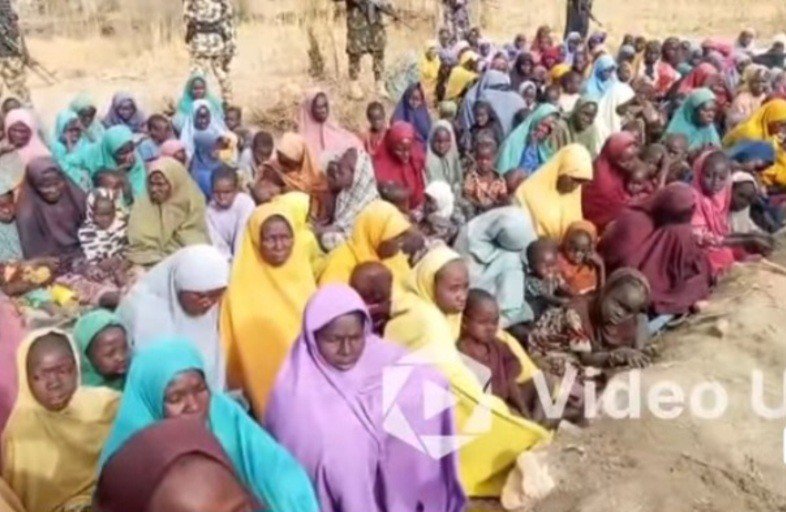
The 72-hour ultimatum issued by Boko Haram to the Nigerian government over 416 abducted residents in Borno State has expired without any official response, as uncertainty deepens over the fate of hundreds still in captivity.
Twelve victims abducted from Ngoshe community in Gwoza Local Government Area have managed to escape, offering a rare glimmer of hope. However, 404 others remain unaccounted for, with fears growing over their safety.
The insurgents had demanded a N5 billion ransom, warning that failure to comply would result in the captives being permanently lost. They also threatened to scatter the victims across multiple locations if security forces attempted a rescue.
A local source said the escape occurred during a military offensive. According to one of the freed victims, troops launched operations that forced the insurgents to flee, abandoning some captives while taking others along.
Meanwhile, violence continues to escalate in the region. At least 18 farmers and firewood collectors were killed in a fresh ambush on the outskirts of Gwoza. The attackers reportedly opened fire on civilians working in their fields ahead of the rainy season.
Senator Mohammed Ali Ndume confirmed the killings, describing the attack as shocking and devastating. Local officials warned that more victims could still be missing.
The Borno South Youth Alliance also confirmed the escape of the 12 victims—10 women and two men—who are now safe in a nearby town. However, the group stressed that most abductees remain in captivity following the March 4 attack on Ngoshe and a nearby military base.
In a related development, troops under Operation Hadin Kai intensified counter-insurgency operations, killing 24 fighters during an attack in Kukareta. This brings the total number of insurgents killed in recent days to 54, following earlier operations around Lake Chad.
Military authorities said troops recovered a cache of weapons, including rifles, machine guns, rocket launchers and ammunition. Two soldiers were injured, while an armoured vehicle sustained damage.
Amid the worsening crisis, Senator Abdul Ahmed Ningi blamed Nigeria’s persistent insecurity on leadership failures. He called for drastic measures, including temporarily suspending political activities to focus on restoring security.
“We are in a state of anarchy,” he said, warning that political distractions continue to undermine efforts to tackle terrorism.
In Adamawa State, Governor Ahmadu Umaru Fintiri visited communities affected by a separate attack in Hong Local Government Area, where at least nine people were killed. He pledged continued efforts to maintain peace and support displaced residents.
At the federal level, lawmakers in the House of Representatives have urged the government to deploy more security personnel and resources to troubled areas in Kaduna and Borno states. They warned that continued attacks risk triggering a wider humanitarian crisis if urgent action is not taken.