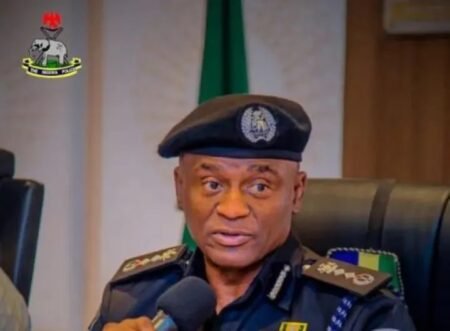





VAT does not know who drinks what. Every time news breaks of Hisbah, Kano State’s moral police, smashing bottles of beer, millions of people mostly in the South erupt in rage. Band A rage, that is. Most of the anger, I believe, is expressed by people who identify as Christians and who see the Muslim North as bad news.
The comment sections, especially on Facebook, burn hottest. The question that comes up again and again is: why should states that ban the consumption of alcohol receive VAT from alcohol? I used to think this was a clever gotcha, but I no longer do. The argument rests on a moral instinct that feels good but collapses under scrutiny whether legal, economic, or grounded in basic fairness.
The claim is simple: if some states ban alcohol and even use religious agencies to seize or destroy it, they should not benefit from VAT generated from alcohol produced elsewhere. It sounds like justice. It is not. It is fiscal confusion. I do not expect this view to be popular with the permanently enraged.
VAT is not a prize awarded to states that host certain industries, but a national consumption tax collected by the Federal Government and shared using an agreed constitutional formula. Once collected, the money loses memory of its origin. It stops being alcohol VAT, gambling VAT, pork VAT, nightclub VAT, or interest-based banking VAT. It is just VAT.
This debate is often framed as entitlement: if you ban alcohol, you should not “chop” alcohol money. I do not think states with Hisbah and other agencies that convulse at the thought of liquor are taking alcohol money. What they receive are statutory allocations from a common pool to which all parts of the federation contribute in different ways. No state earns VAT by permission, none. Every state receives VAT by membership, because Nigeria exists as one fiscal unit.
There is also the small matter of selective memory. If moral purity is the standard, alcohol cannot be the only issue. VAT also comes from gambling, interest-based banking, insurance tied to interest and uncertainty, pork-based food items, nightclubs, adult entertainment, lotteries, and media content that would unsettle religious leaders across faiths. Southern states do not reject VAT because some of it comes from predatory loans, betting apps, pornography-adjacent entertainment, or music and films churches regularly denounce. Moral filtering becomes impossible once the lens widens.
The argument also ignores economic reality. Citizens of states with alcohol restrictions and moral police pay VAT outside their states every day. They travel, trade, bank, rent homes, insure assets, borrow money, and work across Nigeria. VAT is paid at the point of consumption, not belief. A trader buying goods in Onitsha or a traveller spending in Lagos pays VAT regardless of what their home state bans. To deny their states a share is to pretend that the economy stops at state boundaries.
The noise around Hisbah and smashed beer bottles, while emotionally powerful, is a distraction. Destroying alcohol within a state is an internal regulatory choice that has nothing to do with national revenue sharing. A state can ban an activity locally without losing access to federal resources generated nationally.
There is also an uncomfortable undertone that deserves honesty. The Southern position suggests that religious difference should determine fiscal worth that some Nigerians deserve less because their moral codes are stricter or simply different. Once accepted, that idea does not stop at alcohol. It begins to ask who truly belongs—and on what moral terms. That is no fiscal argument.
If we believe Nigeria should abandon pooled revenue and adopt strict derivation, the honest path is to argue for full constitutional restructuring and fiscal federalism across all sectors. It is weak to single out alcohol and gambling as special moral exceptions while benefiting from the same system everywhere else. VAT is not a moral endorsement of how other Nigerians live. It is the price of sharing a country and sharing a country means no group gets to redesign the national revenue framework in the image of its own theology after the money has already been collected.