


An Ebola outbreak in north-eastern Democratic Republic of the Congo has killed 65 people, with at least 246 suspected cases reported in Ituri province, according to the Africa Centres for Disease Control and Prevention.
Health officials said the outbreak has been detected mainly in Mongwalu and Rwampara health zones, with additional suspected cases reported in Bunia awaiting confirmation.
Laboratory analysis by the Institut National de Recherche Biomédicale (INRB) found evidence of the Ebola virus in 13 out of 20 samples tested. Preliminary findings suggest a non-Zaire strain, with full genetic sequencing still ongoing to determine the exact variant.
Four confirmed deaths have been recorded among laboratory-confirmed cases, while authorities continue to monitor wider transmission risks across affected communities.
Africa CDC raised concerns over the outbreak’s spread, citing high population movement, mining-related travel in Mongwalu, insecurity in affected areas, and gaps in infection prevention and control measures. The agency also warned that proximity to Uganda and South Sudan increases cross-border transmission risks.
An emergency coordination meeting has been convened involving health authorities from the Democratic Republic of the Congo, Uganda and South Sudan, alongside partners including the World Health Organization, UNICEF, and the Centers for Disease Control and Prevention.
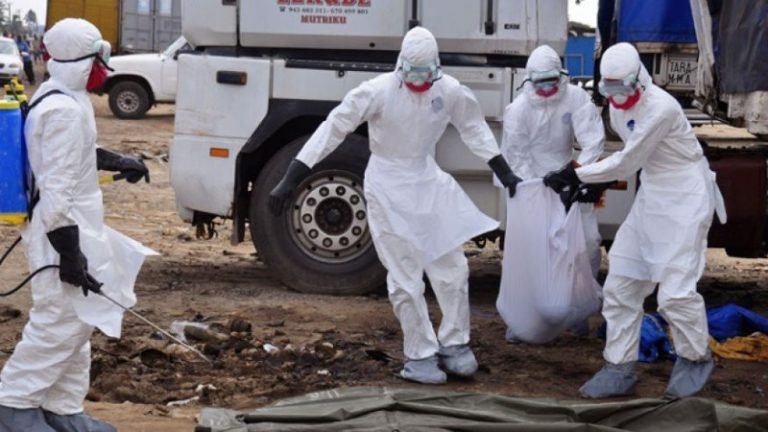
The meeting is focusing on surveillance, laboratory support, infection control, safe burials, and emergency coordination.
Africa CDC said it is deploying additional technical support, including digital surveillance systems, laboratory management, and community engagement initiatives, to strengthen response efforts.
Residents in affected and at-risk areas have been urged to report symptoms early, avoid contact with suspected cases, and comply with health guidance from response teams.
Ebola has previously affected the country. In 2025, an earlier outbreak killed at least 15 people before being declared over.