


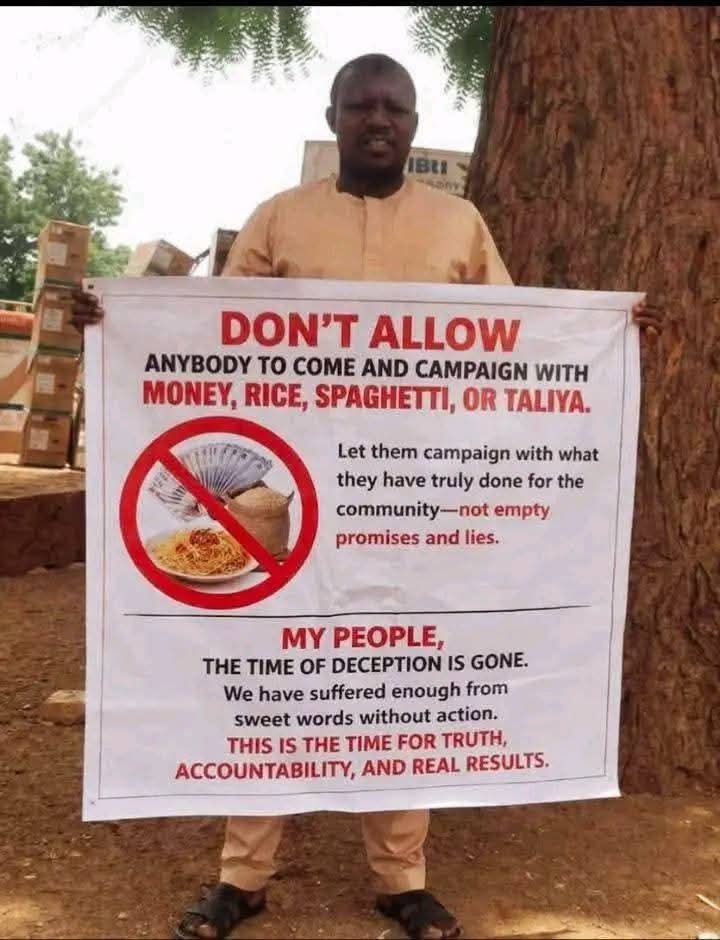
As political campaigns for Nigeria’s 2027 general elections gather momentum, a viral message urging voters to reject campaign gifts such as money, rice, spaghetti and other food items has struck a chord with Nigerians.
The message calls on politicians to campaign with their records rather than material handouts, urging voters to demand “truth, accountability and real results” instead of promises and speeches.
“Don’t allow anybody to come and campaign with money, rice, spaghetti, or taliya,” the message reads. “Let them campaign with what they have truly done for the community — not empty promises and lies.”
The message comes as presidential and National Assembly campaigns officially began on August 19, with economic hardship, insecurity and the impact of President Bola Tinubu’s reforms expected to dominate the 2027 race. The presidential and National Assembly elections are scheduled for January 16, 2027, according to the Independent National Electoral Commission (INEC).
Economy takes centre stage
Nigeria enters the campaign season under significant economic pressure, with the cost of living expected to be one of the biggest issues influencing voters.
“The economy is the biggest issue. That’s the one thing that cuts across different parts of the country, and it continues to affect security and development concerns,” said Afolabi Adekaiyaoja, author of The Bellwether political newsletter.
Tinubu, elected in 2023, has pursued major economic reforms, including the removal of the petrol subsidy and changes to the foreign-exchange system.
The reforms have attracted praise from economists and investors but have also contributed to severe pressure on households as the naira weakened and inflation surged. Headline inflation later eased to 15.4 per cent in July, according to the source report.
Poverty remains another major concern. The World Bank has estimated that more than 60 per cent of Nigerians lived below the national poverty line in 2025, compared with about 40 per cent in 2019.
Security will also feature prominently in the election debate, with banditry, kidnapping, jihadist violence and other conflicts continuing to affect parts of the country.
Ladd Serwat, a senior Africa analyst at the Armed Conflict Location & Event Data project (ACLED), said violence had increased since 2024, driven partly by the spread of armed banditry across northern and central Nigeria and increased conflict in Borno State.
Tinubu faces familiar opponents
The 2027 presidential race is expected to feature several familiar names from the 2023 contest, including Tinubu, Peter Obi and Atiku Abubakar.
Tinubu won the 2023 presidential election with 36.6 per cent of the vote, followed by Atiku with 29 per cent and Obi with 25 per cent. Rabiu Kwankwaso, who secured about six per cent, has since aligned with Obi.
Tinubu also enters the race with a significant political advantage. His All Progressives Congress controls the National Assembly and 31 of Nigeria’s 36 governorships, according to AFP.
However, the opposition faces the challenge of presenting voters with a clear alternative.
“The opposition has been too mired in internal and legal issues to really articulate a difference” between its policies and Tinubu’s, Adekaiyaoja said.
Peace accord signed
The campaign season opened shortly after presidential candidates and political parties signed a National Peace Accord in Abuja.
Peter Obi, Omoyele Sowore and other presidential candidates signed the accord, while Tinubu was represented by Secretary to the Government of the Federation George Akume. The agreement commits political actors to peaceful and issue-based campaigns and rejects violence, hate speech, misinformation and personal attacks.
Obi urged Nigerians to vote against politicians who violate the agreement.
“I don’t have any fear [going into next year’s election] except to say that, please, for the sake of the children of Nigeria, can we have an election where people’s votes will count?” he said.
Tinubu, through Akume, praised the National Peace Committee for sustaining the peace initiative and pointed to the use of technology, including the Bimodal Voter Accreditation System (BVAS), as part of efforts to improve electoral transparency.
Chronicle NG reports that, With the campaigns now under way, the viral voters’ message reflects a wider demand for politicians to move beyond handouts and campaign promises.
For many Nigerians, the central question may be whether candidates can point to tangible achievements and convince voters that their records deserve another four years.