



The United States military used expired Tomahawk cruise missiles during its Christmas Day 2025 strikes against Islamic State militants in Nigeria.
The revelation has raised fresh questions about the reliability of the weapons deployed during the military operation, particularly after reports that some of the missiles failed to detonate.
In the Wall Street Journal (WSJ) report, a US official familiar with the operation disclosed that the missiles fired at militant targets in Nigeria had passed their designated expiration dates.
The disclosure comes amid growing concerns over dwindling American military stockpiles following extensive weapons use in its military campaign against Iran.
US Navy admits using expired missiles
The issue came into focus during the confirmation hearing of Hung Cao, President Donald Trump’s nominee to lead the US Navy.
During Tuesday’s Senate hearing, Cao, a retired Navy captain, acknowledged that the military had used expired munitions in its operations against Iran.
He explained that some weapons classified as expired had undergone a process known as recoding, allowing them to be returned to operational service.
“For some of these munitions, we recoded them. And so we’re able to shoot off the expired munitions,” he told lawmakers.
Cao compared the process to making expired bread usable again.
Although his comments focused on the Iran operation, the WSJ separately reported that the same procedure had been applied to Tomahawk missiles used during the December 25, 2025 strikes in Nigeria.
Why expired missiles were considered usable
Mark Montgomery, a retired rear admiral and expert with the Foundation for Defense of Democracies, explained that the US Navy assigns expiration dates to missiles because some components may develop technical problems as they age.
However, expired missiles can undergo inspections to determine whether they remain suitable for deployment.
According to Montgomery, the military can recode such weapons as acceptable for use after checks establish that their performance has not deteriorated.
The reported use of recoded missiles in Nigeria therefore raises questions about the condition of the weapons deployed during the operation and whether their subsequent failures were related to their age.
Four of 16 missiles reportedly failed to explode
The December 25 operation, conducted in coordination with the Nigerian government, targeted suspected Islamic State-linked militant positions in Sokoto State.
Reports indicated that US forces fired 16 Tomahawk cruise missiles during the operation.
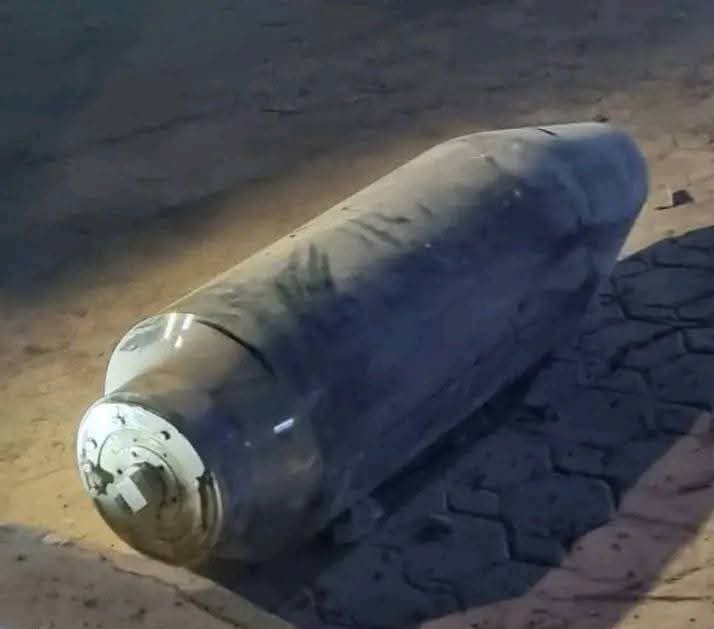
However, an investigation by The Washington Post in January 2026 found that the warheads of at least four missiles appeared not to have exploded.
The unexploded weapons were reportedly discovered in different locations across Nigeria.
One landed in an onion field in Jabo village, Sokoto State, while another struck residential buildings in Offa, Kwara State.
A third was reportedly found in an agricultural field outside Offa, while Nigerian police recovered the fourth in a forest in Zugurma, Niger State.
The incidents raised concerns about civilian safety and the effectiveness of the military operation.
The precise reasons the four missiles failed to detonate were not established in the earlier investigation.
Cost of the military operation
Tomahawk cruise missiles are among the most expensive weapons in the US military arsenal.
Each missile is estimated to cost approximately $2 million, meaning the 16 missiles deployed during the Nigerian operation represented more than $30 million in military hardware.
The four missiles that reportedly failed to explode accounted for 25 per cent of the weapons fired.
The reported use of expired missiles has added another dimension to questions surrounding the operation, although there is no established evidence that their expiration dates or recoding caused the reported failures.