




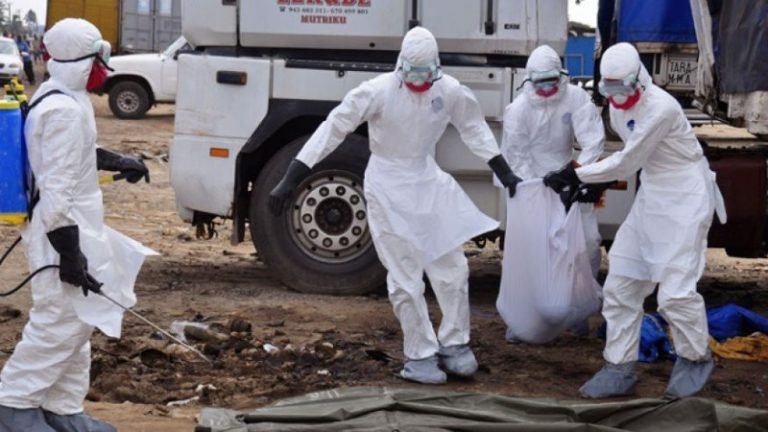
The World Health Organization (WHO) has warned that the ongoing Congo Ebola outbreak may already have spread beyond the borders of the Democratic Republic of the Congo and into other provinces.
Anne Ancia said ongoing investigations were revealing wider transmission of the virus than initially believed.
“The more we are investigating this outbreak, the more we realise that it has already disseminated at least a little bit across border and also in other provinces,” Ancia said, according to the BBC.
She described Ituri Province, the epicentre of the outbreak, as a highly insecure region with significant population movement, complicating efforts to trace infections and contain the disease.
Ancia added that the outbreak had also spread to South Kivu Province, an area already facing a prolonged humanitarian crisis.
The outbreak has killed at least 131 people, while neighbouring Uganda has recorded one death linked to cross-border transmission.
Health officials said more than 513 Ebola cases were suspected in Congo as of Tuesday.
The WHO recently declared the outbreak a public health emergency of international concern after consultations with authorities in DR Congo and Uganda, citing the growing risk of international spread.
However, the agency said the situation has not yet reached the threshold for a pandemic emergency under International Health Regulations.
Tedros Adhanom Ghebreyesus said he was “deeply concerned about the scale and speed of the epidemic”.
A modelling study released on Monday by the MRC Centre for Global Infectious Disease Analysis suggested the true scale of infections may be far higher than official figures show.
The study warned there had been “substantial” under-detection and estimated that more than 1,000 infections could already have occurred.
Researchers added that the outbreak was “larger than currently ascertained” and that its “true magnitude remains uncertain”.
There is currently no approved vaccine for the strain of Ebola driving the latest outbreak, although the WHO said it is assessing whether existing treatments could provide some protection.