




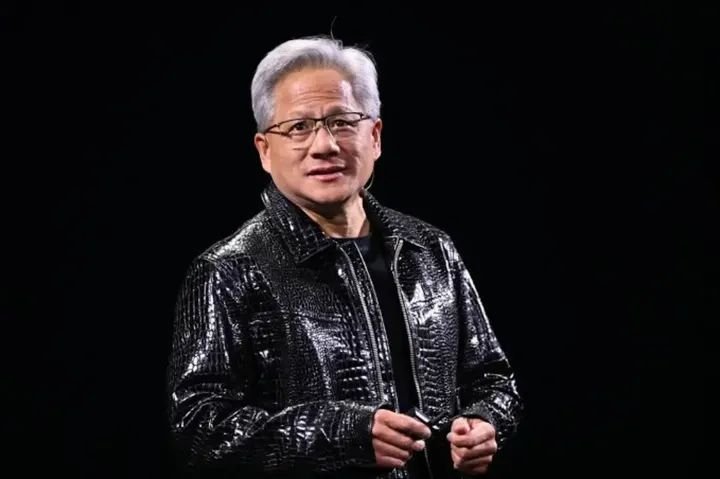
US lawmakers have called Jensen Huang to face their questions in December after the Nvidia ex-CEO quit over extramarital affairs, including one with a suspected Chinese spy.
The scandal has erased nearly half a trillion dollars from Nvidia’s market value, fueling national security concerns and plunging the AI industry into uncharted territory.
“Recent reports raise serious concerns about our national security and the protection of sensitive US technology,” Republican Senator Tim Scott wrote Thursday on X.
Scott stated that he was asking Huang and Commerce Secretary Howard Lutnick to appear in December before the Senate Banking Committee, the panel he leads.
This adds to a request from three House of Representatives committees for a private interview with the 63-year-old Huang, known for his leather jacket, on December 1, under threat of a subpoena.
Huang, married to his wife Lori for more than 40 years, confessed on Sunday to an affair, said to be with Alice Huang, formerly a senior executive at Megaspeed, a data center company based in Singapore. The two share no family ties.
According to reports, US intelligence circulated a memo this spring claiming she was an asset of China’s Ministry of State Security. Beijing has dismissed the allegations.
On Wednesday, The New York Times cited video of Huang being affectionate with Kimberly Powell, Nvidia’s vice president of health care, in reporting a second affair.
As Nvidia’s board looks for a permanent replacement for Huang, who led the company he co-founded for 33 years, Chief Financial Officer Colette Kress will step in as interim CEO.
Nvidia struck it rich when OpenAI’s launch of ChatGPT in 2022 set off a worldwide scramble to build AI, turning its processors originally built for video game graphics into an essential component for training and running the technology.
Nvidia offered no explanation for the departure of Huang, who also stepped down from his board seat.
According to the company, Huang is Nvidia’s biggest individual shareholder, holding roughly a 3.6 percent stake.
Born in Taiwan, the businessman served as an informal close adviser to President Donald Trump on AI and had spent years pressing against restrictions on advanced AI chip sales to China on national security grounds.
Dan Ives of the investment bank Yorkville Ives described it as “a dark day for Nvidia and the US tech industry.”
Still, he said the board had done what was necessary: “rip off the band-aid and take Nvidia into its next chapter without him.”
The board appointed Harvey Jones, a former chief executive of chip design software company Synopsys, as chair, and said it expected the company’s operations and product roadmap “to continue without interruption.”
Interim CEO Kress came to Nvidia in 2013 following nearly 25 years at firms such as Cisco and Microsoft.
Trump, who had supported Huang throughout the scandal, said former Apple boss Tim Cook ought to take over.
“A legend replaces a legend!” Trump said on his Truth Social network, adding that Cook had made Apple “one of the great companies of the world at a fairly short range.”
Singapore announced on Thursday that it had prohibited Alice Huang, a Chinese citizen, from coming back into the country in February because she gave investigators inaccurate details about her position at Megaspeed, although she was not investigated for espionage.
On Sunday, Nvidia’s board launched an inquiry into reports that Huang had been the focus of a “foreign intelligence effort,” while stating that it still had confidence in him.
Asked on Thursday whether Jensen should have resigned, Trump replied that it would depend.
“If the woman was a spy, yes. If she was not a spy, maybe things would be different,” Trump said in an interview.
Yet Trump said he was sure Huang would “end up on his feet” and added, “I spoke to him yesterday. He’s going through hell. What troubles him most is his wife and family.”
At the core of the spy allegations lies the contest between the United States and China for dominance in an industry that many regard as the next industrial revolution.
Prominent US lawmakers, among them Senate Democratic leader Chuck Schumer, demanded answers on Thursday about what the Trump administration knew regarding Huang’s connections to a suspected Chinese spy, just days before Trump is set to travel to China for a summit.
Reports claim that the Commerce Department, under Secretary Howard Lutnick, may have neglected to act on suspicions that Megaspeed was assisting in rerouting restricted Nvidia technology to China.
Singapore’s home ministry stated that during its Megaspeed investigation, it had repeatedly requested information from the US Justice Department and the FBI about a US server supplier but “received limited information or assistance.”
On Thursday, Malaysia also announced that it was investigating a subsidiary of Megaspeed International over the potential diversion of advanced AI chips to other countries.