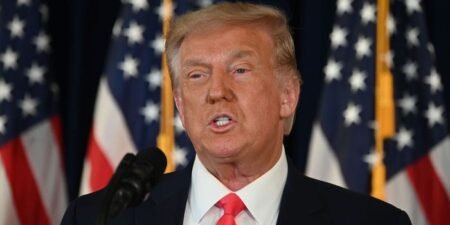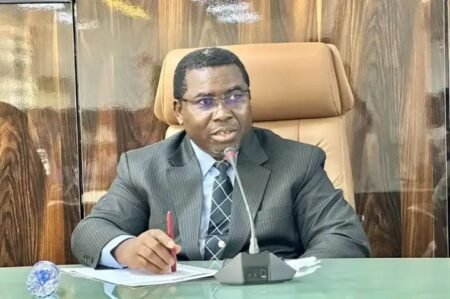




Daniel Bwala, President Bola Tinubu’s Special Adviser on Policy Communication, has stated that it would be diplomatically unacceptable for President Donald Trump and the US to conduct any military operation in Nigeria without the clear approval of the Federal Government.
In an interview with the BBC World Service on Monday, Bwala emphasized that Nigeria is a sovereign nation and that any foreign participation in its internal security challenges must be collaborative and respectful of its territorial integrity.
This happened after Trump designated Nigeria as a “country of particular concern” due to alleged persecution of Christians.
Trump has warned Nigeria that if it fails to address insecurity, it may lose US aid.
He also threatened to use America’s “Department of War” against terrorist groups allegedly attacking Christians in Nigeria.
Bwala responded by saying Trump’s words were mainly misconstrued, and he expressed confidence that the subject will be cleared when Tinubu speaks with his US counterpart in the coming days.
He also praised Trump for approving weaponry shipments to Nigeria during his first administration, calling it a goodwill gesture.
He denied charges of a “Christian genocide” in Nigeria, adding that insecurity affects individuals across religious lines.
“We are grateful to President Donald Trump because during his first term, he approved arms sales that strengthened Nigeria’s fight against insurgency.
“In his second term, he has again shown interest in supporting the fight against Boko Haram, which we welcome—but such efforts must rely on credible intelligence, not isolated reports or social media narratives,” Bwala said.
In response to Trump’s warning about potential US military engagement, Bwala stressed that any such action would only be acceptable if carried out in collaboration with the Nigerian government.
“If it’s a joint operation with Nigeria, that’s acceptable. But diplomatically, it is wrong to invade a sovereign nation without collaboration—especially one that remains a strategic partner in the fight against insecurity.
“Unilateral intervention only happens when there is evidence that a government is complicit in a crisis. That is certainly not the case in Nigeria,” he said.