



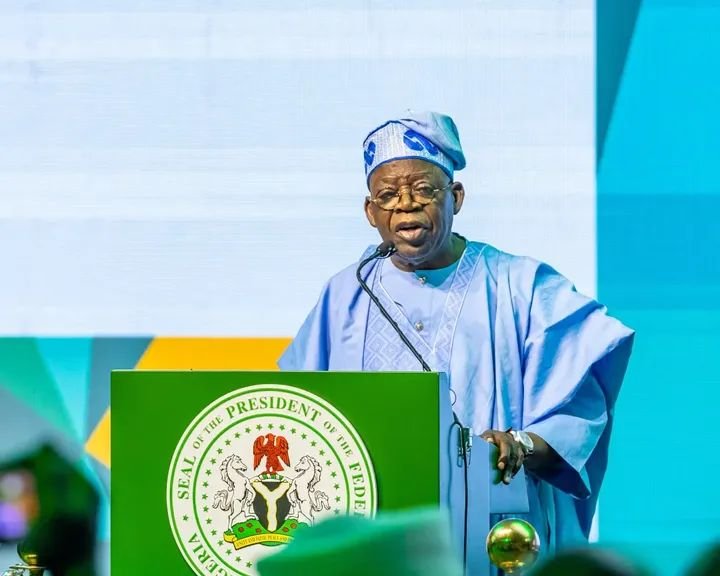
President Bola Tinubu has confirmed that he will attend the 81st session of the United Nations General Assembly (UNGA), scheduled to take place in New York this September.
Nigeria’s Permanent Representative to the United Nations, Jimoh Ibrahim, disclosed this on Wednesday after a meeting with the president at the State House, where he presented the budget for Nigeria’s participation in the global summit.
According to Ibrahim, President Tinubu will take part in several high-level side events focused on energy, education and hospital management during the gathering.
“The president was able to give us his word. Now he will come to UNGA this September,” Ibrahim said.
He explained that the president’s participation would provide an opportunity for Nigeria to present the reforms introduced by the Tinubu administration to the international community.
Tinubu personally attended the 78th session of the UN General Assembly, while Vice-President Kashim Shettima represented Nigeria at the 79th and 80th sessions.
Ibrahim also revealed that the president intends to use the UN platform to push for stronger regional cooperation on border policing across West Africa, describing the region’s porous borders as a significant security concern.
“So, border policing will be fine. These are the kind of things that the UN is established for,” he said.
He added that the Federal Government is already working with the United Nations on a regional border policing initiative and will seek wider international support for the programme during the assembly.
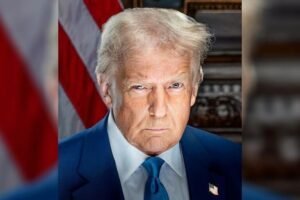
The envoy further disclosed that a meeting between President Tinubu and US President Donald Trump could take place on the sidelines of the event.
According to Ibrahim, Tinubu is expected to sit in the front row during the General Assembly and deliver Nigeria’s address at about 10:45 a.m. New York time.
The 81st session of the UN General Assembly will officially open on September 8, while the annual general debate will run from September 22 to 28, 2026.
The gathering will bring together world leaders, heads of government and ministers to discuss key global issues, including climate change, sustainable development, international peace and security.