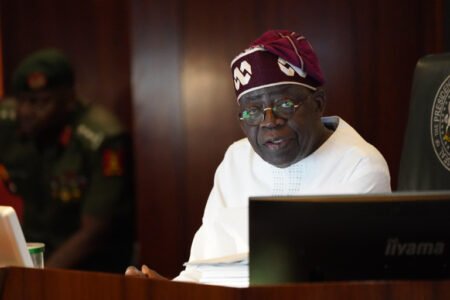



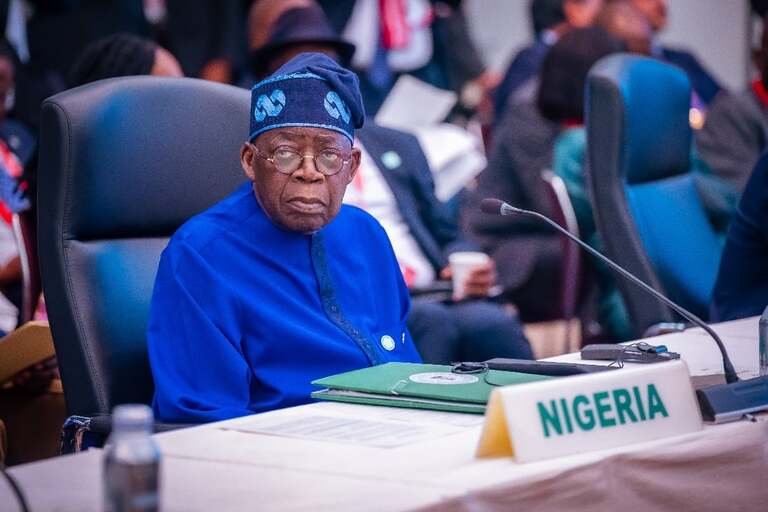
President Bola Tinubu has directed Nigeria’s newly appointed ambassadors and high commissioners to endeavor to enhance the country’s worldwide image.
He also advised them to seek international investment and build strategic alliances.
He delivered the charge on Monday at the start of an introduction session for the envoys at the Ministry of Foreign Affairs in Abuja.
The president, represented by the secretary to the government of the federation, George Akume, stated that their selections demonstrated the administration’s trust in their abilities to advance Nigeria’s interests on the world stage.
A statement by the SGF’s media aide, Yomi Odunuga, read, “Tinubu charged Nigeria’s newly appointed ambassadors and high commissioners to aggressively pursue foreign investments, strengthen strategic partnerships, and reposition the country’s global image in line with evolving diplomatic realities.”
Tinubu stated that the global system was undergoing rapid upheaval due to shifting geopolitical dynamics, economic uncertainty, technological disruptions, climatic concerns, and growing security threats.
According to him, these developments made diplomats’ roles more important than ever, emphasizing the necessity for envoys to use modern, results-oriented approaches to diplomacy.
“The international system is evolving rapidly. We must be prepared to meet these challenges by focusing on how best to protect and promote Nigeria’s national interest,” Tinubu said.
He asked the envoys to combine traditional diplomacy with digital engagement, public diplomacy, and strategic communication, while also highlighting Nigeria’s achievements under his administration’s Renewed Hope Agenda.
The president also stressed the need of conveying Nigeria’s story in a credible and compelling way in order to change global attitudes.
Tinubu also urged the envoys to be proactive and imaginative in building relationships, promoting commerce, and drawing foreign direct investment and technology to the country.
He also stated that the well-being of Nigerians in the diaspora must remain a key focus for all missions.
In what he called a policy shift, the president announced a reorganization of Nigeria’s foreign policy framework, dubbed the 4D Doctrine.
Tinubu stated that the priority had previously been Democracy, Development, Demography, and Diaspora but had now been reconfigured as Demography, Development, Diaspora, and Democracy.
He explained that the adjustment prioritizes Nigerians in foreign policy and seeks to ensure that international engagements provide genuine advantages to citizens.
“This reordering has put the Nigerian people at the center of our foreign policy agenda and is aimed at harnessing outcomes for their maximum benefit,” he said.
Tinubu emphasized the need for professionalism, integrity, and patriotism in diplomatic tasks, stressing that envoys worked as both government representatives and custodians of Nigeria’s international image.
He also emphasized the significance of accountability, pushing missions to be result-oriented and cautious in their resource management, with concrete goals that contribute to national development.
The President urged participants to take full advantage of the induction course, describing it as critical for providing them with the skills needed for effective diplomatic service in a fast-changing world.
He praised the National Assembly for swiftly confirming the nominees and challenged the envoys to justify the trust placed in them.
“You have a special responsibility in helping to reposition Nigeria in global affairs. The world is watching,” Tinubu concluded.
Bianca Odumegwu-Ojukwu, Minister of State for Foreign Affairs, stressed the importance of diplomats in defining Nigeria’s international perception and furthering national interests during the induction course’s inaugural session.
She stated that, while Nigeria faces various issues, including insecurity, resource mobilization, and infrastructural shortfalls, ambassadors must not hide these realities but rather attract constructive world attention to them.
She said, “Locally, our nation faces genuine challenges of insecurity, resource mobilization, and infrastructure development.
“Your task is not to hide these realities but to secure international attention and partnership by amplifying the true picture that, despite these obstacles, this government’s commitment to resolving them remains unparalleled and consistent.”
The minister emphasized operational obstacles, particularly funding restrictions, and urged for caution and innovation in the fulfillment of tasks.
“One challenge you will inevitably encounter at POST is funding. You will find that, whereas your task is vast, the resources placed at your disposal are scarce.
“A lean budget, however, is not a license for failure; it is a call for prudency and ingenuity.
“We therefore look forward to your cooperation to ensure improvement on all fronts because Nigeria has entrusted you with its sovereignty, and sovereignty, even when poorly funded, must be exercised with excellence,” she stated.
The minister also emphasized the necessity of safeguarding the welfare of Nigerians in the diaspora, improving bilateral and multilateral partnerships, and upholding the highest standards.
She also reminded the envoys that diplomatic immunity did not excuse malfeasance and urged them to maintain transparency and discipline and follow established protocols when managing public resources.
She stated that the introduction training would introduce participants to essential frameworks that guide diplomacy, such as international treaties, regional protocols, and Nigeria’s activities on global platforms.