




South Koreans are believed to consume about one million dogs a year as a summertime delicacy, with the greasy red meat — which is invariably boiled for tenderness — believed to increase energy.
The tradition has declined as the nation increasingly embraces the idea of dogs as pets instead of livestock, with eating them now something of a taboo among young South Koreans.
Nevertheless, activists have stepped up campaigns to ban dog consumption, with online petitions urging boycotts of the 2018 Pyeongchang Winter Olympics over the issue and protests in Seoul.
Such lobbying has provoked angry debates over what many describe as cultural double standards.
“I don’t eat dogs, but I am disgusted by those who preach that only animals deemed cuddly enough or friendly enough by Westerners deserve to live,” read one online comment.
One fifth of the South’s 50 million people own pets, mostly dogs and cats, said another netizen, but for many of the rest, dogs were “no more special than lambs or rabbits”.
Similar debates have emerged in other Asian nations where dogs are eaten.
China’s most notorious dog meat festival in the southwestern town of Yulin has drawn crowds despite international outrage, with sellers saying the criticism has actually encouraged more people to eat canines.
READ: NNPC, DPR give free fuel to motorists in Abuja
Taiwan banned dog meat consumption in April to mixed reaction, with some deeming it unfair to single out certain species under what was mocked as the “cute animal protection law”.
Polls show South Korean public opinion is divided.
According to a survey this year 70 percent of South Koreans do not eat dogs, but far fewer — about 40 percent — believe the practice should be banned.
It also found 65 percent support raising and slaughtering dogs in more humane conditions.
There is currently no law on how to treat or slaughter canines in the meat trade in South Korea. But while farmers have urged Seoul to include dogs under livestock welfare regulations, animal rights groups oppose doing so, seeking complete abolition instead.
Rescuing the dogs
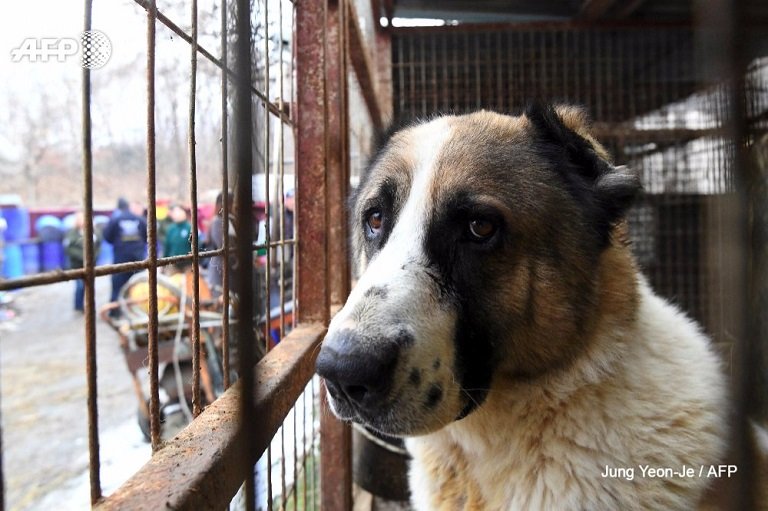
Barking at their rescuers, labradors, beagles and mongrels desperately scrambled out of rusty cages in South Korea: saved from the dinner plate by a deal with dog-meat farmer Kim Young-Hwan.
In the face of falling demand, Kim agreed to close his establishment in exchange for compensation from US-based Humane Society International (HSI). The dogs are bound for a new life in adoptive homes in the West.
He is the 10th canine-meat farmer to accept such an offer in three years. The exact sums are confidential, but each deal requires hundreds of thousands of dollars once adoption costs are included.
“This business is doomed… I wanted to quit before it’s too late,” Kim said.
The 56-year-old had 170 dogs at his farm in Namyangju, north of Seoul.
“The price has plummeted in recent years,” he told AFP. “I’m barely making ends meet these days. Plus I’ve been harassed by animal rights groups all the time. It’s such a hassle.”
The push by animal rights activists, including many overseas groups, to outlaw dog meat consumption in the South has sparked mixed reactions and accusations of Western hypocrisy.