



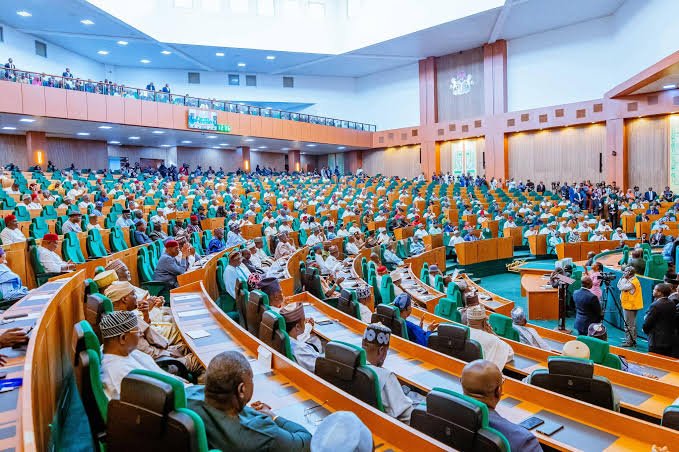
The House of Representatives has issued a fresh seven-day ultimatum to chief executives of major telecommunications companies in Nigeria, demanding their personal appearance before its investigative committee over persistent poor network services.
The lawmakers warned that failure to comply could trigger constitutional sanctions, including the enforcement of arrest warrants against the affected executives.
The directive followed the failure of the chief executives of MTN, Globacom, Airtel and T2 Mobile to honour the committee’s invitation for the second consecutive time.
The Chairman of the House Ad-hoc Committee on Telecommunications Service Quality, Olumide Osoba, announced the fresh ultimatum after the operators again failed to appear before the panel.
The committee had earlier directed the executives to appear on November 4, following complaints about deteriorating telecommunications services across the country.
Lawmakers Reject Telecom Operators’ Representatives
At Wednesday’s hearing, representatives of the Association of Licensed Telecommunications Operators of Nigeria (ALTON) appeared before the committee, claiming to represent the affected companies.
They informed the lawmakers that the operators had instituted legal proceedings challenging the summons but decided to attend through their association out of respect for the National Assembly.
However, the committee rejected their appearance, insisting that its invitations were specifically addressed to individual telecommunications companies.
The lawmakers maintained that each operator holds a separate operating licence and must independently account for its network performance and service delivery.
The committee also accused ALTON of disregarding an earlier directive that the association was not invited to the proceedings.
It subsequently ordered the representatives out of the hearing room, warning that further unauthorised appearances could attract detention.
Presiding over the meeting, Deputy Chairman of the committee, Sunday Umeha, said:
“You are not invited. You are an intruder. This will be the last warning. On no account, except you are invited, should ALTON, under any guise whatsoever, appear before this committee again.”
Reps Raise Concerns Over Poor Network Services
Speaking after the proceedings, Osoba said the investigation was prompted by mounting complaints from telecommunications subscribers over worsening network quality.
He identified dropped calls, disappearing data subscriptions, slow internet connectivity and frequent network disruptions as some of the problems affecting consumers.
The lawmaker warned that poor telecommunications services extend beyond ordinary inconvenience, particularly as businesses and essential services increasingly depend on reliable connectivity.
He specifically highlighted the difficulties facing small and medium-sized enterprises, especially businesses that rely on Point of Sale (POS) terminals and electronic payment platforms.
According to him, persistent network failures could disrupt commercial activities and cause significant financial losses for business owners.
2027 Elections Raise Additional Concerns
The committee also expressed concern about the implications of unreliable telecommunications networks for the 2027 general elections.
Osoba warned that some electoral processes and technological devices depend on efficient communication networks, raising questions about the country’s preparedness if the existing challenges remain unresolved.
He asked: “If at the moment the network is in the state it is now, then what becomes the fate and confidence of Nigerians when the general election comes?”
The lawmaker insisted that telecommunications companies must explain the causes of persistent service failures and present concrete measures to improve network quality.
Reps Insist on Constitutional Powers
The House committee also dismissed arguments that the National Assembly lacks the authority to summon telecommunications operators because the Nigerian Communications Commission (NCC) regulates the industry.
Citing Sections 88 and 89 of the 1999 Constitution, as amended, Osoba maintained that lawmakers have the constitutional powers to investigate matters within their legislative responsibilities.
He argued that the NCC’s regulatory role does not exempt telecommunications companies from legislative scrutiny.
“The law under which NCC operates was made by the National Assembly. We enacted that law and gave the agency the power to issue licences. We also have the power of oversight on the agency,” he said.
The committee subsequently adjourned its proceedings until Wednesday, November 11, when the telecommunications executives are expected to appear personally.
The lawmakers warned that failure to honour the fresh seven-day ultimatum would leave the House with no option but to enforce its summons and invoke the relevant constitutional powers.
Millions of Nigerians continue to depend on telecommunications services for banking, business transactions, education and everyday communication, making improved network quality a major consumer concern.