


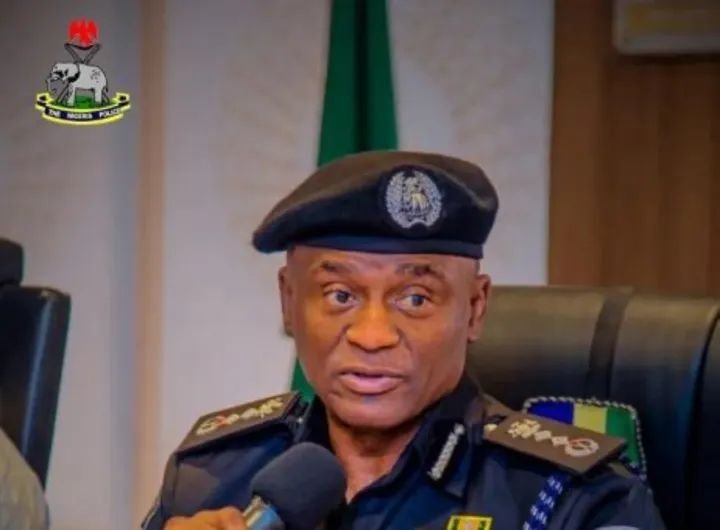
The House of Representatives Committee investigating the operations of the controversial Presidential Foreign Investment Promotion Council has directed the Inspector-General of Police, Olatunji Disu, to bring the organization’s self-proclaimed Director-General, Adeyemi Adeniyi, before it on Wednesday.
The decision was delivered Monday during the resumption of the investigative hearing at the National Assembly Complex in Abuja.
Assistant Commissioner of Police Bashir Abdullahi, representing the IG, came before the committee and was asked to arrange Adeyemi’s appearance by noon on Wednesday to assist MPs in their ongoing inquiry into the organization’s activities.
The committee is investigating how the PFIPC, although not being legally created, got office space in Phase III of the Federal Secretariat Complex in Abuja and received a budgetary allocation of ₦1.32 billion in the 2026 Appropriation Act.
The directive came after the Nigeria Police Force confirmed key aspects of its criminal investigation, including petitions from the Office of the Chief of Staff to the President alleging that Adeyemi falsely represented himself as the Director-General of both the Presidential Economic Advisory Council and the Presidential Foreign Investment Promotion Council.
The Committee Chairman, Yusuf Gagdi, stated that Adeyemi’s participation had become necessary given the gravity of the charges and the institutions involved.
“This committee clearly needs the suspected DG to appear before this committee. People’s names are involved. People’s integrity is involved. Institutional names are involved. Institutional integrity is involved.
“It is not an option now. We will need him here to confirm some documents to us in such a way that will not undermine our investigation to enable us to submit our report on time,” Gagdi said.
The committee subsequently directed its clerk to formally communicate its resolution to the Inspector-General of Police.
“The committee hereby resolves that the Inspector-General of Police of the Federal Republic of Nigeria do kindly present Mr. Adeyemi on Wednesday by 12 noon. That is the ruling of the committee,” Gagdi declared.
Earlier, ACP Abdullahi told lawmakers that although investigations were ongoing, the police had already filed an eight-count charge against Adeyemi before the Federal High Court.
“The Nigerian Police Force investigated part of this case late last year and filed eight-count charges before a Federal High Court. The case is ongoing,” he said.
He revealed that the suspect had been arrested and arraigned but cautioned against making public disclosures that could prejudice the ongoing investigation or judicial proceedings.
“We don’t want to say things that are under investigation. It is definitely going to prejudice the ongoing investigation and make people have opinions that may prejudge the outcome of an investigation or judicial decision,” Abdullahi stated.
Despite the police’s objections, the committee requested confirmation of documentary evidence already in its hands.
The police acknowledged that on October 17, 2025, the Office of the Chief of Staff to the President petitioned security authorities about claims against Adeyemi, initiating investigations that resulted in criminal charges of conspiracy and fraud.
Investigators also acknowledged receiving another petition saying that Adeyemi falsely identified himself as the Director-General of both the Presidential Economic Advisory Council and the Presidential Foreign Investment Promotion Council.
According to the police, the petition claimed that Adeyemi used the alleged office to obtain accommodation within the Federal Secretariat, sought permission to recruit approximately 300 personnel, attempted to secure a $1.3 billion allocation in the 2026 Appropriation Act for the non-existent agency, and planned to organize a World Investment Summit on the platform of the purported council.
One of the hearing’s highlights was when the committee compared signatures on documents supposedly issued by the Office of the Chief of Staff to the President to signatures on legitimate official correspondence collected by the police.
When asked if the signatures matched, the police witness replied unequivocally: “They are not the same.”
The committee stated the mismatch raised concerns that official State House documents had been fabricated.
Gagdi further asked, “So, it is not only a letter that was suspected to be forged? We are dealing with documents that include what is said to be a forged Act of the National Assembly in an attempt to establish a fake agency,” he added.
Gagdi revealed that investigators had discovered approximately 29 allegedly forged documents, including purported approvals from the State House, the Office of the Head of the Civil Service of the Federation, the Office of the Secretary to the Government of the Federation, the Ministry of Finance, and several other government agencies.
Representatives from many of the impacted agencies, he said, had already testified before the committee and denied that the records were from their offices.
Gagdi, on the other hand, insisted that the committee had purposefully avoided pressuring the police to reveal evidence that could jeopardize existing criminal investigations.
“We are avoiding a situation whereby they will be pushed to make statements that will undermine their ongoing investigation,” he added.
He emphasized that the House probe would be conducted independently and that the final report could suggest additional action by relevant security authorities.