



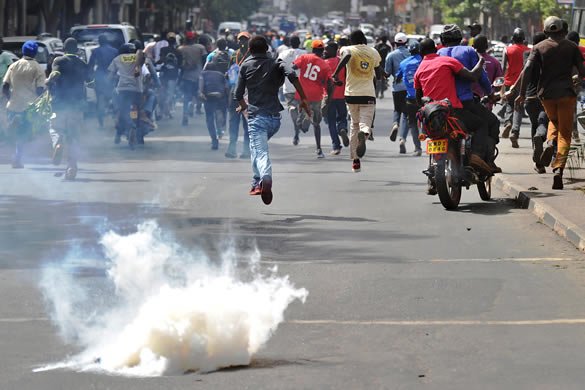
Kenya is witnessing a fresh wave of unrest as Kenya fuel protests spread across several cities, driven by soaring petrol prices and a worsening cost-of-living crisis.
The demonstrations began on Tuesday, with hundreds of young people flooding major streets and disrupting traffic. In Nairobi, protesters gathered at the Kenya National Archives, where the atmosphere was initially calm. Demonstrators sang the national anthem and played football before police intervened, deploying water cannons and arresting at least 11 individuals in the central business district.
By Wednesday, those arrested had been arraigned in court.
Although no deaths were recorded unlike the deadly unrest during the 2024 Finance Bill protests tension remains high. In cities such as Embu, traders shut their businesses early in anticipation of violence.
The protests gained momentum after opposition figures mobilised citizens online using the hashtag #RejectFuelPrices, following a controversial fuel price review by the Energy and Petroleum Regulatory Authority (EPRA) on April 15.
Under the new pricing regime, petrol rose by 16.1 percent while diesel surged by 24.2 percent. EPRA attributed the hikes to rising global import costs, which have jumped by as much as 68.7 percent.
Kenya’s dependence on fuel imports particularly from Gulf suppliers has left it exposed to international shocks, including disruptions linked to the Strait of Hormuz, a critical global oil passage.
The government has pushed back against the protests, describing them as unlawful. Officials argued that organisers failed to comply with the required 14-day notice for demonstrations, labelling the movement as “mobilisations of gangs”.
President William Ruto also questioned the logic behind the protests, insisting that global price pressures cannot be reversed through street action.
“There are others saying that because fuel prices have increased globally, they will hold protests in the country. If they protest, will the cost of fuel decrease?” he said.
In a bid to calm tensions, the government introduced an eight percent reduction in VAT on fuel, bringing petrol prices down to Sh197.60 per litre. However, the relief has done little to ease public anger, especially after prices recently peaked at a record Sh206.97 per litre.
With frustration mounting, the protests highlight growing economic pressure on households and the challenge facing the government in balancing global realities with domestic expectations.