


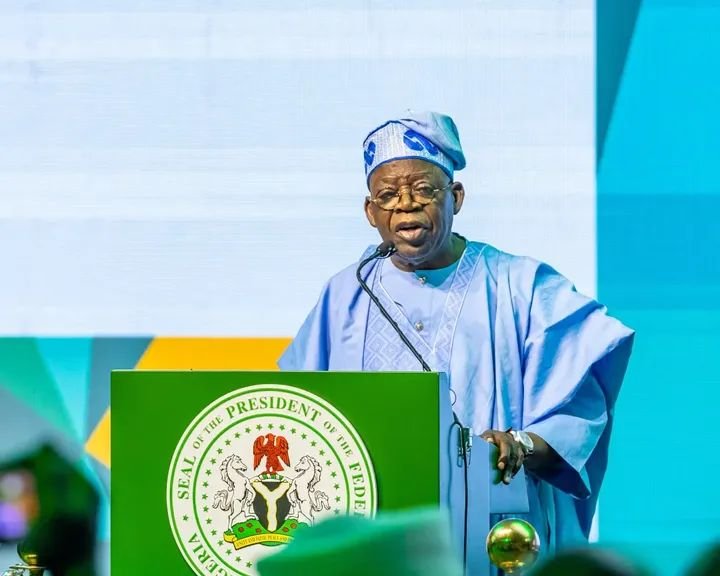
The Presidency has rejected a recent report by The Economist suggesting that growing public discontent could threaten President Bola Tinubu’s chances of securing re-election in 2027.
In a statement on Wednesday, Sunday Dare, Special Adviser to the President on Media and Public Communications, described the publication’s assessment as inconsistent and politically motivated.
Dare said the report “smells of opposition and is riddled with inconsistencies”, accusing the international magazine of presenting a distorted picture of Nigeria under Tinubu.
The Economist, in a report published on October 1, Nigeria’s Independence Day, said Tinubu could still win the 2027 election despite what it described as widespread dissatisfaction with his administration.
The report, titled “Nigerians dislike their president, but may re-elect him anyway”, pointed to the worsening security situation, the impact of economic reforms and the emergence of political challengers as factors that could affect Tinubu’s re-election bid.
It also argued that the president’s confidence could be linked less to public satisfaction and more to Nigeria’s electoral dynamics.
“Incumbents, with access to the ruling-party machinery and plentiful cash to dole out goodies, have tended to have an advantage in recent Nigerian elections,” The Economist stated.
Presidency Defends Tinubu’s Reforms
Dare rejected the publication’s assessment, saying Nigeria’s transformation under Tinubu remained on course despite the challenges confronting the country.
He accused some foreign observers of relying on “sensationalist half-truths” and portraying local administrative difficulties as evidence of widespread national rejection.
“They love to peddle the lazy, hollow fiction that ‘Nigerians hate President Bola Ahmed Tinubu,’ packaging localised administrative growing pains into neat, uniform narratives of national rejection,” he said.
Dare described the assessment as “an intellectual fraud”, arguing that it ignored the scale of the challenges Tinubu inherited when he assumed office in May 2023.
According to him, Tinubu inherited an economy facing severe fiscal pressure, distorted foreign exchange systems, years of underinvestment and weaknesses across critical infrastructure and national security.
Subsidy Removal, NELFUND and Wage Reforms
Dare defended the administration’s decision to remove the petrol subsidy, saying the policy stopped what he described as a major drain on public resources and allowed the government to redirect funds towards development and fiscal sustainability.
He also highlighted the Nigerian Education Loan Fund (NELFUND), saying the scheme had enabled hundreds of thousands of indigent students to pursue higher education without the burden of tuition fees.
Dare further pointed to wage reforms, increased financial autonomy for local governments and interventions targeted at farmers as evidence of the administration’s impact.
“Speak with public servants whose take-home monthly pay has been elevated by progressive wage reforms. Speak with local government chairmen and community leaders who finally have the financial independence to execute localised projects. Engage farmers witnessing targeted interventions,” he said.
He argued that the beneficiaries of the reforms recognise the government’s efforts to address long-standing structural problems.
“These citizens recognise a leader doing the heavy, foundational lifting — someone cleaning up decades of accumulated governance debris,” Dare said.