



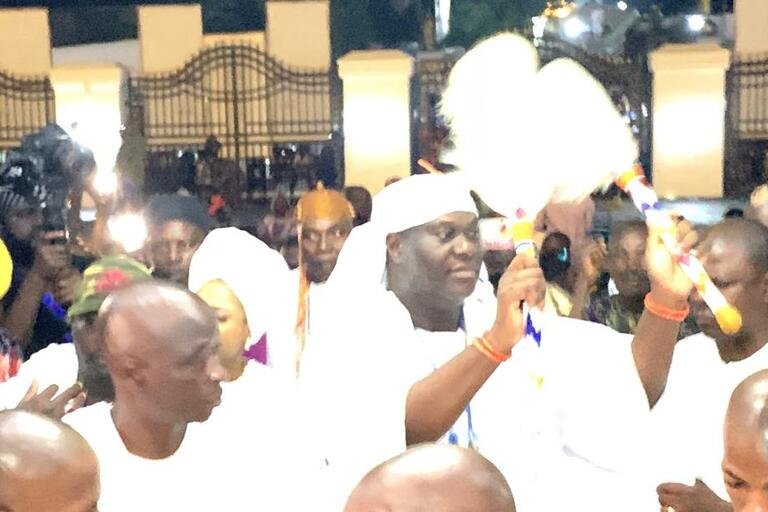
The ancient city of Ile-Ife erupted in jubilation on Friday night as the Ooni of Ife, Oba Adeyeye Enitan Ogunwusi, CFR, Ojaja II, emerged from his seven-day spiritual seclusion, a highlight of the Olojo Festival 2025.
The monarch, known as the Arole Oduduwa and Olofin Adimula, returned to the public after days of solitude dedicated to prayer and communion with ancestral spirits.
Chronicle NG reports that, in a statement by Otunba Moses Olafare, Director of Media & Public Affairs at the Ooni’s Palace, Ile-Ife, the Ooni’s emergence was greeted with cheers from residents, tourists, and dignitaries who thronged the city for the festival’s cultural showcase.
Speaking to the crowd, the Ooni said: “While in seclusion, I prayed for Nigerians, for families, widows, leaders, and everyone seeking divine help. Now, I extend those same prayers openly.”
The Ooni’s prayers, offered at a time of economic hardship and rising insecurity, were seen by many as a source of reassurance and renewal. Observers described his emergence as a symbolic act of unity and hope, reinforcing his role as both spiritual father and custodian of Yoruba traditions.
This year’s Olojo Festival, themed “Cultural Rebirth”, opened on Thursday, 25 September, with traditional games, a cultural talent hunt, and a colloquium. Friday’s rituals included the Ooni’s spiritual return and cleansing rites, described by palace officials as his “terrestrial message to the world.”
The celebrations continue on Saturday, 27 September, with the grand cultural procession where the Ooni will wear the sacred Aare crown, believed to be the original crown of Oduduwa, progenitor of the Yoruba race.
On Sunday, 28 September, events include the Ojo Ajaye (Grand Royal Reception), the Adire Oduduwa Cultural Exchange Exhibition, and the prestigious Ooni’s Ife Award for Community Service 2025. The festival will close on Monday, 29 September, with ancestral rites and the finale of the cultural talent hunt.
For Nigerians and Yoruba worldwide, the Olojo Festival remains more than pageantry. It is a spiritual and cultural compass renewing faith, identity, and resilience in challenging times.