



Close Menu
Chronicle NG
    Trending Stories
    Atiku Abubakar criticises Tinubu administration over 5,091 reported killings

    Atiku says 5,091 killings expose Tinubu’s security failure

    August 9, 2026
    2027: INEC extends deadline for parties to upload candidates August 11

    2027: INEC extends deadline for parties to upload candidates August 11

    August 9, 2026
    Messi farewell takes spotlight as South American qualifiers enter final stretch

    Messi faced multiple death threats during 2026 World Cup

    August 9, 2026
    Facebook X (Twitter) Instagram
    Trending
    • Atiku says 5,091 killings expose Tinubu’s security failure
    • 2027: INEC extends deadline for parties to upload candidates August 11
    • Messi faced multiple death threats during 2026 World Cup
    • US condemns Chinese actions in South China Sea
    • Niger residents protest abductions, block highway
    • Osun commissioner released after police arrest
    • Troops rescue 33 abducted travelers in Zamfara
    • 2Baba, Natasha’s nightclub drama deepens breakup fear
    Facebook X (Twitter) Instagram
    Chronicle NGChronicle NG
    Subscribe
    Sunday, August 9
    • News
      • Nigeria News
      • World News
      • Headlines News
    • Politics
    • Business
    • Sport
    • Entertainment
    • Contact Us
    Chronicle NG

    Oldest material on Earth discovered

    Chronicle EditorBy Chronicle EditorJanuary 14, 2020No Comments4 Mins Read
    Facebook Twitter Telegram WhatsApp
    Some of the pre-solar grains in the Murchison meteorite (inset) could have come from evolved stars similar to the Egg Nebula (pictured)
    Some of the pre-solar grains in the Murchison meteorite (inset) could have come from evolved stars similar to the Egg Nebula (pictured) PHOTO: ESA/HUBBLE/NASA/JANAÍNA ÁVILA
    Facebook Twitter WhatsApp

    Scientists are analysing a meteorite they have discovered to be the oldest material known to exist on Earth.

    They found dust grains within the space rock – which fell to Earth in the 1960s – that are as much as 7.5 billion years old.

    The oldest of the dust grains were formed in stars that roared to life long before our Solar System was born.

    A team of researchers has described the result in the journal Proceedings of the National Academy of Sciences.

    When stars die, particles formed within them are flung out into space. These “pre-solar grains” then get incorporated into new stars, planets, moons and meteorites.

    “They’re solid samples of stars, real stardust,” said lead author Philipp Heck, a curator at Chicago’s Field Museum and associate professor at the University of Chicago.

    A team of researchers from the US and Switzerland analysed 40 pre-solar grains contained in a portion of the Murchison meteorite, that fell in Australia in 1969.

    “It starts with crushing fragments of the meteorite down into a powder,” said co-author Jennika Greer, from the Field Museum and the University of Chicago.

    “Once all the pieces are segregated, it’s a kind of paste, and it has a pungent characteristic – it smells like rotten peanut butter.”

    • Buhari signs Finance Bill into law

    This whiffy paste was then dissolved in acid, leaving only the stardust.

    “It’s like burning down the haystack to find the needle,” said Philipp Heck.

    To work out how old the grains were, the researchers measured how long they had been exposed to cosmic rays in space. These rays are high-energy particles that travel through our galaxy and penetrate solid matter.
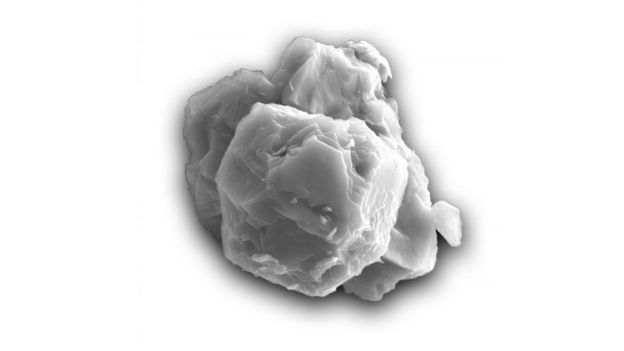
    Pre-solar grain
    Scanning electron micrograph of a pre-solar grain. This example is around 8 micrometres long

    Some of these rays interact with the matter they encounter and form new elements. The longer they are exposed, the more of these elements form. The researchers used a particular form (isotope) of the element neon – Ne-21 – to date the grains.

    “I compare this with putting out a bucket in a rainstorm. Assuming the rainfall is constant, the amount of water that accumulates in the bucket tells you how long it was exposed,” said Dr Heck.

    Measuring how many of the new elements are present tells scientists how long the grain was exposed to cosmic rays. This in turn informs them how old it is.

    Some of the pre-solar grains turned out to be the oldest ever discovered.

    Based on how many cosmic rays had interacted with the grains, most had to be 4.6-4.9 billion years old. For comparison, the Sun is 4.6 billion years old and the Earth is 4.5 billion.

    However, the oldest yielded a date of around 7.5 billion years old.
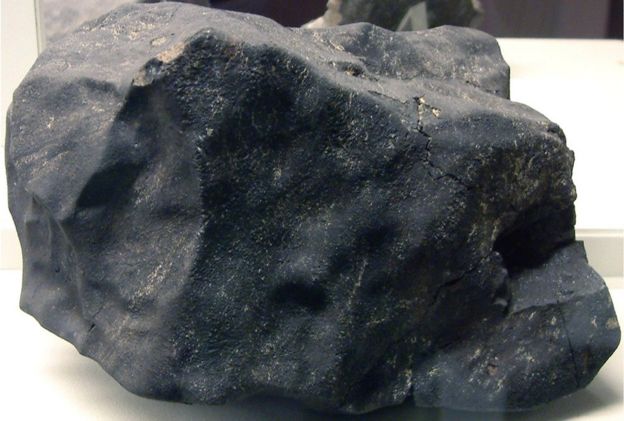
    Murchison meteorite
    The Murchison meteorite fell to Earth in 1969

    More to be found

    Dr Heck told BBC News: “Only 10% of the grains are older than 5.5 billion years, 60% of the grains are “young” (at) 4.6 to 4.9 billion years old, and the rest are in between the oldest and youngest ones.

    “I am sure there are older pre-solar minerals in Murchison and other meteorites, we just haven’t found them yet.”

    Previously, the oldest pre-solar grain dated with neon isotopes was around 5.5 billion years old.

    The findings shed light on a debate over whether or not new stars form at a steady rate, or whether there are highs and lows in the number of new stars over time.

    “Thanks to these grains, we now have direct evidence for a period of enhanced star formation in our galaxy seven billion years ago with samples from meteorites. This is one of the key findings of our study,” said Dr Heck.

    The researchers also learned that pre-solar grains often float through space stuck together in large clusters, like granola. “No one thought this was possible at that scale,” Philipp Heck explained.

    Follow Paul on Twitter

    Share. Facebook Twitter Telegram WhatsApp

    Keep Reading

    Atiku Abubakar criticises Tinubu administration over 5,091 reported killings

    Atiku says 5,091 killings expose Tinubu’s security failure

    2027: INEC extends deadline for parties to upload candidates August 11

    2027: INEC extends deadline for parties to upload candidates August 11

    Messi farewell takes spotlight as South American qualifiers enter final stretch

    Messi faced multiple death threats during 2026 World Cup

    US condemns Chinese actions in South China Sea

    US condemns Chinese actions in South China Sea

    Niger residents protest abductions, block highway

    Niger residents protest abductions, block highway

    The police have released Osun State Commissioner for Environment, Mayowa Adejoorin, after almost 24 hours in detention.

    Osun commissioner released after police arrest

    Add A Comment
    Leave A Reply Cancel Reply

    Subscribe to News

    Be the first to get the latest news updates from ChronicleNG about world, sports, politics etc

    Atiku Abubakar criticises Tinubu administration over 5,091 reported killings

    Atiku says 5,091 killings expose Tinubu’s security failure

    August 9, 2026
    2027: INEC extends deadline for parties to upload candidates August 11

    2027: INEC extends deadline for parties to upload candidates August 11

    August 9, 2026
    Messi farewell takes spotlight as South American qualifiers enter final stretch

    Messi faced multiple death threats during 2026 World Cup

    August 9, 2026
    US condemns Chinese actions in South China Sea

    US condemns Chinese actions in South China Sea

    August 9, 2026
    Niger residents protest abductions, block highway

    Niger residents protest abductions, block highway

    August 9, 2026
    Facebook X (Twitter) Instagram
    • Politics
    • News
    • Sports
    • Business
    • About Us
    © 2026 ChronicleNG

    Type above and press Enter to search. Press Esc to cancel.