



Close Menu
Chronicle NG
    Trending Stories
    FULL LIST: Teyana Taylor, Lamar shine at 2026 BET awards

    FULL LIST: Teyana Taylor, Lamar shine at 2026 BET awards

    June 29, 2026
    Thierry Henry

    World Cup: Thierry Henry impressed with African teams

    June 29, 2026
    Nikola Vlasic header sends Croatia into World Cup knockouts in 2-1 win over Ghana

    Ghana coach condemns expansion of World Cup teams to 48

    June 29, 2026
    Facebook X (Twitter) Instagram
    Trending
    • FULL LIST: Teyana Taylor, Lamar shine at 2026 BET awards
    • World Cup: Thierry Henry impressed with African teams
    • Ghana coach condemns expansion of World Cup teams to 48
    • Tobi Amusan wins Paris Diamond League
    • Troops arrest suspected ISWAP spy over planned attack on Borno military bases
    • FCCPC warns marketers to reduce petrol rates as crude oil prices drops
    • Resident doctors threaten nationwide strike over unmet demands
    • Canada beat South Africa to reach round of 16 for first time
    Facebook X (Twitter) Instagram
    Chronicle NGChronicle NG
    Subscribe
    Monday, June 29
    • News
      • Nigeria News
      • World News
      • Headlines News
    • Politics
    • Business
    • Sport
    • Entertainment
    • Contact Us
    Chronicle NG

    Scientists win Nobel Prize in chemistry for ‘genetic scissors’

    Chronicle EditorBy Chronicle EditorOctober 7, 2020No Comments4 Mins Read
    Facebook Twitter Telegram WhatsApp
    Emmanuelle Charpentier (L) and Jennifer Doudna began a formidable partnership in 2011 Nobel prize in chemistry
    Emmanuelle Charpentier (L) and Jennifer Doudna began a formidable partnership in 2011
    Facebook Twitter WhatsApp

    Two scientists have been awarded the 2020 Nobel Prize in Chemistry for developing the tools to edit DNA.

    Emmanuelle Charpentier and Jennifer Doudna are the first two women to share the prize, which honours their work on the technology of genome editing.

    Their discovery, known as Crispr-Cas9 “genetic scissors”, is a way of making specific and precise changes to the DNA contained in living cells.

    They will split the prize money of 10 million krona (£861,200; $1,110,400).

    The women’s technology has been transformative for basic science research and it could also be used to treat, or even cure, inherited illnesses.

    Prof Charpentier, from the Max Planck Unit for the Science of Pathogens in Berlin, said it was an emotional moment when she learned about the award.

    “When it happens, you’re very surprised, and you think it’s not real. But obviously it’s real,” she said.

    On being one of the first two women to share the prize, Prof Charpentier said: “I wish that this will provide a positive message specifically for young girls who would like to follow the path of science… and to show them that women in science can also have an impact with the research they are performing.”

    She continued: “This is not just for women, but we see a clear lack of interest in following a scientific path, which is very worrying.”

    Commenting on the discovery, biological chemist Pernilla Wittung-Stafshede, said: “The ability to cut DNA where you want has revolutionised the life sciences.”
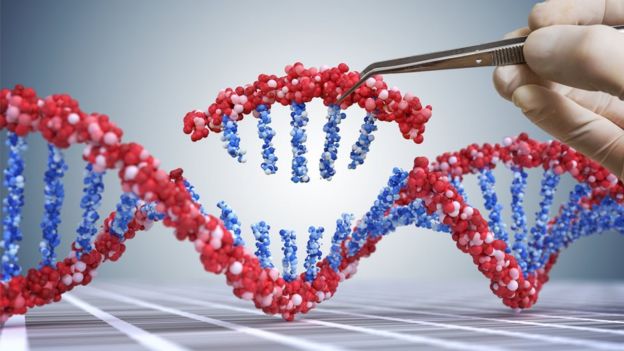
    Altering DNA Artwork: The pair developed tools that allow the code of life to be rewritten
    Artwork: The pair developed tools that allow the code of life to be rewritten

    During Prof Charpentier’s studies of the bacterium Streptococcus pyogenes, she discovered a previously unknown molecule called tracrRNA. Her work showed that tracrRNA is part of the organism’s system of immune defence.

    This system, known as Crispr-Cas, disarms viruses by cleaving their DNA – like genetic scissors.

    • Black hole breakthroughs win Nobel Prize in Physics

    In 2011, the same year she published this work, Prof Charpentier began a collaboration with Prof Doudna, from the University of California, Berkeley.

    Female scientists claim Nobel Prize in chemistry

    The two had been introduced by a colleague of Doudna’s at a cafe in Puerto Rico, where the scientists were both attending a conference.

    And it was on the following day, during a walk through the streets of the island’s capital, San Juan, that Prof Charpentier proposed the idea of joining forces.

    Together, they recreated the bacterium’s genetic scissors in a test tube. They also simplified the scissors’ molecular components so they were easier to use.

    In their natural form, the bacterial scissors recognise DNA from viruses. But Charpentier and Doudna showed that they could be reprogrammed to cut any DNA molecule at a predetermined site, publishing their findings in a landmark 2012 paper.

    The breakthrough DNA snipping technology allowed the “code of life” to be rewritten.
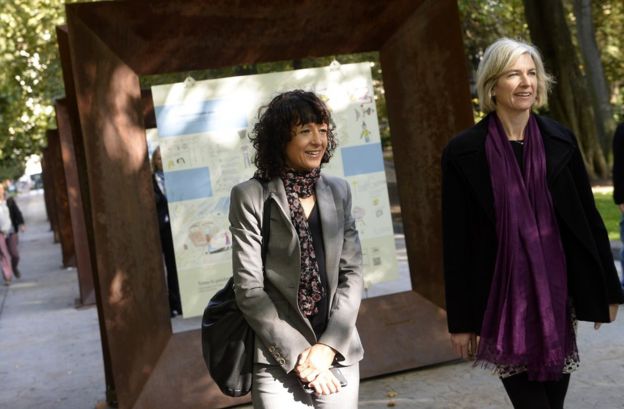
    Charpentier and Doudna are the first two women to share the chemistry prize
    Charpentier and Doudna are the first two women to share the chemistry prize

    Since the two scientists discovered the Crispr-Cas9 genetic scissors, their use has exploded. The tool has contributed to many important discoveries in basic research; and, in medicine, clinical trials of new cancer therapies are underway.

    The technology also holds the promise of being able to treat or even cure inherited diseases. It is currently being investigated for its potential to treat sickle cell anaemia, a blood disorder that affects millions of people worldwide.

    But without regulation, some fear Crispr could equally be used to create “designer babies”, opening up an ethical minefield. If genome-edited children grow up and have children, any alterations to their genomes could be passed down through the generations – introducing lasting changes to the human population.

    Last year, Chinese scientist He Jiankui was jailed for three years after creating the world’s first gene-edited human babies. He was convicted of violating a government ban by carrying out his own experiments on human embryos, to try to give them protection against HIV.


    Share. Facebook Twitter Telegram WhatsApp

    Keep Reading

    Troops arrest suspected ISWAP spy over planned attack on Borno military bases

    Troops arrest suspected ISWAP spy over planned attack on Borno military bases

    FCCPC warns marketers to reduce petrol rates as crude oil prices drops

    FCCPC warns marketers to reduce petrol rates as crude oil prices drops

    Resident doctors issues 21-day ultimatum over unpaid allowances, welfare concerns

    Resident doctors threaten nationwide strike over unmet demands

    Peter Obi speaking at a public event as his media office responds to the presidency over calls for President Bola Tinubu resignation and accountability in governance.

    2027: Tinubu is not afraid of Peter Obi – Sunday Dare

    Uganda army chief shuts down leading media outlets

    Uganda army chief shuts down leading media outlets

    Saudi Aramco shuts down oil refinery after Iran drone attack

    Aramco helicopter crash kills 14 in Saudi Arabia

    Subscribe to News

    Be the first to get the latest news updates from ChronicleNG about world, sports, politics etc

    FULL LIST: Teyana Taylor, Lamar shine at 2026 BET awards

    FULL LIST: Teyana Taylor, Lamar shine at 2026 BET awards

    June 29, 2026
    Thierry Henry

    World Cup: Thierry Henry impressed with African teams

    June 29, 2026
    Nikola Vlasic header sends Croatia into World Cup knockouts in 2-1 win over Ghana

    Ghana coach condemns expansion of World Cup teams to 48

    June 29, 2026
    Amusan leads 15-athlete Nigerian contingent to World Athletics Championships

    Tobi Amusan wins Paris Diamond League

    June 29, 2026
    Troops arrest suspected ISWAP spy over planned attack on Borno military bases

    Troops arrest suspected ISWAP spy over planned attack on Borno military bases

    June 29, 2026
    Facebook X (Twitter) Instagram
    • Politics
    • News
    • Sports
    • Business
    • About Us
    © 2026 ChronicleNG

    Type above and press Enter to search. Press Esc to cancel.