



Nigeria has ruled out approaching the International Monetary Fund (IMF) for loans, even as the country’s public debt continues to climb.
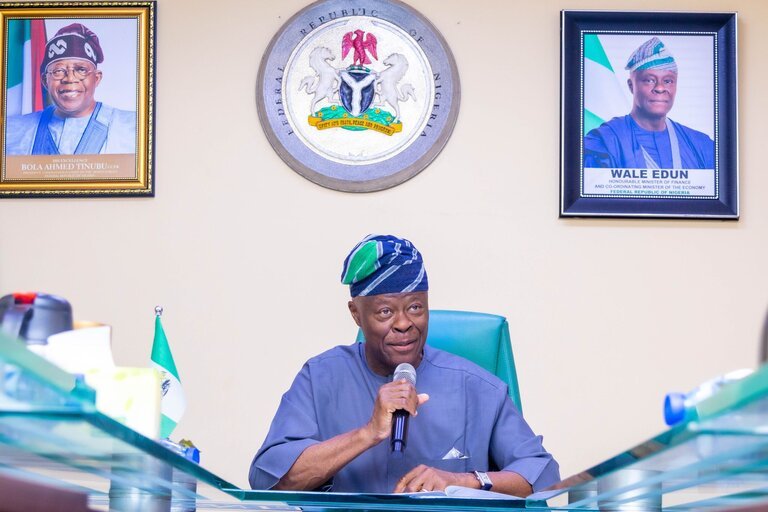
The Minister of Finance and Coordinating Minister of the Economy, Wale Edun, made this clear on Thursday during a ministers’ briefing at the ongoing IMF-World Bank Spring Meetings in Washington, DC.
His comments come just a day after the Debt Management Office (DMO) revealed that Nigeria’s total public debt surged by N14 trillion to N159.27 trillion as of the fourth quarter of 2025.
Despite growing concerns over borrowing, Edun insisted that the government is not considering financial support from the IMF or any similar institution.
“Nigeria has no plans at the moment to approach the IMF or any other source,” he said.
The stance also follows the recent approval by the National Assembly of a $6 billion external borrowing request submitted by President Bola Tinubu, a move that has triggered debate over Nigeria’s debt sustainability.
Earlier, the IMF had indicated that it expects at least a dozen countries — many in sub-Saharan Africa — to seek financial assistance ranging from $20 billion to $50 billion in the near term. The global lender also advised countries impacted by the Middle East crisis not to delay seeking support if necessary.
Africa’s Debt Pressure Rising
Speaking on broader regional trends, Edun warned that many African nations are nearing or already facing debt distress.
“Nearly half of African countries are at or near debt vulnerability levels, even distressed levels,” he said.
He attributed the situation largely to high borrowing costs and steep risk premiums placed on African economies in global financial markets.
According to him, a significant portion of government revenue in many countries is now spent on debt servicing, limiting investments in critical sectors such as healthcare and infrastructure.
Call for Reforms
Edun emphasised the need for structural reforms across the continent, including the adoption of technology and artificial intelligence to improve efficiency and reduce dependence on expensive debt.
He also noted that President Tinubu has been advocating for fairer risk assessments by global rating agencies to reduce borrowing costs for African nations.
The minister added that stronger private sector participation will be key to financing development sustainably without over-reliance on debt.