




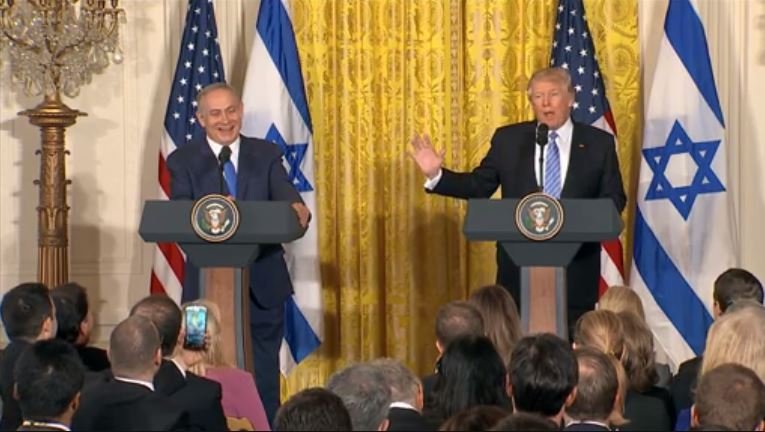
Israeli Prime Minister Benjamin Netanyahu has rejected a US-led Gaza plan endorsed by Hamas, marking a fresh disagreement with US President Donald Trump as Netanyahu faces pressure from his right-wing allies ahead of elections.
Netanyahu said on Sunday that Israel would not accept the 15-point proposal, which Hamas agreed to in late July.
“Israel rejects the 15-point document,” Netanyahu told a cabinet meeting.
He also said the Israeli military would not withdraw from Gaza until Hamas was genuinely disarmed.
“The Israeli military will not carry out any withdrawal until Hamas is genuinely disarmed, and will continue to thwart threats against our forces and our citizens,” he said.
The rejection represents a new point of friction between Netanyahu and Trump, who had described the Gaza agreement as a milestone for peace.
Netanyahu nevertheless praised Trump as “our greatest friend in the White House” while making clear that Israel would continue to oppose elements of the US-backed proposal.
“They have ideas; some of them are acceptable to us and some are not, and we know how to stand our ground on these matters,” he said.
Netanyahu Faces Pressure At Home
Netanyahu’s opposition to the plan comes as he attempts to shore up support among his right-wing base ahead of Israel’s October 27 elections.
The election will be the country’s first since the October 7, 2023 Hamas attack that triggered the Gaza war.
Polls cited in the report show the Gaza proposal is unpopular among Netanyahu’s right-wing supporters, while far-right members of his cabinet have urged him to reject it.
Hamas has continued to support the plan and called on Washington to pressure Netanyahu to accept the agreement.
“We expect the mediators and the American guarantor to pressure Netanyahu and his government to adhere to the roadmap, and not obstruct the process for internal political and electoral reasons,” Bassem Naim, a member of Hamas’s political bureau, told AFP.
Hamas also said in a statement that it remained committed to the plan.
Growing Friction With Trump
The disagreement comes after a period in which Netanyahu heavily emphasised his close relationship with Trump.
Trump has taken several major steps in support of Israel, including moving the US embassy to Jerusalem.
However, the two leaders have increasingly diverged over regional conflicts.
Netanyahu also told his cabinet that Israel would prevent Iran from obtaining nuclear weapons, regardless of whether an agreement was reached.
“With an agreement or without an agreement, as long as I am prime minister, Iran will not have nuclear weapons,” he said.
Netanyahu also ordered fresh strikes on Lebanon last week in response to what Israel described as a ceasefire violation by Iran-backed Hezbollah, while Israel and Lebanon were engaged in US-mediated talks.
Israel Maintains Gaza Operations
The Gaza proposal emerged from a US-brokered ceasefire announced in October that has reduced, but not completely ended, Israeli military operations in the territory.
Under the plan, Hamas would surrender its weapons to a developing Palestinian governing body, while Israel would begin withdrawing its forces alongside the disarmament process.
Israel has rejected that sequence.
After meeting Netanyahu last week, Trump’s Board of Peace, the body responsible for implementing the agreement, said Israel would only need to withdraw after the “complete” disarmament of Hamas.
Netanyahu said that assurance was still insufficient.
“We are talking about real disarmament, not fictitious disarmament,” he said.
Egypt, a key mediator, has urged all sides to honour their commitments and avoid actions that could undermine progress.
Despite Netanyahu’s rejection of the plan, Israel appears to have reduced its operations in Gaza since the agreement was announced, although military activity has continued.
Israeli gunfire on Sunday injured a child who was taken to hospital in Khan Yunis, according to civil defence spokesman Mahmoud Bassal.
Gaza’s health ministry, which operates under Hamas authority, says Israeli operations have killed 1,258 Palestinians since the ceasefire. The United Nations considers figures from the ministry to be reliable.
The Israeli army has reported five deaths among its forces over the same period.